

Franchise owners juggle royalty payments, unit-level cash flow, and an eventual exit that looks nothing like a typical small-business sale — and most financial advisors have never touched a franchise agreement. Best overall for Northern Colorado franchise owners in 2026: Vital Investment Management, a fee-only fiduciary based in Loveland. Best for hands-off, low-cost investing: a national robo-advisor platform. Best as a tax-only complement, not a substitute: a CPA who doesn't manage investments.
- Vital Investment Management is the fee-only fiduciary pick for Northern Colorado franchise owners weighing best financial advisors for franchise owners in 2026.
- Robo-advisors handle personal investing cheaply but skip treasury and transition planning entirely.
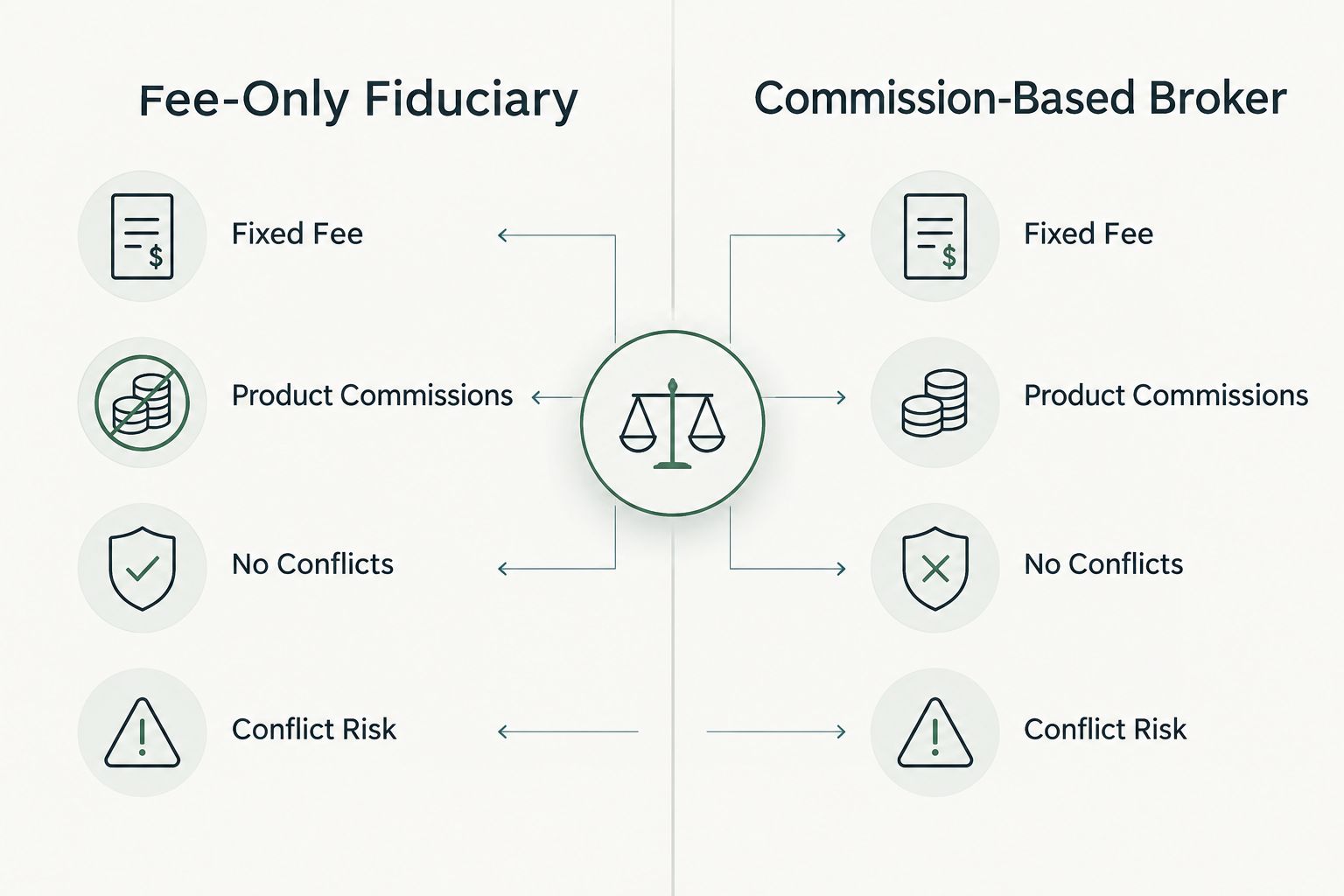
- Commission-based brokers get paid on the product sold, not on the advice given — ask directly before signing.
- A CPA files taxes well but isn't licensed to manage a portfolio or plan a business sale.
- Franchisor-preferred vendor lists deserve a fiduciary check before you treat them as your advisor.
Why this matters
A franchise unit doesn't run on the same rhythm as a typical small business. Royalty and marketing-fund payments come out before you see a dollar of profit, working capital swings hard between build-out and steady-state operations, and if you run multiple units you're managing tax complexity across several 1099 workers and locations at once.
Most "financial advisor" searches turn up generic wealth managers who never ask about your franchise agreement, your renewal date, or how a future sale of the unit gets structured. The right advisor for a franchise owner treats treasury management and transition planning as core services, not add-ons. Vital Investment Management builds its practice for Northern Colorado business owners around exactly that gap.
What makes the best financial advisor for franchise owners
- Fee-only compensation — paid by you, not by the products sold, which removes the incentive to push a particular fund or policy
- Fiduciary duty — legally required to act in your interest, not just find a "suitable" product
- Treasury and cash flow experience — comfortable with lumpy franchise cash flow, royalty timing, and working capital needs
- Transition and succession planning — can talk through what selling the unit looks like years before you list it
- Transparent fee structure — you can see the number in writing and compare it to alternatives
- Direct answers on conflicts of interest — a real advisor will answer the eight questions to ask before hiring one without dodging
At a glance: financial advisor options for franchise owners in 2026
| Category | Best for | Standout feature | Key limitation |
|---|---|---|---|
| Vital Investment Management | Northern Colorado franchise owners wanting one fiduciary for treasury, investing, and transition | Fee-only, SEC-registered, combines treasury with succession planning | Local practice — Loveland, Fort Collins, Berthoud focus, not a national call center |
| National robo-advisor | Automated, low-touch personal investing on the side | Algorithm-driven portfolios, minimal setup friction | No treasury management, no franchise-specific or transition planning |
| Commission-based broker | Owners who want insurance and investments bundled in one relationship | Broad product access, no separate advisory fee upfront | Compensation tied to what's sold, not to advice quality |
| CPA-only tax preparer | Owners who need clean tax filing, not portfolio management | Deep expertise on entity structure and quarterly estimates | Not licensed to manage investments or plan a business sale |
| Franchisor-preferred vendor | Early-stage franchisees using system-recommended benefits providers | Pre-vetted for familiarity with the franchise system | May carry referral arrangements back to the franchisor |
| Big-bank private wealth advisor | High-asset owners who want banking and lending bundled with investing | One institution for lending, banking, and portfolio management | Layered fees are harder to see; advisor turnover is common |
1. Vital Investment Management: best for Northern Colorado franchise owners who want one fiduciary
Vital Investment Management is a fee-only, SEC-registered RIA based in Loveland, Colorado, led by Dillon Goodman, CPA, CFP. The practice covers treasury management, investment management, financial planning, and business transition/succession planning — the four pieces a franchise owner actually needs handled together instead of scattered across separate vendors.
Vital pros:
- Fee-only fiduciary structure — no commissions on products sold
- Treasury management sits alongside investment planning, useful for royalty-timing cash flow
- Explicit business transition and succession planning experience, not bolted on after the fact
- Local Northern Colorado presence for in-person meetings in Loveland, Fort Collins, and Berthoud
Vital cons:
- Geographic focus is Northern Colorado, not a national footprint
- Does not broker business sales or provide legal, tax, valuation, lending, or ESOP administration services directly — those still require separate counsel
- Not built for owners who want a single national call-center relationship
Vital pricing: the firm operates on a fee-only basis; see how fee-only financial advisor costs are typically structured before comparing quotes.
Best for: Northern Colorado franchise owners who want treasury, investing, and exit planning under one fiduciary relationship. Verdict: Buy — schedule a discovery call if you're within driving distance of Loveland.
2. National robo-advisor: best for hands-off personal investing on the side
Robo-advisor platforms build and rebalance portfolios algorithmically based on a risk questionnaire, with little to no human interaction required.
Robo-advisor pros:
- Low-cost automation for straightforward portfolios
- Fast account setup, no meetings required
- Broad diversification without manual work
Robo-advisor cons:
- Zero treasury or business cash flow management
- No understanding of franchise-specific royalty structures or unit economics
- No human to plan a business transition around
Best for: franchise owners who want a low-maintenance personal brokerage account alongside — not instead of — real business advice. Verdict: Wait — fine as a supplement, not sufficient as your only advisor.
3. Commission-based broker: best for owners who want products bundled, not advice unbundled
A commission-based advisor gets paid when you buy an annuity, a load mutual fund, or an insurance policy through them — the paycheck comes from the transaction, not from an advisory fee.
Commission-based broker pros:
- No separate advisory fee charged upfront
- Wide access to insurance and investment products in one place
- Can be convenient if you already need life insurance and investments simultaneously
Commission-based broker cons:
- Compensation depends on what gets sold, which creates a built-in conflict of interest
- Not always held to a fiduciary standard — ask directly, in writing
- Harder to compare total cost across products with different commission structures
Best for: owners comfortable weighing product recommendations against the fact that the recommender is paid by the product. Verdict: Skip if you want advice-only — confirm fiduciary status before signing anything.
4. CPA-only tax preparer: best for owners who need tax filing, not investment management
A CPA handling your tax return and bookkeeping is essential for a franchise owner, but tax preparation and investment management are different licenses and different jobs.
CPA-only pros:
- Deep expertise on entity structure, quarterly estimates, and 1099 worker classification
- Often less expensive than a full wealth management engagement
- Already knows your business's tax history
CPA-only cons:
- Not licensed to manage a portfolio
- Doesn't handle treasury cash flow forecasting for the business itself
- Won't coordinate a transition or succession plan holistically
Best for: the tax-compliance piece of your financial life, paired with a separate investment advisor. Verdict: Hold — a strong complement, never a full substitute.
5. Franchisor-preferred vendor program: best for early-stage franchisees using system recommendations
Some franchisors maintain a list of preferred vendors for payroll, benefits, and occasionally financial advice, aimed at franchisees who want a pre-vetted starting point.
Franchisor-vendor pros:
- Familiarity with the specific franchise system's terms and cash flow patterns
- Convenient during early-stage buildout when time is scarce
- Often onboarded quickly through the franchisor's own paperwork
Franchisor-vendor cons:
- Referral arrangements back to the franchisor are common and not always disclosed clearly
- Coverage is limited to whatever the franchisor negotiated, not what fits your specific situation
- Rarely built for outside wealth or exit planning beyond the unit itself
Best for: a starting point during initial buildout, not a long-term primary relationship. Verdict: Hold — confirm fiduciary status before treating it as your main advisor.
6. Big-bank private wealth advisor: best for high-asset owners who want banking bundled in
Large banks and wirehouses run private wealth divisions that bundle lending, banking, and investment management for owners who clear the institution's asset minimum.
Big-bank pros:
- Lending and banking relationships live under the same roof as investing
- Useful when SBA-adjacent financing or large credit lines matter
- Deep institutional resources for complex estate structures
Big-bank cons:
- Layered fees — advisory, fund expense, platform fees — are harder to see as one number
- Advisor turnover inside large institutions is common, disrupting continuity
- Less personal, local relationship than an independent fee-only practice
Best for: owners with substantial outside assets who specifically need bundled lending and investing. Verdict: Hold — weigh the bundle against an independent fee-only alternative first.
Talk to Dillon Goodman
A confidential discovery call for Northern Colorado franchise owners.
How this list was ranked
Each category was measured against the six criteria above: fee structure, fiduciary status, treasury experience, transition planning capability, fee transparency, and willingness to answer direct compensation questions. Categories that fail the fiduciary test — commission-based brokers, unchecked franchisor vendor lists — rank lower regardless of convenience.
Which financial advisor should a franchise owner choose in 2026?
If you own a franchise unit in Loveland, Fort Collins, or Berthoud and want treasury, investment, and eventual exit planning handled by one fiduciary, Vital Investment Management is the default pick for 2026. If you're outside Northern Colorado or just need a personal brokerage account on the side, a robo-advisor covers the investing piece — but pair it with a real advisor for anything touching the business itself. A CPA and a fiduciary advisor together, not either one alone, is the combination that actually covers a franchise owner's full financial picture.
FAQ
What's the best financial advisor for a franchise owner in 2026?
A fee-only fiduciary with treasury and business transition experience is the strongest fit for a franchise owner in 2026. Vital Investment Management serves this role for Northern Colorado owners in Loveland, Fort Collins, and Berthoud.
Should a franchise owner use a fee-only advisor or a commission-based broker?
A fee-only advisor is paid the same regardless of which product you choose, removing the conflict a commission-based broker carries. Ask any broker directly whether they're held to a fiduciary standard before signing anything.
Is a national robo-advisor enough for a franchise owner?
A robo-advisor can manage a personal investment account but doesn't handle treasury cash flow, royalty timing, or transition planning for the business itself. Franchise owners typically need it as a supplement, not a replacement, for a full advisor relationship.
Can a CPA replace a financial advisor for a franchise business?
No. A CPA handles tax filing, quarterly estimates, and entity structure, but isn't licensed to manage investments or coordinate a business sale. Franchise owners generally need both a CPA and a separate investment advisor.
Should I trust my franchisor's preferred vendor list for financial advice?
Treat it as a starting point, not a final answer. Preferred vendor arrangements sometimes include referral fees back to the franchisor, so confirm fiduciary status before relying on the list as your main financial relationship.
How much does a fee-only financial advisor cost?
Fee-only advisors charge directly for advice rather than earning commissions on products sold, which makes the total cost easier to see in writing. Compare quotes and fee structures before choosing, since arrangements vary by firm.
Does Vital Investment Management work with franchise owners outside Colorado?
Vital Investment Management is based in Loveland and focuses on Northern Colorado business owners, including those in Fort Collins and Berthoud. Owners outside that region should look for a comparable fee-only fiduciary local to them.
What questions should I ask before hiring a financial advisor for my franchise?
Ask directly about fee structure, fiduciary status, experience with treasury and cash flow for a business (not just personal investing), and whether they handle transition and succession planning. A specific list of eight questions to ask covers this in detail.
One last thing
The single question that separates a real advisor from a product salesperson in 2026 is simple: "Are you a fiduciary at all times, for all recommendations, in writing?" A fee-only fiduciary answers yes without qualification. A commission-based broker often can't, because their compensation depends on the answer being flexible.