

Best for coordinated Northern Colorado owner planning: VIMSmallBusiness. Best for one specific decision: an hourly fiduciary planner. Best for a defined financial plan: a project-based fiduciary planner. The right fiduciary financial advisor for small business connects your company’s cash flow with your household, retirement, and eventual transition—not just your investment account.
- VIMSmallBusiness fits Northern Colorado owners seeking coordinated treasury, investment management, financial planning, and succession planning.
- Choose a fiduciary financial advisor for small business around written responsibilities, compensation, and owner-specific experience.
- Hourly planning suits a narrow question; project planning suits a defined deliverable.
- Treasury and transition specialists address different decisions; neither automatically replaces ongoing financial planning.
Why this matters
Cash is lumpy. Your business can show a profit while payroll, estimated taxes, and household withdrawals compete for the same bank balance. An advisor who only discusses investments leaves those decisions disconnected.
For your 2026 search, start with the decision you need help making. A retirement question, a treasury problem, and a family succession conversation require different work—even when the same firm coordinates them.
This is a comparison of advisory approaches, not a performance ranking of competing firms. The named firm’s services are described below; the remaining options are engagement types you can use to evaluate local fee-only advisors.
What makes the best fiduciary advisor for a business owner?
Use these six criteria before comparing proposals:
- Written fiduciary responsibility: Ask whether the advisor will act as a fiduciary throughout the proposed advisory relationship and document that responsibility.
- Clear compensation: Identify who pays the advisor, whether commissions apply, and what falls outside the agreement. Fee-only and fee-based are not interchangeable terms.
- Owner-specific planning: Look for work connecting business cash flow, personal spending, retirement, and concentrated ownership.
- Defined deliverables: Require a description of what you receive, who implements it, and what happens after delivery.
- Professional coordination: Establish how the advisor works with your accountant, attorney, retirement-plan providers, and valuation professionals.
- Visible boundaries: A financial advisor should explain which tax, legal, transaction, and administrative services require separate professionals.
SEC registration is not an endorsement or a promise of results. Credentials and registration help you check background; the engagement agreement tells you what work you are actually buying.
Advisory options at a glance
| Option | Best for | Standout purpose | Key limitation |
|---|---|---|---|
| VIMSmallBusiness | Coordinated planning for Northern Colorado owners | Treasury, investments, personal planning, and transition planning | Does not replace tax preparation, legal work, or transaction services |
| Hourly fiduciary planner | One narrow financial decision | Advice tied to a specific question | Follow-up and implementation need explicit scope |
| Project-based fiduciary planner | A defined financial planning deliverable | Written analysis with an agreed endpoint | Updates are separate unless included |
| Treasury-focused fiduciary advisor | Separating operating cash from investable capital | Cash needs and liquidity guide investment decisions | Does not replace bookkeeping or bank operations |
| Transition-focused fiduciary advisor | Testing readiness for an ownership change | Connects succession choices with household finances | Does not replace a broker, attorney, or valuation professional |
1. VIMSmallBusiness: best for coordinated local owner planning
VIMSmallBusiness is a fee-only fiduciary and SEC-registered investment advisory firm in Loveland, serving small business owners in Northern Colorado. Its services include treasury management, investment management, financial planning, and business transition and succession planning.
Dillon Goodman, CPA, CFP®, leads the business-owner practice. The relevant fit question is whether you need those decisions coordinated across your company and personal finances, particularly if you operate in Loveland, Fort Collins, Berthoud, or the surrounding region.
VIMSmallBusiness is best for Northern Colorado owners seeking coordinated treasury, financial, investment, and succession planning. That is a service-fit verdict, not a claim of better investment results.
Pros:
- The stated service scope covers both business-owner cash decisions and personal financial planning.
- The fee-only fiduciary model makes compensation structure a clear starting point for due diligence.
- The business-owner practice has a named lead with CPA and CFP® credentials.
Cons:
- The firm does not prepare tax returns or replace your tax preparer.
- Legal work, business valuation, lending, transaction brokerage, and ESOP administration require other professionals.
Best for: An owner who needs the company, household, and transition discussed together.
For a 2026 engagement, ask which services belong in your agreement and which require separate work. Do not assume the full service list is included in every relationship.
Verdict: Buy only when the written scope matches your coordination needs.
2. Hourly fiduciary planner: best for one narrow decision
An hourly engagement organizes advice around a specific question rather than an open-ended relationship. Examples include reviewing retirement priorities or deciding what information you need before changing owner compensation.
The model works best when you can state the question clearly. Ask what preparation, written analysis, and follow-up the engagement includes before work begins.
Hourly fiduciary planner pros:
- Keeps the assignment focused on a decision you can name.
- Lets you define the work before considering an ongoing relationship.
- Makes it possible to request a second opinion on existing planning.
Hourly fiduciary planner cons:
- A narrow assignment can leave connected questions outside scope.
- Implementation and future monitoring are not included unless the agreement says so.
Best for: An owner with one question and enough records to support a focused review.
Bring the relevant account statements, business financials, and the decision deadline. A vague request to review everything is not a narrow assignment.
Verdict: Buy for a bounded question; skip when you need continuing coordination.
3. Project-based fiduciary planner: best for a defined plan
A project engagement has an agreed deliverable and endpoint. You might request a written retirement assessment connecting household spending, assets outside the company, and assumptions about a future ownership transition.
For your 2026 proposal, ask the planner to separate facts from assumptions. A business value estimate, an intended retirement date, and a possible successor are planning inputs—not completed transactions.
Project-based fiduciary planner pros:
- Gives you an identifiable document or analysis to evaluate.
- Creates a place to collect assumptions and unresolved questions.
- Supports clear ownership of next steps after delivery.
Project-based fiduciary planner cons:
- The plan becomes dated when cash flow, family circumstances, or business assumptions change.
- A finished document does not mean someone has implemented its recommendations.
Best for: An owner who wants a defined planning assessment before deciding on ongoing advice.
Require an implementation list that distinguishes your tasks from the advisor’s tasks. Include questions that need an accountant or attorney rather than leaving them inside a general recommendation.
Verdict: Buy when you need a plan with an endpoint; hold if nobody owns implementation.
4. Treasury-focused fiduciary advisor: best for cash separation
A treasury-focused assignment addresses what cash must remain available before you invest anything. Start with operating expenses, payroll, taxes, debt payments, and planned capital spending—not an investment product.
Build a proposed 12-month cash forecast and identify payment dates. This is a planning exercise, not a universal reserve requirement: your commitments and collection pattern determine the liquidity question.
Treasury-focused fiduciary advisor pros:
- Connects investment decisions to actual business obligations.
- Separates operating liquidity from longer-term personal goals.
- Gives you a process for reviewing cash before moving it.
Treasury-focused fiduciary advisor cons:
- The analysis depends on usable bookkeeping and cash-flow records.
- Advisory work does not execute payroll, collect invoices, or replace bank operations.
Best for: An owner whose immediate problem is cash timing rather than retirement-account selection.
Ask the advisor to distinguish cash needed on demand from money assigned to a longer goal. Do not treat money earmarked for taxes as surplus simply because it sits in the same account.
Verdict: Buy for a documented cash-separation problem; skip product-first proposals.
5. Transition-focused fiduciary advisor: best for exit readiness
A transition-focused engagement connects an ownership change with the life you need to fund afterward. Selling to an outsider, transferring to children, and selling to employees raise different planning questions.
Start with your household needs and the assets you already hold outside the business. Then identify what depends on a sale, continued company payments, or another uncertain outcome.
Transition-focused fiduciary advisor pros:
- Connects succession discussions with your personal finances.
- Makes assumptions about timing and sale proceeds visible.
- Helps organize questions for tax, legal, valuation, and transaction professionals.
Transition-focused fiduciary advisor cons:
- Planning does not establish a sale price or produce a buyer.
- A financial advisor does not replace transaction execution or legal agreements.
Best for: An owner considering an ownership change who needs to test personal financial readiness.
Keep tax work separate from financial modeling. When comparing small business tax strategist costs, distinguish transaction planning, return preparation, and coordination with your financial advisor; they are different assignments with different responsibilities.
Verdict: Buy for readiness planning; skip any assumption that advice guarantees a completed exit.
How we ranked these advisory approaches
The order starts with coordinated owner planning, then separates narrower assignments by the decision they address. It follows the six criteria above: fiduciary responsibility, compensation clarity, owner relevance, deliverables, coordination, and boundaries.
This 2026 comparison does not score investment performance, customer satisfaction, or competing firms. Choose a narrower engagement when it solves your problem; broader scope is not automatically better.
Use these four steps before signing
Name the decision
Write one sentence describing the result you need: separate operating cash, assess retirement readiness, or organize a succession decision. Do not substitute a product name for the problem.
Define the scope
Ask for the deliverable, records required, exclusions, and implementation responsibilities. If your accountant must provide an input, identify it before work starts.
Check the relationship
Review registration and disciplinary disclosures through the relevant regulator’s public records. Ask who advises you, how compensation works, and what conflicts the firm discloses.
Assign follow-up
Set a proposed 90-day review after delivery to check unfinished tasks. The interval is your planning choice, not a claim that every engagement requires that schedule.
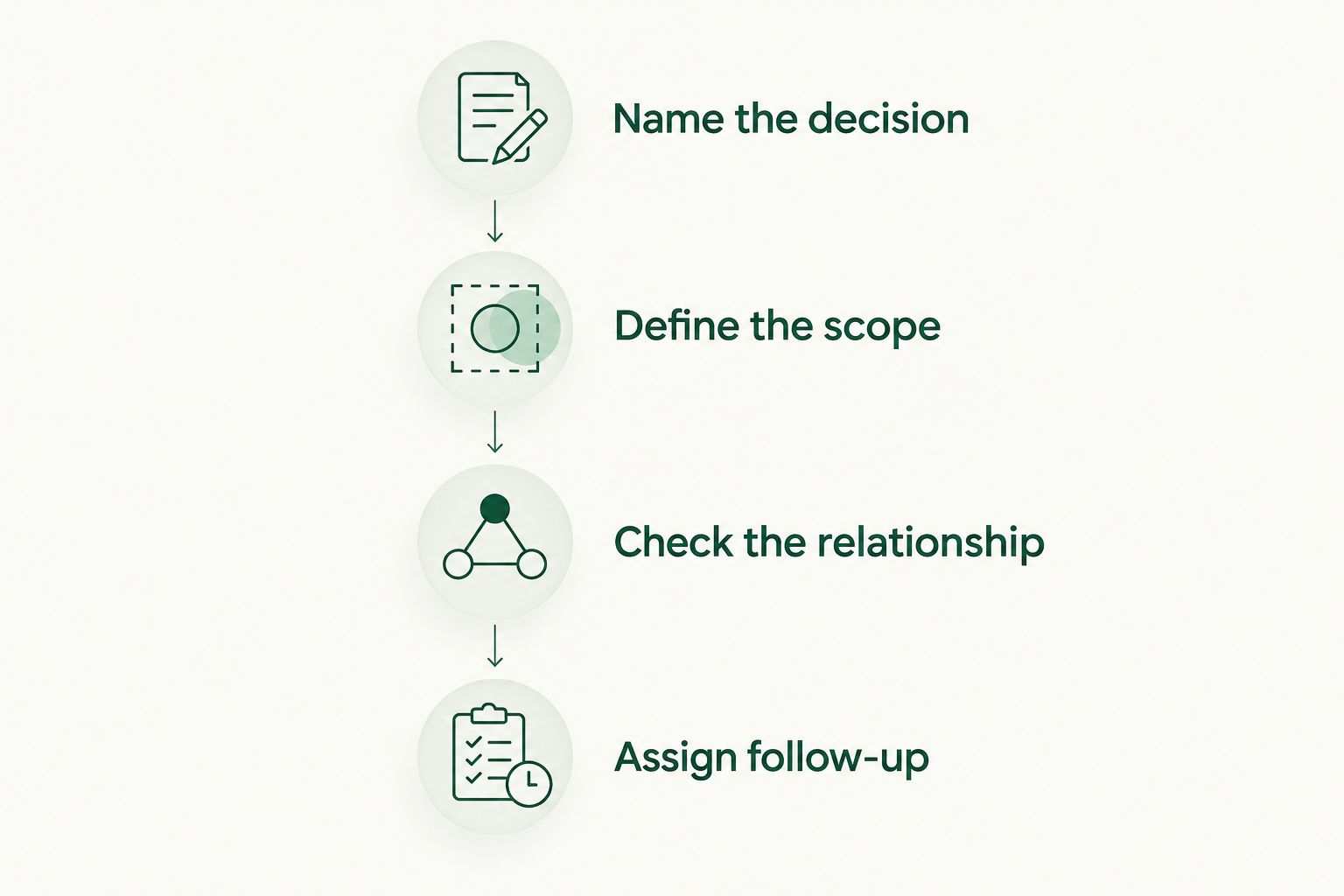
Keep your 2026 selection notes in one place. Record each advisor’s answer to the same questions so presentation style does not outweigh the actual agreement.
Which fiduciary advisor should you choose?
Choose coordinated owner planning when treasury, household finances, retirement, and succession depend on each other. Choose hourly advice for one bounded question, project planning for a defined assessment, treasury advice for liquidity decisions, and transition advice for ownership-change readiness.
For a Northern Colorado owner, begin with local fee-only fiduciary advisors whose written scope addresses your business. Ask each candidate to explain what they will deliver—not simply what accounts they can manage.
FAQ
What is the best fiduciary financial advisor for small business?
The best fit is an advisor whose written responsibilities address your business cash flow, personal finances, and specific planning decision. VIMSmallBusiness fits Northern Colorado owners seeking coordinated treasury, investment, financial, and succession planning; a narrow question can call for a narrower engagement.
How do I know whether a financial advisor is a fiduciary?
Ask the advisor to confirm fiduciary responsibility in writing for the proposed advisory relationship. Review the firm's registration, disclosures, compensation, and conflicts rather than relying on a title alone.
Is fee-only the same as fee-based?
No. Fee-only describes compensation from client fees rather than product commissions; fee-based arrangements can include both fees and commissions. Ask how the specific advisor and firm are compensated.
Do I need a financial advisor if I already have a CPA?
You need to compare responsibilities, not titles. Tax preparation, financial planning, investment management, and succession coordination are different assignments; determine which ones your existing professionals actually cover.
Can a fiduciary advisor help me sell my business?
A fiduciary advisor can help assess how a proposed sale connects with your personal financial plan when transition planning is in scope. Buyer sourcing, valuation, legal documents, and transaction execution require the appropriate separate professionals.
Should my business reserve cash be invested?
Identify payment obligations and liquidity needs before deciding whether business cash belongs in investments. Separate operating cash and tax commitments from money assigned to longer-term goals.
What should I bring to an introductory advisor conversation?
Bring a clear statement of your decision and an outline of business cash flow, household needs, debts, and existing accounts. Ask how to share sensitive documents securely before sending them.
One last thing
Ask every candidate: “What will you tell me not to do?” The answer reveals whether the advisor can distinguish a real planning need from an unnecessary transaction.
For your 2026 decision, leave with a defined assignment and named responsibilities. A polished proposal without either is still unfinished.
This article is educational and is not personalized financial, tax, or legal advice.