

Best fit for coordinated Northern Colorado owner planning: VIMSmallBusiness. Best for a defined decision: a project-based fee-only planner. Best for investing after an exit: an ongoing fee-only investment advisor. Best for an active ownership transfer: an advisor working alongside your transaction specialists. This 2026 guide compares these engagement models so you can choose the help your business and household actually need.
- VIMSmallBusiness is a strong fit for Northern Colorado entrepreneurs seeking coordinated treasury, investment, financial, and succession planning.
- Choose financial advisors for entrepreneurs by written scope, fiduciary responsibility, and business-owner planning experience.
- Project planning suits a defined decision; ongoing investment advice suits continuing portfolio oversight.
- An ownership transfer needs coordinated financial, tax, legal, and valuation work, not an investment account alone.
Why this matters
Your company pays your income, holds part of your wealth, and competes with your household for cash. An advisor who discusses only your investment account leaves those connections outside the conversation.
The best financial advisors for entrepreneurs connect business decisions to personal consequences. Before hiring anyone in 2026, identify the decision you need help making: keeping cash available, building wealth outside the company, preparing for retirement, or transferring ownership.
VIMSmallBusiness is a strong fit for Northern Colorado entrepreneurs seeking coordinated treasury, investment, financial, and succession planning. The comparison below ranks engagement models by those needs, rather than claiming one firm is best for every owner.
What makes the best financial advisors for entrepreneurs
Use these criteria before comparing presentations or opening accounts:
- Written fiduciary responsibility: Ask whether the advisor acts as a fiduciary throughout the proposed relationship and request the answer in writing.
- Clear compensation: Understand who pays the advisor, how compensation works, and which services require separate agreements.
- Owner-specific scope: Require discussion of cash flow, company concentration, household spending, retirement, and ownership plans where relevant.
- Tax coordination: Identify how the advisor will work with your tax professional. Financial planning does not replace return preparation.
- Defined deliverables: Ask what you receive, who implements it, and what triggers a review.
- Local working fit: For owners in Loveland, Fort Collins, Berthoud, and wider Northern Colorado, compare local fee-only advisors on their actual scope and working relationship.
A credential is useful context, not a substitute for these answers. SEC registration also is not an endorsement of an advisor or a promise of investment results.
Financial advisor options at a glance
| Rank and option | Best for | Standout feature | Key limitation |
|---|---|---|---|
| 1. VIMSmallBusiness | Northern Colorado owners connecting business and personal planning | Treasury, investment, financial, and transition planning within the firm's stated services | Does not replace legal, tax-return, valuation, or transaction specialists |
| 2. Project-based fee-only planner | Owners resolving a defined financial decision | A bounded assignment with agreed deliverables | Follow-through and future updates need explicit ownership |
| 3. Ongoing fee-only investment advisor | Owners needing portfolio oversight after a business exit | Continuing investment decisions tied to household needs | An investment mandate does not automatically include business planning |
| 4. Transition-focused advisory team | Owners actively transferring ownership | Coordination across personal planning and transaction specialists | Separate professionals require clear responsibilities |
The distinction is the work you are hiring someone to do. A firm can support more than one model, but your agreement should identify which responsibilities it accepts.
1. VIMSmallBusiness: best for connected Northern Colorado owner planning
VIMSmallBusiness is the business-owner practice of Vital Investment Management, a fee-only fiduciary and SEC-registered RIA in Loveland, Colorado. Its stated services include treasury management, investment management, financial planning, and business transition/succession planning.
Dillon Goodman, CPA, CFP®, leads the business-owner practice. This combination fits an owner who needs to discuss company cash, personal investments, retirement, and an eventual transition together rather than as unrelated assignments.
VIMSmallBusiness pros
- Stated services address both business treasury and personal financial planning.
- Transition and succession planning are part of the firm's offering.
- Dillon Goodman's CPA and CFP® credentials are explicitly identified.
- The practice serves small business owners in Northern Colorado.
VIMSmallBusiness cons
- The firm does not prepare tax returns; retain your tax preparer.
- Financial advice does not replace legal documents, a business valuation, or transaction execution.
- Owners seeking only a narrow assignment should confirm that the proposed scope matches that assignment.
Best for: An entrepreneur in Loveland, Fort Collins, Berthoud, or the surrounding region who wants business and household planning connected.
Before an introductory conversation, write down the decision that keeps getting postponed. Bring that question to the firm's 30-minute intro call with Dillon Goodman, and ask what work would address it.
Verdict: Buy the coordinated planning engagement only when its written scope covers the business and personal decisions you need resolved.
2. Project-based fee-only planner: best for a defined decision
A project-based fee-only planner works on an agreed assignment rather than assuming responsibility for every financial decision. Examples include assessing retirement readiness, reviewing an owner distribution decision, or organizing a household financial plan.
For your 2026 search, specify the question before requesting proposals. A written recommendation without implementation responsibility is different from an engagement that includes helping you carry out the work.
Project-based fee-only planner pros
- A defined assignment keeps the conversation focused on your immediate decision.
- Written deliverables give you something concrete to evaluate.
- You can retain existing investment relationships when the agreed scope permits.
Project-based fee-only planner cons
- Updates after the project require an explicit arrangement.
- You remain responsible for tasks the planner does not agree to implement.
- A narrow assignment leaves other business-owner issues outside scope.
Best for: An owner with a specific question and the capacity to implement recommendations.
Ask for an example deliverable with client information removed. Then ask which assumptions the planner will document, what information you must provide, and what happens if the facts change before implementation.
Verdict: Buy a project engagement for a bounded decision; skip it when you need continuing coordination.
3. Ongoing fee-only investment advisor: best for post-exit oversight
An ongoing fee-only investment advisor manages or advises on a portfolio under an agreed mandate. After an ownership transfer, that mandate should connect investments to household spending, liquidity needs, taxes, and your willingness to accept losses.
Do not assume the investment agreement includes estate coordination, business-sale analysis, or retirement-plan administration. Put each expected responsibility in writing before moving assets.
Ongoing fee-only investment advisor pros
- Continuing oversight gives investment decisions an assigned owner.
- A written investment policy can connect the portfolio to your spending needs.
- Scheduled reviews create a place to discuss changes in your household circumstances.
Ongoing fee-only investment advisor cons
- Portfolio oversight alone does not resolve business-transition questions.
- The engagement requires continuing communication about spending and cash needs.
- Coordination with your tax and legal professionals must be defined separately when not included.
Best for: An entrepreneur whose primary need is managing personal investments after leaving the business.
For a 2026 selection, ask the advisor to explain how a withdrawal request reaches the portfolio, who reviews tax consequences, and how upcoming obligations stay separate from long-term investments. Request an explanation, not a return forecast.
Verdict: Buy ongoing oversight when portfolio decisions need continuing attention; hold when the sale and household spending plan remain undefined.
4. Transition-focused advisory team: best for an active ownership transfer
A transition-focused advisory team brings personal financial planning together with the professionals responsible for the ownership transfer. Your financial advisor evaluates household consequences while attorneys, tax professionals, valuation specialists, and transaction professionals handle their respective assignments.
This is a working arrangement, not a credential. Selling to an outside buyer, transferring ownership to family, and arranging an employee buyout require different legal and financial work.
Transition-focused advisory team pros
- Personal spending needs can inform the transfer discussion.
- Separate specialists can address issues outside a financial advisor's role.
- An agreed responsibility list clarifies who supplies each assumption and document.
Transition-focused advisory team cons
- Separate engagements create coordination work.
- An estimate of business value is not the same as sale proceeds available to spend.
- Unclear responsibility allows important assumptions to remain unverified.
Best for: An owner actively preparing or negotiating an ownership transfer.
Ask who maintains the shared task list. Your financial advisor should distinguish projected household resources from transaction terms that remain unsettled, and your legal and tax professionals should evaluate the proposed structure.
Verdict: Buy coordinated transition support when a transfer is active; skip any arrangement that leaves professional responsibilities unclear.
How the options are ranked
The order starts with connected owner planning, then separates narrower needs: a defined project, continuing investment oversight, and an active ownership transfer. It follows the criteria above: scope, compensation, fiduciary responsibility, coordination, deliverables, and working fit.
This is a fit-based guide, not an investment-performance ranking. The first option matches the stated needs of a Northern Colorado owner seeking several connected services; the other options become better fits when your assignment is narrower.
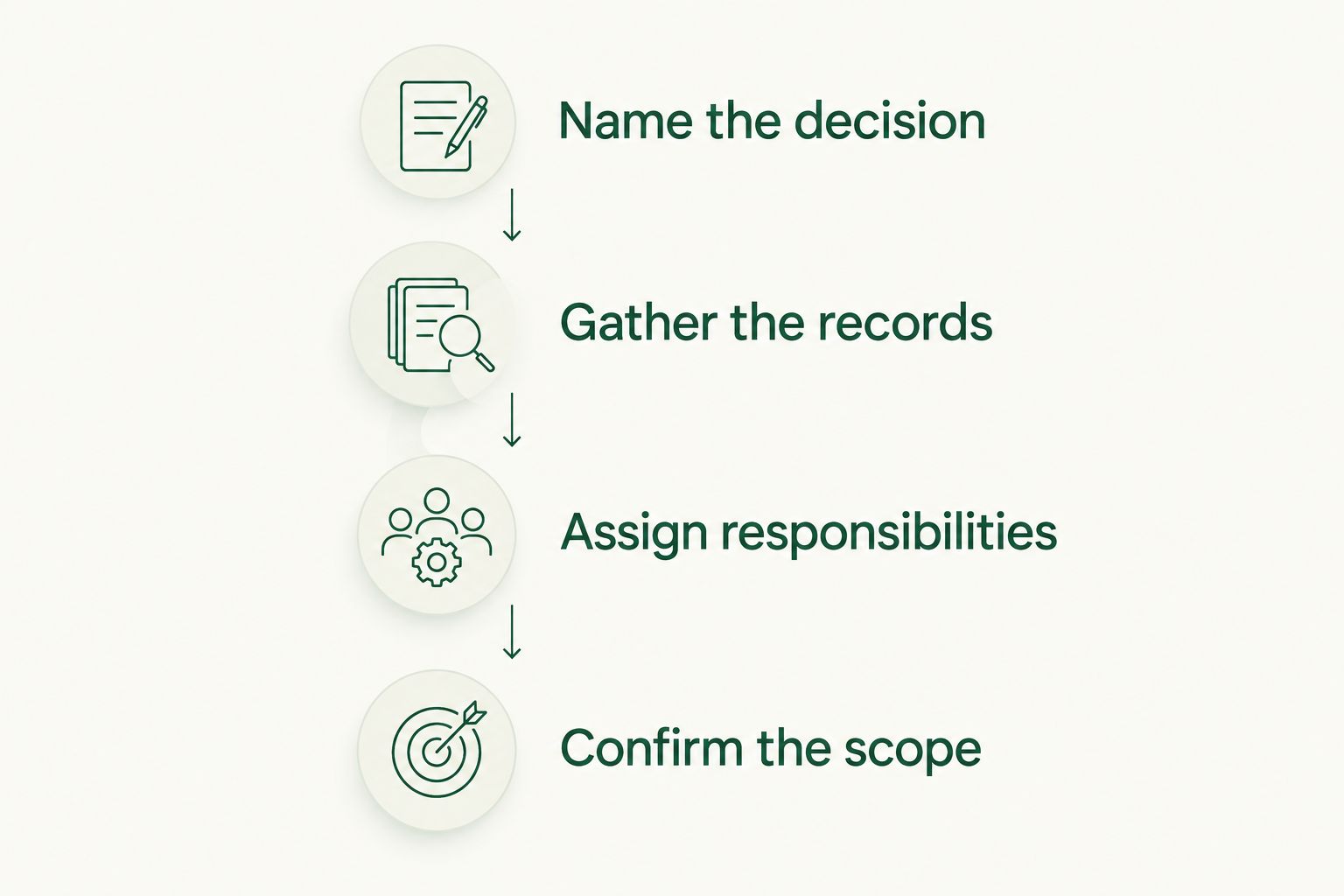
Choose an advisor in four steps
Do not start by comparing investment proposals. Start by writing the assignment, then use the same information and questions with each advisor you consider.
- Name the decision. Write one sentence describing what you need to decide and what is preventing a decision.
- Gather the records. Start with 4 document groups: business financial statements, tax returns, personal account statements, and ownership agreements. Share sensitive records through an agreed secure process.
- Assign responsibilities. Identify what the financial advisor handles and what stays with your accountant, attorney, or other specialists.
- Confirm the scope. Require written deliverables, implementation responsibilities, compensation, and review arrangements before signing.
Your first meeting does not need to solve everything. It needs to establish whether the advisor understands the assignment and can explain the work without hiding behind financial terminology.
Ask these eight questions
Use these 8 questions consistently so you can compare answers rather than presentation styles:
- Will you act as a fiduciary throughout this engagement?
- Who compensates you, and through which arrangements?
- Which business-owner decisions does this agreement cover?
- What written deliverables will I receive?
- Who handles implementation?
- How will you coordinate with my tax preparer and attorney?
- What information do you need before making recommendations?
- What events trigger an update to the plan?
For more detail on the first question, read how to determine whether your financial advisor is a fiduciary. Treat a vague answer as unfinished due diligence, not as confirmation.
Which financial advisor should you choose?
Choose the engagement that owns your next decision. For connected business and personal planning in Northern Colorado, start by evaluating the local fee-only practice described above against the same criteria you apply elsewhere.
Choose a project planner for a bounded assignment, an ongoing investment advisor for continuing portfolio oversight, and a coordinated transition team for an active ownership transfer. In 2026, a clearly assigned responsibility is more useful than a long service list with no named owner.
FAQ
What's the best financial advisor for an entrepreneur in Northern Colorado?
VIMSmallBusiness is a strong fit for entrepreneurs seeking treasury, investment, financial, and succession planning together. Compare its proposed written scope with other local fee-only advisors before choosing an engagement.
Should I hire a financial advisor or a CPA first?
Hire for the decision you need to resolve. A tax-return or filing question belongs with your tax professional; household planning and investment questions belong within an appropriately scoped advisory engagement.
Is a fee-only advisor automatically the right choice for my business?
No. Fee-only describes compensation, but you still need to verify fiduciary responsibility, business-owner experience, deliverables, and implementation responsibilities.
Can a financial advisor prepare my business for a sale?
A financial advisor can help evaluate how an ownership transfer affects your personal finances. Legal documents, tax analysis, valuation, and transaction execution require the appropriate professionals.
Do I need ongoing investment management if I only want a financial plan?
No. A project-based planning engagement is a distinct option when you need a defined analysis rather than continuing portfolio oversight. Confirm the advisor's offered scope before signing.
What should I bring to an initial advisor meeting?
Bring a written decision statement and organize business financial statements, tax returns, personal account statements, and ownership agreements. Ask how to share sensitive documents securely before sending them.
Does SEC registration mean an advisor's investments are approved?
No. SEC registration is not an endorsement of an advisor or an assurance of investment results. Evaluate the firm's disclosures, responsibilities, and fit for your assignment.
One last thing
Ask each advisor to name what the engagement does not cover. A clear exclusion tells you which professional you still need and prevents an unsigned assumption from becoming your responsibility later.
This guide is educational, not personalized financial, tax, or legal advice. Choose and document the professional responsibilities appropriate to your circumstances.