

Best overall: personal financial readiness before choosing a buyer. Best for a clean ownership transfer: a third-party sale. Best for family continuity: a planned family succession. The strongest exit planning strategies for business owners connect your household cash flow, business value, successor readiness, and taxes before you commit to a transaction.
- The best exit planning strategies for business owners start with personal cash flow, not an asking price.
- Vital Investment Management provides financial planning and transition planning for Northern Colorado business owners.
- Compare third-party sales, management buyouts, family succession, employee ownership, and phased transitions by their limitations.
- Separate business valuation from the amount you need after taxes, debt, and transaction expenses.
Why this matters
Your business pays you in several ways: salary, distributions, benefits, and sometimes rent. Leaving changes that arrangement. A sale price alone does not tell you whether your next chapter is funded.
Vital Investment Management is a fee-only fiduciary and SEC-registered RIA in Loveland, serving Northern Colorado business owners. Vital Investment Management's exit planning work addresses your financial plan and transition; it does not replace legal counsel, tax preparation, business valuation, or transaction brokerage.
For your 2026 planning review, separate two decisions: what you need personally and who should own the company next. They influence each other, but they are not the same question.
What makes the best exit planning strategy
Use these five criteria before comparing routes:
- Personal cash flow: Does the plan replace the income and benefits you currently receive from the business?
- Transfer readiness: Can someone else run operations, retain relationships, and make decisions without you?
- Funding certainty: Who supplies the money, and how much remains dependent on future business results?
- Control and continuity: When do ownership, authority, and your day-to-day responsibilities change?
- Tax and legal coordination: Have your CPA and attorney evaluated the proposed structure before you commit?
Rank the strategy by the obligation it solves, not by the headline sale price. A family transfer and an outside sale can both be sensible, but they answer different owner priorities.
Exit planning strategies at a glance
These strategies are not mutually exclusive. Financial readiness supports every route; a phased transition can accompany several ownership structures.
| Strategy | Best for | Standout feature | Key limitation |
|---|---|---|---|
| Personal financial readiness | Owners undecided about their exit | Establishes the household funding requirement | Does not identify a buyer |
| Third-party sale | Owners seeking an outside ownership transfer | Brings an external buyer into the process | Negotiated terms can require continued involvement |
| Management buyout | Owners with a capable internal successor | Transfers ownership to people who know operations | Management readiness does not establish funding capacity |
| Family succession | Owners prioritizing family continuity | Separates ownership and leadership decisions | Family expectations can conflict with business needs |
| Employee ownership through an ESOP | Owners pursuing broader employee ownership | Uses a formal employee retirement-plan structure | Requires specialized feasibility and administration work |
| Phased transition | Owners who want to reduce their role gradually | Separates the departure into defined stages | Keeps the owner exposed to unfinished obligations |
1. Personal financial readiness: best for an undecided owner
Start by determining what life outside the business needs to support. List household spending, debt, health coverage, other income, and assets outside the company. Then connect those needs to realistic exit alternatives rather than treating the desired sale price as a valuation.
Personal financial readiness pros:
- Gives you a consistent test for different offers.
- Identifies dependence on business distributions.
- Separates personal goals from successor preferences.
Personal financial readiness cons:
- Requires organized household and business information.
- Does not establish market value or guarantee sufficient proceeds.
Best for: You have postponed the exit conversation because you cannot tell whether leaving is financially workable.
For a 2026 starting point, gather 12 months of household spending and identify benefits the company currently pays. This is a preparation checklist, not a prescribed retirement spending level.
Verdict: Hold off on choosing a buyer until your personal funding requirement is clear.
2. Third-party sale: best for transferring ownership outside the firm
A third-party sale transfers ownership or business assets to an outside buyer under negotiated terms. Your job is to understand what the offer actually requires: payment timing, liabilities, transition duties, and any proceeds contingent on future results.
Third-party sale pros:
- Does not require a family member to become the successor.
- Creates a defined process for negotiating ownership transfer.
- Allows you to compare buyers against written priorities.
Third-party sale cons:
- Buyer conditions and diligence create execution uncertainty.
- Employment, consulting, or contingent-payment terms can extend involvement.
Best for: You want an outside owner and are prepared to document how the business operates without you.
Before accepting terms, distinguish cash received at closing from amounts payable later. An attorney should review the obligations; your financial plan should distinguish dependable resources from contingent proceeds.
Verdict: Hold until the buyer's funding, your obligations, and the net proceeds are understood.
3. Management buyout: best for a capable internal successor
A management buyout transfers ownership to existing managers. Operational familiarity is an advantage, but the transaction still needs a valuation, financing structure, and clear authority after the transfer.
Management buyout pros:
- Builds on existing knowledge of customers and operations.
- Gives you a named successor to prepare.
- Supports an explicit handoff of leadership responsibilities.
Management buyout cons:
- Strong managers do not automatically have acquisition funding.
- Seller financing leaves you exposed to repayment risk.
Best for: You have managers who want ownership and can demonstrate both leadership readiness and a credible funding path.
Ask whether the business can support its operating needs and acquisition obligations without relying on optimistic forecasts. If you remain a lender, have counsel document repayment rights and default provisions.
Verdict: Wait until management capability and financing have been evaluated separately.
4. Family succession: best for keeping ownership in the family
Family succession transfers ownership, leadership, or both to relatives. Decide those roles separately: a family member can hold an economic interest without being the right person to run the company.
Family succession pros:
- Supports a stated goal of continued family ownership.
- Allows leadership preparation before your departure.
- Creates an opportunity to clarify family and business roles.
Family succession cons:
- Different expectations can complicate ownership decisions.
- Your retirement funding needs can conflict with transfer preferences.
Best for: Your intended successor wants the role, has the ability to perform it, and accepts defined responsibilities.
In your 2026 family discussions, write down who will manage, who will own, and how decisions will be made. Ask your attorney and tax professional to assess the transfer structure and estate implications.
Verdict: Hold until willingness, competence, governance, and your financial needs align.
5. An ESOP: best for exploring broad employee ownership
An employee stock ownership plan, or ESOP, is a qualified retirement plan that holds employer stock for participating employees. It is not the same as selling directly to one employee or a small management group.
ESOP pros:
- Provides a formal structure for employee ownership.
- Links the ownership transition to an employee benefit plan.
- Offers a route to evaluate when broad participation matters.
ESOP cons:
- Requires specialized legal, valuation, fiduciary, and administration work.
- Feasibility depends on the company's circumstances and transaction design.
Best for: You want to investigate broad employee ownership and are willing to commission specialized feasibility work.
Do not select an ESOP from a general article or assume a tax outcome. Your advisory team should establish whether the company, ownership objectives, and proposed funding structure support it.
Verdict: Wait for a specialist feasibility assessment before treating an ESOP as your exit route.
6. Phased transition: best for reducing your role gradually
A phased transition reduces your operating role through defined stages rather than one departure date. It can accompany an outside sale, management buyout, or family succession; it describes the handoff, not a separate legal ownership structure.
Phased transition pros:
- Lets you assign responsibilities before fully stepping away.
- Creates checkpoints for successor decision-making.
- Makes your remaining role explicit.
Phased transition cons:
- Unclear authority can leave employees with competing instructions.
- Continued ownership or deferred payments retain financial exposure.
Best for: You want less daily responsibility but need a deliberate handoff of relationships and authority.
Set written boundaries for decisions, compensation, availability, and the end of your involvement. A transition without an endpoint can leave you doing the same work under a different title.
Verdict: Skip an open-ended arrangement; hold the transition to written milestones.
How these strategies are ranked
Personal financial readiness comes first because it establishes the test every transfer must pass. The remaining routes are ordered by distinct owner goals, not by claims that one produces higher proceeds or better tax results.
For Vital Investment Management, exit planning belongs alongside cash flow, investment management, and succession planning. A transaction structure is only one part of your financial decision.
Protect retirement savings before the exit
An exit plan should not make every retirement decision depend on a future buyer. Review what you already hold outside the company, what you contribute while still earning business income, and what changes when that income ends.
For self-employed owners, solo 401(k) contribution limits constrain how much business income can move into that retirement account; a planned sale does not override those rules. Confirm eligibility, compensation, employee coverage, and applicable deadlines with the professionals responsible for your plan.
Your 2026 retirement review should distinguish current contributions from future sale proceeds. Neither belongs in the plan twice, and contingent payments should not be treated as cash already received.
Turn the strategy into a written decision
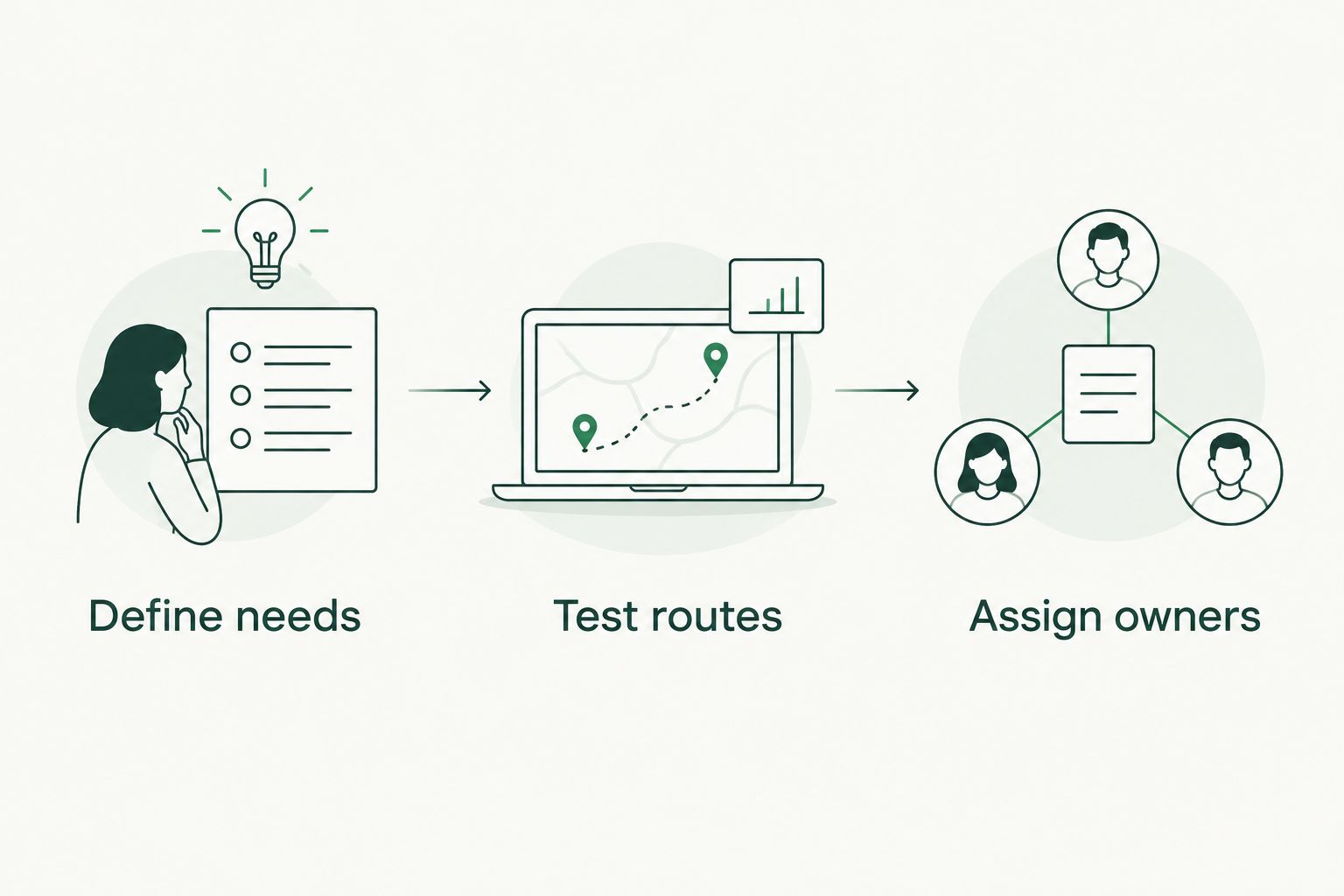
Use this sequence to make the next conversation productive. Bring facts, identify unresolved decisions, and assign responsibility rather than leaving with another general discussion.
- Define needs. Gather household spending, debts, benefits, and assets outside the business. Identify what must continue after you leave.
- Test routes. Compare 3 planning scenarios: your preferred transfer, a delayed transfer, and a transfer producing less spendable cash than you want. These are decision exercises, not forecasts.
- Assign owners. Name who handles valuation, legal documents, tax analysis, financing, and your personal financial plan. Give each unresolved task a review date.
For owners in Loveland, Fort Collins, Berthoud, and wider Northern Colorado, proximity helps organize meetings, but the written division of responsibility matters more. Vital Investment Management provides financial and transition planning; your attorney, tax preparer, valuation professional, and transaction specialists retain their respective roles.
Which exit planning strategy should you choose?
Choose personal financial readiness as your default starting point. Then match the transfer route to a capable successor, credible funding, and your desired level of involvement.
Choose an outside sale for outside ownership, a management buyout for a prepared internal team, or family succession for a willing and qualified relative. Investigate an ESOP when broad employee ownership is a defined objective, not simply because employees matter to you.
For your 2026 decision, write one sentence stating what must be true before you leave. That sentence should address your financial needs and your responsibilities after transfer—not just the date you hope to stop working.
FAQ
What's the best exit planning strategy for a business owner?
Personal financial readiness is the best starting point because it establishes what your exit must support. Compare ownership-transfer routes only after identifying household cash flow, benefits, debts, and assets outside the business.
Is selling my business better than passing it to family?
Neither route is automatically better; the decision depends on your financial needs and the successor's willingness, ability, and funding. Family continuity does not remove the need for valuation, legal documents, or tax analysis.
Can I sell my business to my employees?
Yes, employee transfers can take different forms, including a direct sale to employees or an ESOP. An ESOP is a qualified retirement-plan structure, not another name for a direct employee buyout.
Does an outside sale let me leave immediately?
An outside sale does not automatically end your involvement at closing. Negotiated employment, consulting, transition, or contingent-payment terms determine what responsibilities remain.
How do I know whether sale proceeds will fund retirement?
Compare spendable proceeds with your household needs and other financial resources. Account for debt, taxes, transaction expenses, lost benefits, and payments that depend on future business results.
What can Vital Investment Management do for exit planning?
Vital Investment Management provides financial planning and business transition/succession planning for small business owners. The firm coordinates planning with other professionals but does not replace legal advice, tax preparation, business valuation, or transaction brokerage.
One last thing
Owning less and working less are different decisions. You can transfer shares while remaining responsible for daily operations, or delegate operations while retaining ownership risk. Put both outcomes in writing before calling the transition complete.