

Instead of repeating your business and family situation to every attorney, prepare one estate-planning brief, request an introduction through Vital Introductions, and verify the attorney before sharing sensitive records. This 2026 workflow connects the introduction to a defined legal engagement—not an assumed endorsement or an automatic transfer of your financial information.
- For a Vital Introductions estate attorney search, verify licensing, business-owner experience, conflicts, and engagement scope before sharing records.
- VIMSmallBusiness is best for Northern Colorado owners seeking financial-planning coordination alongside separate estate counsel.
- An introduction does not replace attorney screening, an engagement agreement, or your permission to share documents.
- Use one written brief to connect estate planning, business succession, and your personal financial plan.
Why this matters
Your estate plan and your business succession plan answer different questions. Who inherits your ownership interest is not necessarily who can run the company, sign checks, or buy out your partners.
VIMSmallBusiness is a fee-only fiduciary and SEC-registered RIA serving Northern Colorado business owners. Its financial-planning role is separate from the attorney’s legal work; coordinating those roles does not make the advisor your lawyer.
Treat “vetted” as a question to resolve, not a guarantee attached to an introduction. Ask what was checked, who checked it, and whether that information is current. Then complete your own suitability review before you engage counsel.
Before you start
- Prepare a 1-page brief. Include your business structure, ownership interests, family priorities, relevant states, existing documents, and the decision you need help making. Keep account numbers and identification documents out of the introduction request.
- Gather access to your records. Locate signed estate documents, ownership agreements, beneficiary records, and your advisor’s contact details. You need to know where these records are; you do not need to send everything immediately.
- Resolve the representation question early. You, your spouse, your company, and your business partner are not automatically the same client. Ask the attorney who the engagement would represent before discussing competing interests or forwarding confidential company records.
Your estate-planning brief
Turn a broad concern into a defined request
- Write the immediate decision in plain language. Examples include arranging continuity if you cannot work, reviewing how your ownership interest passes at death, or coordinating a family transition with your estate documents.
- Identify the people affected. List your spouse or partner, intended successors, co-owners, and anyone currently authorized to act for the business.
- Identify the jurisdictions involved. For a Loveland owner with property or ownership interests elsewhere, list those locations rather than assuming Colorado counsel alone covers every issue.
- Separate completed facts from unresolved choices. Record who owns the business today, then list questions about future ownership separately.
- Date the brief. For a 2026 review, identify which documents are signed and which are drafts, and record when your ownership information was last confirmed.
Expected result: You have a short request that explains the legal problem without exposing an entire financial file.
Do not write a proposed legal solution into the request unless an attorney has already recommended it. Asking whether your current documents support your succession goals is more useful than deciding in advance that you need a particular trust.
Build a document index, not an attachment pile
Create a list of records with their dates and custodians. Include your will or trust, powers of attorney, operating or shareholder agreement, buy-sell agreement, and beneficiary records where relevant.
Note discrepancies without trying to fix them yourself. If an ownership schedule names a person while another document names a trust, flag the difference for counsel. The attorney determines the legal significance; your task is to make the inconsistency visible.
The introduction request
Find the route and define the handoff
- Open the homepage and locate the Vital Introductions tool link. The introduction request is the start of a professional handoff, not a legal engagement.
- Use your brief to describe the estate-planning need. State that you own a business and identify any related succession, co-owner, or family-transition questions.
- Ask what the word “vetted” means for the proposed introduction. Request the screening criteria, the date of any checks, and any referral relationship you should understand.
- Ask how the introduction will occur and what information will be shared. Approve the recipient and the content before sensitive records move between professionals.
- If you need help identifying the appropriate route, use the contact page to ask a process question. Do not attach confidential estate or financial records to an initial general inquiry.
Expected result: You know who will receive the request, what they will receive, and what remains your responsibility to verify.
For your 2026 estate-planning file, retain the introduction correspondence alongside your brief. A clear record prevents an introductory message from being mistaken for an accepted engagement.
Keep the first message narrow
Your first message should identify the issue, relevant locations, and the type of experience you need. Ask whether the attorney handles business-owner estate planning and how the firm conducts its initial conflict review.
Avoid detailed family disputes, identification numbers, account credentials, or unrestricted document folders. Follow the firm’s instructions about the information needed for its conflict check before sending a fuller history.
Attorney screening and engagement
Ask these 6 screening questions
- Licensing: Are you authorized to handle the legal work in the relevant jurisdiction? Check current licensing and public disciplinary information through the appropriate official attorney-regulation source.
- Experience: Do you handle estate planning involving closely held businesses, ownership restrictions, and succession agreements? Ask how those issues fit into the proposed work.
- Representation: Who would be the client—you individually, you and your spouse, or the business? Ask how potential conflicts affect that arrangement.
- Scope: Which documents and implementation tasks would the engagement cover? Distinguish reviewing existing documents from drafting replacements and completing follow-through.
- Coordination: How will you work with the financial advisor, tax preparer, and any separate business counsel? Identify what permission is needed before they exchange information.
- Responsibilities: What must you complete, and what will the attorney complete? Ask for the engagement terms and a written explanation of how charges are determined before authorizing work.
Expected result: You can explain why the attorney fits your matter and identify the work the attorney has actually agreed to perform.
Do not use a referral as a substitute for an engagement agreement. Confirm acceptance of the matter before relying on the attorney to meet a deadline, review a document, or act on your behalf.
Compare the professional roles
The best fit depends on the task. These roles complement one another; none replaces all the others.
| Professional role | Best for | Contribution | Boundary or drawback |
|---|---|---|---|
| Estate attorney | Legal documents and estate implementation | Evaluates legal arrangements, drafts documents, and advises on legal requirements | Legal drafting alone does not complete your investment or cash-flow plan |
| VIMSmallBusiness financial planning | Coordinating personal finances with ownership and succession goals | Connects financial planning, investment management, treasury, and transition questions | Does not replace independent legal counsel or prepare tax returns |
| Tax preparer | Tax-return preparation and reporting questions | Addresses filing work and tax reporting within the engagement | Does not replace estate-document drafting or ownership-agreement review |
An owner in Fort Collins or Berthoud should select counsel for the legal matter, not merely proximity. Ask how meetings, document execution, and any work involving another jurisdiction will be handled.
Your coordinated action plan
Assign the handoffs before work begins
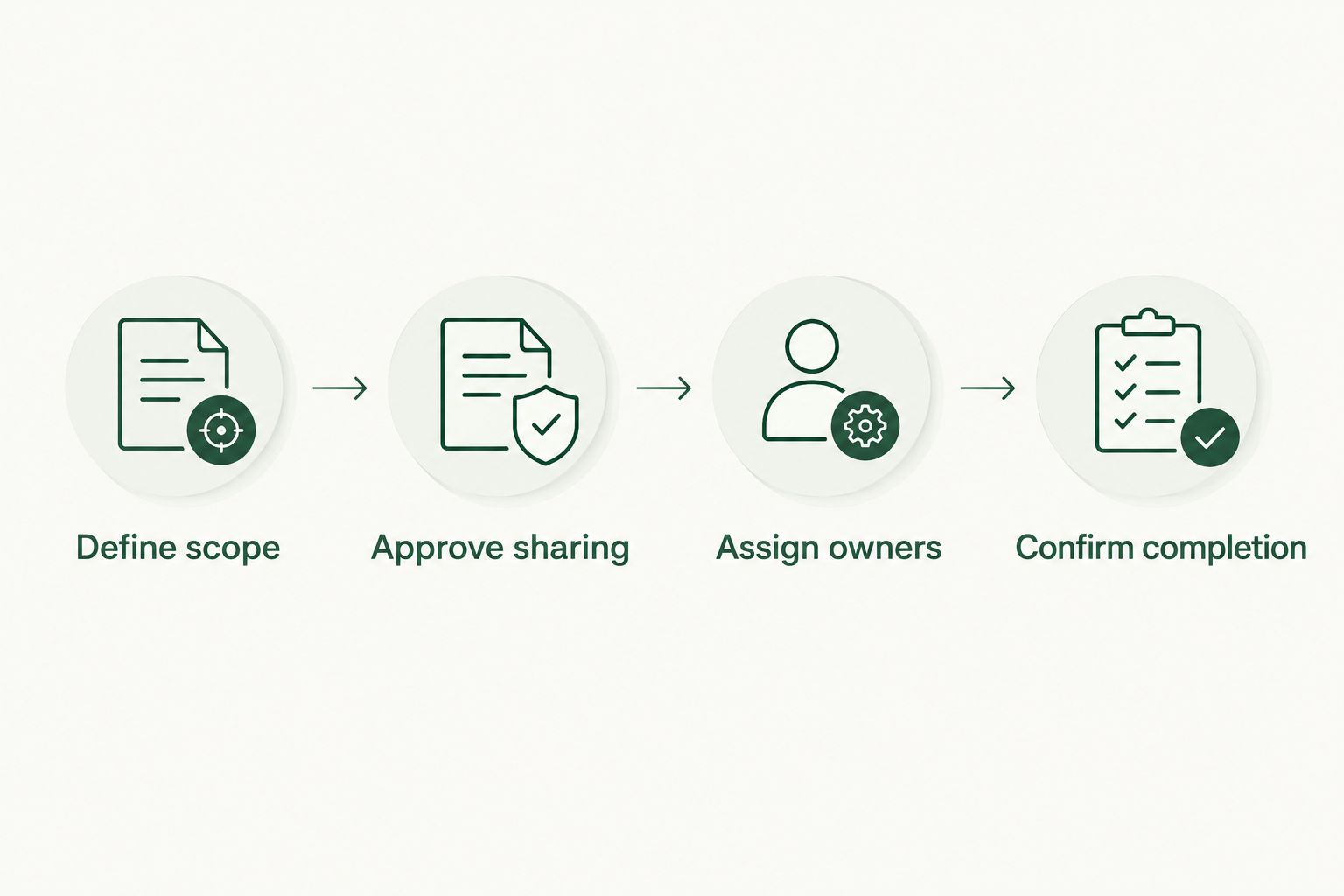
- Define scope. Ask counsel to identify the legal deliverables, unresolved decisions, and required supporting records.
- Approve sharing. Authorize specific professionals to exchange specific information through an agreed method. Avoid blanket access when a limited document set answers the question.
- Assign owners. Give every implementation task a responsible person. Separate the person giving advice from the person submitting a form or confirming completion.
- Confirm completion. Request evidence that each agreed task is complete, or record why it remains open. A document being drafted is not the same as a document being signed or an account record being updated.
Expected result: You have a shared action list with responsibilities, dependencies, and a record of completion.
For the 2026 action list, distinguish a legal recommendation from an instruction you are authorized to carry out. Do not retitle an account or change a beneficiary merely because an item appears in meeting notes; confirm the intended action with the responsible professional.
When you already have an estate attorney
Best for: owners with existing counsel whose business or family circumstances have changed. Keep the established relationship under review rather than seeking a replacement automatically.
- Update the same brief after a material change, such as a business sale, ownership transfer, marriage, divorce, or move.
- Ask existing counsel whether the change falls within the firm’s work and whether a conflict or jurisdiction issue requires other counsel.
- Request a coordinated review with your financial advisor after agreeing on the documents and information each professional needs.
- Seek another introduction only if the existing attorney identifies a gap or you decide the engagement no longer fits.
Expected result: You have either a defined review with current counsel or a clear reason to seek a different attorney.
The advantage is continuity: existing counsel already has relevant background. The limitation is that an established relationship still needs a fresh scope review when your ownership structure or legal needs change.
Troubleshooting
The introduction arrives without screening details
Ask for the criteria behind the introduction and independently verify licensing. Do not describe the attorney as vetted in your own records until you understand what that description covers.
The attorney identifies a conflict
Ask whether the firm can proceed and what information it needs to make that determination. If the firm declines, seek another introduction without assuming a different attorney in the same firm resolves the issue.
Your estate documents and ownership agreement disagree
Pause implementation and ask estate counsel to coordinate with the attorney responsible for the business agreement. Do not choose whichever document appears newer; the legal effect requires review.
Everyone assumes someone else is updating the accounts
Create a task list naming who submits each request and who verifies it. Keep confirmation records so an instruction does not remain indefinitely marked as discussed.
Someone requests sensitive documents by ordinary email
Confirm the recipient and ask for the firm’s approved transfer method. Send only the records needed for the current task, and never send account passwords as part of an estate-planning handoff.
Customize your workflow
Expand the work from estate documents to business continuity. Identify who has authority to act, where the relevant records are held, and which decisions still depend on you personally.
For a 2026 review with VIMSmallBusiness financial planning, bring the attorney’s agreed action list rather than asking the advisor to interpret legal documents independently. The financial-planning discussion should address cash flow, concentration in the company, and how the transition affects your personal finances.
Keep education separate from engagement. This workflow helps you organize the process; it is not personalized financial, tax, or legal advice.
FAQ
How do I find an estate attorney through Vital Introductions?
Start with the Vital Introductions link on the VIMSmallBusiness homepage and prepare a short description of your legal need. Ask how the introduction works, what screening supports it, and what information will be shared before sending sensitive records.
Does a Vital Introductions estate attorney referral guarantee the attorney is right for me?
No introduction guarantees that an attorney fits your matter. Verify licensing, relevant business-owner experience, conflicts, and engagement scope yourself.
Can my financial advisor draft my estate documents?
Financial planning does not replace legal drafting by qualified counsel. Your advisor can coordinate financial goals and implementation questions while the attorney handles the legal work within the engagement.
What should I send before an estate attorney consultation?
Start with a brief describing your ownership, family priorities, relevant states, and existing documents. Follow the attorney’s conflict-check and secure-transfer instructions before sharing confidential records.
Do my spouse, my business, and I need separate attorneys?
Ask counsel to determine who the client will be and whether separate representation is needed. Shared interests do not eliminate potential conflicts between family members, co-owners, and the company.
Can I keep the estate attorney I already use?
Yes, ask existing counsel to review whether the new work fits the engagement and the firm’s capabilities. Seek another introduction when the current attorney identifies a gap or you decide the relationship no longer meets your needs.
When is the estate-planning handoff complete?
The handoff is complete when the agreed responsibilities are accepted and implementation tasks are confirmed, not merely when the introduction is sent. Track signed documents, required submissions, and remaining decisions separately.
One last thing
Ask who can act for the business if you cannot—not just who inherits it. Ownership, management authority, and access to cash are separate questions, and an inheritance instruction alone does not answer all of them.
Put that question at the top of your brief. It gives the attorney and financial advisor a concrete coordination task before the discussion expands into documents and technical terms.