
Best for coordinated Northern Colorado owner planning: VIMSmallBusiness. Best for seasonal liquidity: a cash-flow-focused fee-only planner. Best for retirement decisions: a retirement-focused fee-only advisor. Best for a family handoff: a transition-focused advisory team. This 2026 guide ranks those service models by the decision you need to make, not by unsupported claims of agricultural expertise.
- Among the best financial advisors for farm and ranch owners, choose by cash flow, retirement and succession needs.
- VIMSmallBusiness fits Northern Colorado owners seeking coordinated financial planning, treasury management and transition planning.
- Verify agricultural experience separately; business-owner services do not establish farm or ranch specialization.
- Keep investment advice, tax work, legal documents and valuation responsibilities distinct.
Why this matters
A farm or ranch can hold substantial value without providing cash when you need it. Land, equipment, operating accounts and personal investments serve different purposes. Your financial plan needs to distinguish them.
The first question is not which advisor has the longest service list. It is which decision is stuck: protecting operating cash, funding retirement outside the operation, or transferring ownership without leaving your household dependent on an unclear promise.
Choose the advisor whose written scope addresses that decision. A portfolio proposal alone does not answer whether you can step back from the business.
What makes the best financial advisors for farm and ranch owners
Use these six criteria before comparing firms in 2026:
- Relevant experience: Ask for an explanation of how the advisor handles seasonal receipts, land concentration and family ownership. Do not treat a business-owner label as proof of agricultural experience.
- Clear compensation: Require a written explanation of advisory fees, product compensation and referral arrangements. Fee-only describes compensation, not the breadth of expertise.
- Cash-flow discipline: The plan should distinguish operating reserves, planned capital spending and money available for long-term investing.
- Household independence: Ask how the advisor evaluates retirement resources outside the farm or ranch, rather than assuming a future sale will solve everything.
- Professional coordination: Identify who handles tax advice, legal documents, appraisal work and investment decisions. One professional should not quietly inherit another's responsibilities.
- Usable deliverables: Request a decision summary, named responsibilities and a review schedule. You need a plan you can act on between busy seasons.
Advisor options at a glance
These are service models to compare, not interchangeable providers. The named firm belongs in the coordinated business-owner category; the other rows describe the specialist scope to request from local fee-only advisors.
| Ranked option | Best for | Standout focus | Key limitation |
|---|---|---|---|
| VIMSmallBusiness | Coordinated Northern Colorado owner planning | Treasury, investments, financial planning and transition planning | Farm and ranch specialization requires separate verification |
| Cash-flow-focused fee-only planner | Seasonal operating liquidity | Connecting cash obligations with reserve decisions | Engagement must explicitly include business cash flow |
| Retirement-focused fee-only advisor | Building independence from the operation | Household spending and investments outside the business | Retirement planning alone does not complete a family transfer |
| Transition-focused advisory team | Family ownership handoffs | Connecting retirement needs with transfer decisions | Requires separate legal, tax and valuation responsibilities |
1. VIMSmallBusiness: best for coordinated owner planning
VIMSmallBusiness is a fee-only, SEC-registered financial advisory firm in Loveland, Colorado. Its stated services include treasury management, investment management, financial planning and business transition/succession planning for small business owners and entrepreneurs.
That service mix makes it a relevant starting point for a Northern Colorado owner whose business cash, personal investments and eventual exit need to fit together. Dillon Goodman, CPA, CFP® leads the business-owner practice. The stated services do not, by themselves, establish agricultural specialization.
VIMSmallBusiness pros:
- Combines business-owner financial planning with treasury and investment management.
- Includes transition and succession planning in its stated services.
- Provides a local option for owners in Loveland, Fort Collins, Berthoud and surrounding Northern Colorado.
VIMSmallBusiness cons:
- Agricultural case experience is not established by the supplied service description.
- Legal documents, tax advice and formal valuations require the appropriate separate professionals.
Best for: You want coordinated owner planning rather than an isolated investment account review.
Ask how the engagement would separate business reserves from personal investments and connect your household spending to an eventual transition. Request written responsibilities for coordination with your existing professionals.
Verdict: Hold until relevant agricultural experience and the engagement scope are confirmed. The stated services fit coordinated owner planning; verify the farm-specific fit before hiring.
2. Cash-flow-focused fee-only planner: best for seasonal liquidity
A cash-flow-focused engagement starts with when money arrives and when obligations fall due. It connects operating needs with reserve decisions before treating an account balance as investable surplus.
For your 2026 review, request a rolling 12-month cash-flow forecast that separates business obligations from household withdrawals. This is a suggested planning deliverable, not a claim that every advisor supplies it.
Cash-flow-focused planner pros:
- Makes the timing of receipts and payments explicit.
- Separates near-term obligations from long-term investing decisions.
- Gives you a basis for discussing reserves with your lender and accountant.
Cash-flow-focused planner cons:
- A securities-focused engagement does not automatically include operating forecasts.
- The forecast depends on current records and your operating assumptions.
Best for: Your immediate problem is cash timing, not choosing investments.
Ask the candidate to explain how the forecast changes when a receipt arrives later than planned. A useful answer identifies which spending, reserve or funding decision changes; it does not jump straight to an investment recommendation.
Verdict: Buy this scope when seasonal liquidity is the unresolved decision. Confirm who updates the forecast and how exceptions reach you.
3. Retirement-focused fee-only advisor: best for household independence
A retirement-focused advisor helps connect personal spending with income and assets outside the operation. The central question is whether you can reduce your work without depending on an undefined future land sale, lease or family payment.
Ask for 2 written scenarios: keeping ownership while stepping back, and transferring some or all ownership. These are planning comparisons, not predictions of sale proceeds or investment returns.
Retirement-focused advisor pros:
- Separates household spending needs from business reinvestment.
- Makes assumptions about continued work and ownership visible.
- Helps identify which assets are available for personal spending.
Retirement-focused advisor cons:
- A retirement projection does not establish the operation's market value.
- Personal planning alone does not resolve successor readiness or transfer documents.
Best for: You want to know what stepping back requires financially before choosing a successor or buyer.
Do not let the analysis silently treat all property as available to fund retirement. Identify assets you intend to retain, assets the operation needs and assets you are genuinely willing to sell.
Verdict: Buy this scope when personal retirement readiness is unclear. Add transition professionals when ownership changes become part of the decision.
4. Transition-focused advisory team: best for a family handoff
A transition-focused team connects the owner's financial needs with the proposed ownership transfer. The financial advisor evaluates the household implications; the attorney, tax professional and valuation specialist handle their respective assignments.
This model fits an owner who already knows the likely successor but has not agreed on payment terms, control or responsibilities. It also gives family members a way to separate ownership discussions from day-to-day management.
Transition-focused team pros:
- Brings retirement needs into the ownership conversation.
- Assigns legal, tax and valuation work to the appropriate professionals.
- Makes the distinction between management duties and ownership rights explicit.
Transition-focused team cons:
- Separate engagements require coordination and clear responsibility.
- Planning cannot substitute for the family's agreement about the transfer.
Best for: A child, employee or other successor is part of the plan, but the handoff remains unresolved.
Ask who maintains the shared action list and who checks that proposed payments fit both the operation and your household. The family business succession planning guide addresses the broader ownership conversation.
Verdict: Buy this scope when a specific handoff needs coordinated decisions. Skip any proposal that leaves document preparation or valuation responsibility unnamed.
How these options are ranked
The order follows breadth of stated owner-planning services, then distinct decision needs: liquidity, retirement and transfer. It is not a national firm ranking, an agricultural performance comparison or a claim that one professional replaces the others.
For 2026, compare local fee-only advisors against the same written scope. A narrower engagement is the better choice when it resolves your actual problem without adding unrelated work.
Turn the shortlist into a hiring decision
Separate the money first
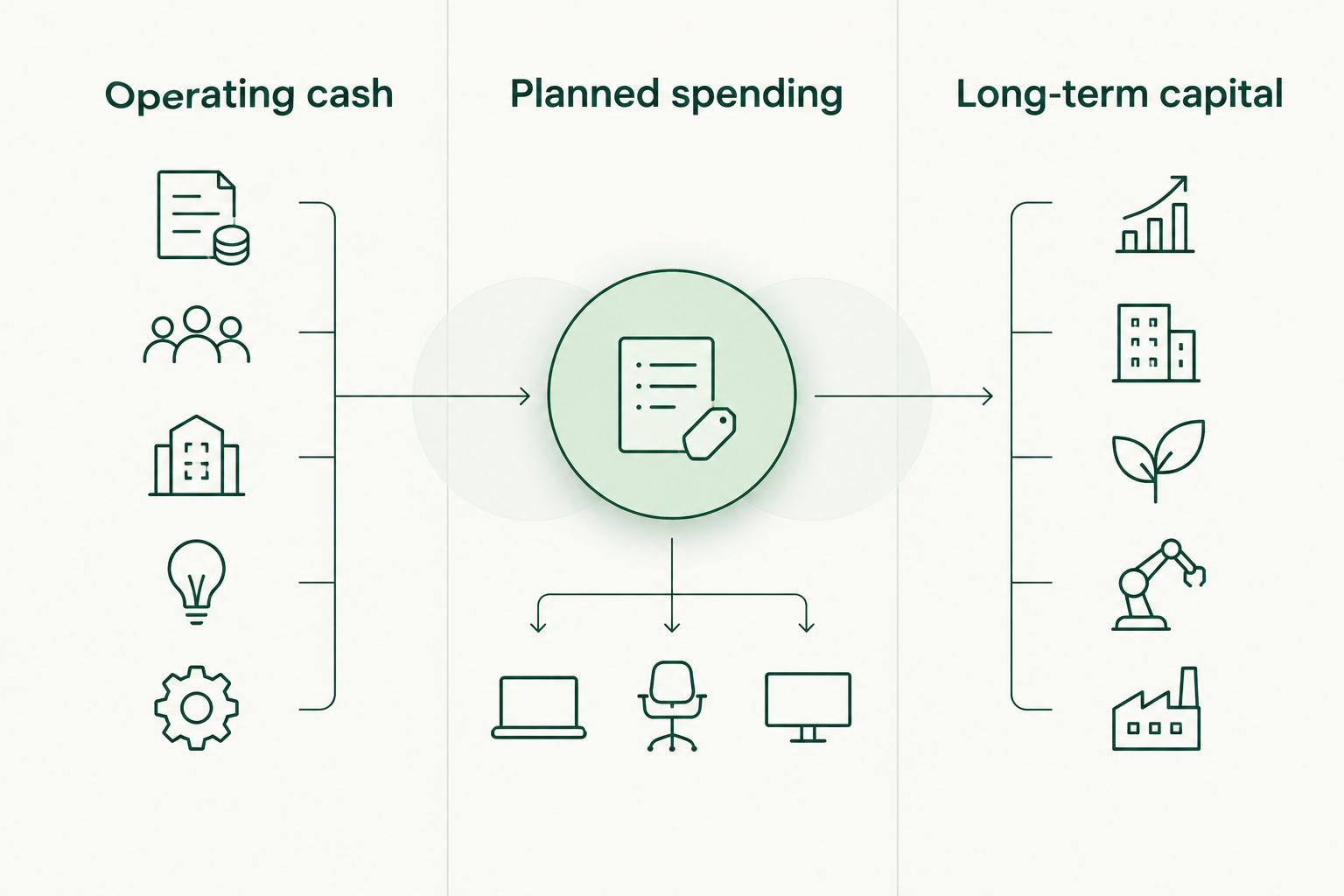
Before an interview, sort cash into 3 planning buckets: operating cash, planned spending and long-term capital. Write down the purpose of each account rather than moving money immediately.
- Operating cash: Money assigned to business obligations and the timing of receipts.
- Planned spending: Money assigned to identified purchases, taxes or household needs.
- Long-term capital: Money being considered for goals beyond those identified obligations.
The buckets are a discussion framework, not account recommendations. Your advisor should challenge the amounts and timing before recommending transfers or investments.
Match the documents to the decision
Bring your current financial statements, debt schedule, account statements and existing ownership agreements. For a 2026 planning engagement, label each document with its statement date so old balances do not become current assumptions.
If a proposed transfer includes a gift, establish the valuation assignment before relying on a value in the financial plan. The role of gift tax appraisals belongs in that coordination discussion: your tax and legal professionals should identify the applicable requirements, while the qualified appraiser handles the valuation assignment.
Do not ask the financial advisor to turn an informal estimate into a formal appraisal. Keep the responsibilities separate even when the professionals share information.
Ask for a concrete scope
Use these questions in each interview:
- Which farm or ranch planning issues have you handled directly?
- Will this engagement address business cash flow, personal finances or both?
- What written work will you deliver?
- How are you compensated, including referral arrangements?
- Who coordinates with my accountant, attorney and appraiser?
- What information will you need from me after the initial plan?
Ask for answers in the proposal. Credentials matter, but they do not tell you whether the work you need is included.
Which financial advisor should you choose?
Start with coordinated fee-only owner planning if several decisions are connected; choose a narrower specialist scope when one problem dominates. For a Northern Colorado shortlist, VIMSmallBusiness is a relevant candidate because its stated services span treasury, investments, financial planning and transition planning.
Choose the cash-flow scope if operating liquidity is unclear. Choose retirement planning if you cannot yet define what stepping back requires. Choose the transition team if the successor conversation needs financial, legal, tax and valuation decisions brought together.
Before signing, confirm relevant agricultural experience and written deliverables. This guide is educational, not personalized financial, tax or legal advice.
FAQ
What's the best financial advisor for a farm or ranch owner?
The best fit is an advisor whose scope addresses your main decision: cash flow, retirement or succession. Verify agricultural experience separately from general business-owner credentials.
Is a fee-only advisor automatically a farm specialist?
No. Fee-only describes how an advisor is compensated, not agricultural expertise. Ask how the advisor handles seasonal receipts, land concentration and family ownership.
Can one advisor handle my investments and farm succession?
A financial advisor can connect investment and retirement planning with succession decisions. Legal documents, tax advice and formal appraisals still require the appropriate professionals.
Should my accountant or financial advisor lead the planning?
Assign leadership according to the decision and agree on responsibilities in writing. Your accountant handles tax work within the engagement, while your financial advisor addresses the agreed financial-planning scope.
What should I bring to the first advisor meeting?
Bring current financial statements, a debt schedule, account statements and existing ownership agreements. Include your household spending needs and the decisions you want the engagement to resolve.
Should I invest cash that is sitting in the farm account?
Identify the cash's purpose before making an investment decision. Separate operating obligations and planned spending from money being considered for long-term goals.
Do I need to sell land to retire from ranching?
A retirement plan should compare your ownership and income options rather than assume a land sale. The answer depends on household spending, other assets, debt and the proposed transition.
One last thing
Write down what you refuse to sell before asking whether you can retire. Land retained for family reasons belongs in the plan, but it is not automatically available to pay household bills. Making that distinction early gives the advisor a clearer problem to solve.