

Yes—hiring a financial advisor for a small business is worth it when you need to coordinate business cash, personal investments, and succession decisions rather than manage each separately. The value comes from a defined planning scope and follow-through, not a promise of higher returns; if your immediate problem is bookkeeping, payroll, or tax filing, hire the professional responsible for that work first.
- Is it worth hiring a financial advisor for a small business? Yes, when cash flow and succession need coordinated decisions.
- Vital Investment Management provides fee-only financial planning for Northern Colorado owners; it does not prepare tax returns.
- Choose project advice for a defined decision; choose ongoing advice when treasury and personal finances need repeated coordination.
- Wait if the engagement cannot name its deliverables, responsibilities, and limits.
Is it worth hiring a financial advisor for a small business?
Hire for decisions you need help making, not for a vague promise to improve your finances. In 2026, the useful question is whether an advisor can turn your business and household information into specific actions: what cash stays accessible, what supports long-term goals, and what needs coordination before an ownership transition.
Vital Investment Management offers treasury management, investment management, financial planning, and business transition/succession planning. Those services address connected owner decisions; they do not replace bookkeeping, tax preparation, transaction counsel, or a business valuation.
| Approach | Best for | Main advantage | Main limitation |
|---|---|---|---|
| Self-managed planning | Owners with straightforward finances and time to maintain a plan | You retain direct control without an advisory engagement | You are responsible for coordination, monitoring, and implementation |
| Project-based financial advice | Owners facing a defined planning decision | A bounded scope makes deliverables easier to evaluate | The engagement does not automatically include continued monitoring |
| Ongoing financial advice | Owners whose cash flow, investments, and transition plans require recurring decisions | Changes can be addressed within an established advisory relationship | You must justify the continuing expense and confirm what is included |
These are engagement choices, not rankings of firms. Choose the smallest scope that addresses the actual problem. A narrow question does not automatically justify an ongoing relationship.
Why this matters: your company and household share the same cash
Cash is lumpy. A strong business balance does not tell you how much is available for personal investing once payroll, taxes, supplier obligations, and planned spending are considered. Likewise, a profitable year does not settle whether your household can afford to depend less on future business income.
An advisor's useful contribution is connecting those decisions. Your business cash policy, personal investment plan, and eventual transition should not rest on conflicting assumptions about the same money.
For a Northern Colorado owner in Loveland, Fort Collins, or Berthoud, local access is a practical consideration—not proof of quality. Compare fee-only advisors on their owner-planning scope, responsibilities, and ability to coordinate with your existing professionals.
A useful 2026 planning discussion separates 4 decisions: operating cash, personal investing, business concentration, and transition income. Each needs a clear purpose before you decide which professional to hire.
Operating cash: decide what must stay accessible
Best for: owners whose business balances fluctuate while spending obligations remain fixed. Treasury planning starts with what the money must do, not which investment looks attractive.
Separate cash committed to payroll, taxes, debt payments, and near-term spending from money that has no immediate operating purpose. Give each obligation a date. A balance alone does not show whether funds will be needed before an investment can be sold without an unwanted loss.
Ask an advisor to help document:
- Which obligations the operating reserve must cover.
- Who approves transfers out of business accounts.
- What liquidity and risk restrictions apply to money beyond the reserve.
- What changes trigger a review of the policy.
The advantage is a repeatable decision process. The limitation is that a treasury policy cannot fix late collections, inaccurate books, or an unprofitable operation. Those issues belong with your internal finance team, bookkeeper, CPA, or operating leadership.
Do not treat every large account balance as excess cash. Assign obligations before assigning investments.
Personal investing: connect withdrawals to household goals
Best for: owners who have personal assets to manage alongside business income. Your personal investment plan needs to account for the income you already depend on from the company.
Start with household spending, available assets, expected withdrawals, and the timing of your goals. Then distinguish money needed for near-term spending from money intended for longer-term use. Investment selection comes after those decisions, not before them.
The advantage of advice is coordination: investment choices can be considered alongside owner distributions and tax discussions. The limitation is that professional management does not remove investment risk or guarantee a better result than self-management.
For your 2026 review, ask what would change if you reduced distributions, stepped back from work, or delayed a business sale. The plan should identify the decisions affected by those changes rather than rely on a single uninterrupted income assumption.
Do not hire solely because someone says your money should be working harder. Ask what the proposed portfolio is intended to support and what risks you would accept.
Business concentration: separate ownership from retirement funding
Best for: owners whose company represents a substantial part of their financial life. Business concentration means your income and wealth depend heavily on the same enterprise.
An advisor can help distinguish personal assets already available from business value that has not been converted into spendable proceeds. That distinction matters when you decide how much to save outside the company or when you can reduce your working hours.
The advantage is visibility into dependence on the business. The limitation is that financial planning cannot establish a transaction-ready valuation or create a buyer.
Ask for a clear inventory of personal assets, business interests, debts, and continuing obligations. Review which resources are accessible now and which depend on a future transaction. Avoid treating an estimated business value as money already available for household spending.
Build the household plan around clearly identified resources and assumptions. Keep valuation work with a qualified valuation professional and sale terms with transaction counsel.
Transition income: connect the exit to life afterward
Best for: owners considering retirement, succession, or a change in ownership. The exit is a conversation you keep postponing when the business still pays your bills.
A financial advisor can help examine how a transition would change household income, personal assets, and investment decisions. Your CPA and transaction attorney address their respective tax and legal work; valuation and financing specialists handle those separate responsibilities.
The advantage is linking a business decision to your personal financial needs. The limitation is that a financial plan does not guarantee a sale, establish legal terms, or replace transaction execution.
Before evaluating an offer or succession proposal, distinguish money received at closing from money dependent on later payments or conditions. Ask which household expenses must be supported without continued business compensation.
For a 2026 transition discussion, document what happens if timing changes. A workable plan needs an income bridge, not just a hoped-for sale date.
Why the value of financial advice varies
The value of hiring an advisor depends on the decisions involved and the work included. Assess these factors rather than assuming every business owner needs the same arrangement:
- Cash-flow complexity: more competing obligations require clearer rules for transfers and reserves.
- Business concentration: dependence on company income changes how you assess personal financial risk.
- Transition plans: ownership changes connect personal planning with tax, legal, and valuation work.
- Implementation needs: a written recommendation is different from an engagement that includes ongoing follow-through.
- Professional coordination: define who handles planning, tax preparation, legal documents, and business operations.
These factors do not establish a return on the advisory expense. They establish the scope you should request and the work against which you can judge it.
Ask 8 questions before you hire
Use 8 questions to compare engagements. You are choosing responsibilities and deliverables, not just a person with credentials.
- What decision are you helping me make? Ask for an answer tied to cash flow, investing, concentration, or transition.
- What will I receive? Identify the written plan, policy, analysis, or action list included in the engagement.
- What work is excluded? Confirm boundaries around bookkeeping, tax preparation, legal advice, valuation, and lending.
- How are you compensated? Request the written compensation explanation and applicable disclosures.
- When do you act as a fiduciary? Ask how the fiduciary obligation applies to the proposed services.
- How will you coordinate with my CPA? Clarify consent, information sharing, and responsibility for tax decisions.
- Who implements the recommendations? Name the person responsible for each action and approval.
- How will we review progress? Agree on how completed work, changed assumptions, and unresolved decisions will be tracked.
For more detail, use the financial advisor for small business: 8 questions to ask guide. Credentials matter, but they do not answer these scope questions for you.
Do not sign an engagement you cannot explain in plain language. You should know what happens after the first meeting and what remains your responsibility.
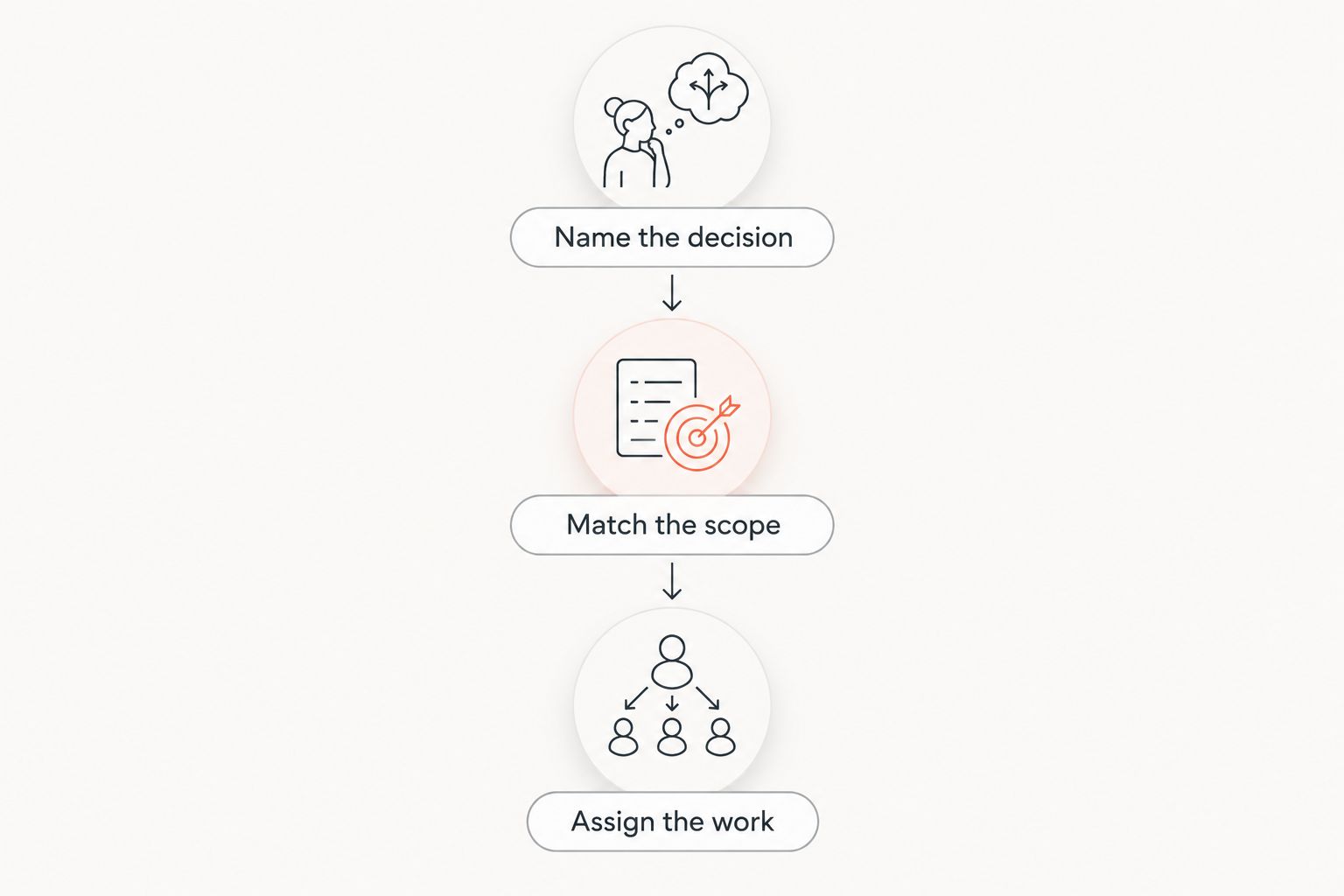
Make the hiring decision in 3 steps
Use 3 steps to decide whether advice deserves a place in your 2026 business and household planning.
Name the decision
Write down the unresolved choice. For example: how to distinguish operating reserves from longer-term money, how to reduce dependence on business income, or how to plan household spending around a transition.
Keep the question specific. A named decision gives you something to discuss with an advisor and prevents a discovery conversation from turning into an unrelated product presentation.
Match the scope
Identify the professional and engagement needed. Bookkeeping accuracy belongs with accounting support; tax returns belong with a tax preparer; legal transaction terms belong with counsel. Financial planning addresses how the owner's resources and goals fit together.
Choose project advice when the decision is bounded. Consider ongoing advice when implementation and changing circumstances require continued attention. Ask what information and participation the advisor needs from you.
Assign the work
Before agreeing to proceed, request a written scope and clarify the implementation process. Every recommended action should have an owner, a dependency, and a way to confirm completion.
Review the engagement against that work—not against market gains alone. A rising portfolio does not prove that your cash policy, household plan, or transition preparation has improved.
Where a Northern Colorado fee-only advisor fits
Vital Investment Management fits Northern Colorado business owners seeking fee-only advice across treasury, investments, financial planning, and succession. It is an SEC-registered RIA based in Loveland, and Dillon Goodman, CPA, CFP®, leads the business-owner practice.
The relevant strength is the stated owner-focused service scope. The boundary matters equally: the firm does not prepare tax returns, broker business transactions, or provide legal, tax, valuation, lending, or ESOP administration services. It coordinates with the relevant professionals rather than replacing them.
Your next step is a confidential discovery call with Dillon to discuss whether your decision fits that scope. Educational tools and guides support preparation; they are not personalized advice or a substitute for an engagement.
Do I need a financial advisor if I already have a CPA?
You need a financial advisor only when there is financial-planning work beyond your CPA's agreed scope. Ask your CPA which planning services are already included before adding another professional.
An advisor and CPA should have distinct responsibilities and permission to coordinate. Hiring both without assigning those responsibilities can leave the same decision unresolved.
Can I manage my small-business finances myself?
Yes, self-management is reasonable when you understand the decisions, maintain reliable information, and have time to act. Use appropriate accounting, tax, and legal support for work outside your competence.
Wait on an advisory engagement if you cannot name what it would add. Revisit the decision when business cash, household goals, or transition plans become harder to coordinate.
Is ongoing advice better than a one-time financial plan?
Ongoing advice is better suited to recurring decisions; a one-time plan is better suited to a defined question. Neither arrangement wins automatically.
Ask how implementation, follow-up questions, and changes in circumstances are handled. A project can be useful without becoming a continuing relationship, while ongoing advice needs a continuing purpose.
FAQ
Is it worth hiring a financial advisor for a small business?
Yes, when business cash, personal investments, and succession decisions need coordination. Hire for defined planning work, not a promise of higher returns.
What's the first thing I should ask a business-owner financial advisor?
Ask which specific decision the advisor will help you make. Then request the deliverables, exclusions, and implementation responsibilities in writing.
Can a financial advisor replace my bookkeeper or CPA?
No, a financial advisory engagement does not automatically include bookkeeping or tax preparation. Confirm each professional's responsibilities before sharing work.
Should my business invest all the cash it isn't using today?
No, today's unused balance does not establish that cash is available for long-term investing. Identify payroll, taxes, debt payments, planned spending, and reserve needs first.
Does hiring a financial advisor guarantee better investment returns?
No, hiring a financial advisor does not guarantee better investment returns. Evaluate the planning scope, risk decisions, coordination, and implementation rather than a return promise.
Can a financial advisor help me prepare to leave my business?
Yes, a financial advisor can help connect a business transition to household income and personal investing. Tax, legal, valuation, and transaction work require the appropriate professionals.
Who is Vital Investment Management suited to?
Vital Investment Management serves Northern Colorado business owners seeking fee-only treasury management, investment management, financial planning, and business transition/succession planning. The firm is based in Loveland and does not prepare tax returns.
One last thing
Ask what you will do differently after receiving the advice. A useful engagement should connect analysis to decisions you can understand and actions someone is responsible for completing.
For your 2026 review, take a short list of unresolved choices—not a demand for a better-performing investment. If the proposed work does not address those choices, decline it or narrow the scope. Advice earns its place when you can explain its purpose without repeating the advisor's sales language.
This article is educational and is not personalized financial, tax, or legal advice.