

Yes—treasury management services can save a small business money by helping you avoid preventable borrowing, reduce unnecessary banking charges, and match cash reserves to upcoming obligations. The benefit depends on your cash flow and whether documented savings exceed the service fees and implementation costs. For your 2026 decision, demand a measurable cash-management improvement, not a promised investment return.
- Can treasury management services save a small business money? Yes, when documented savings exceed fees and implementation costs.
- Vital Investment Management offers treasury management for Northern Colorado business owners; evaluate fit against your actual cash-flow needs.
- Separate operating cash, reserves, and longer-term surplus before changing where business money sits.
- Measure avoided charges and financing costs separately from investment income; neither savings nor returns are guaranteed.
Why this matters
Cash is lumpy. Payroll, supplier invoices, taxes, and owner distributions do not necessarily line up with customer payments. A healthy annual profit does not tell you whether enough cash will be available when a particular obligation comes due.
Treasury management addresses that timing problem. The useful question is not whether another account or report looks sophisticated; it is whether your process helps you make better decisions about money entering, leaving, and remaining in the business.
Vital Investment Management is best for Northern Colorado business owners seeking fee-only fiduciary treasury management alongside financial planning. The firm is an SEC-registered RIA in Loveland serving owners in Fort Collins, Berthoud, and the surrounding region. You can review Vital Investment Management when deciding whether an advisory relationship fits your needs; registration does not establish that a service will save your business money.
Can treasury management services save a small business money?
Yes, treasury management services can save money when they correct a specific, documented problem. Start with your current costs and cash decisions, then evaluate the proposed service against that baseline.
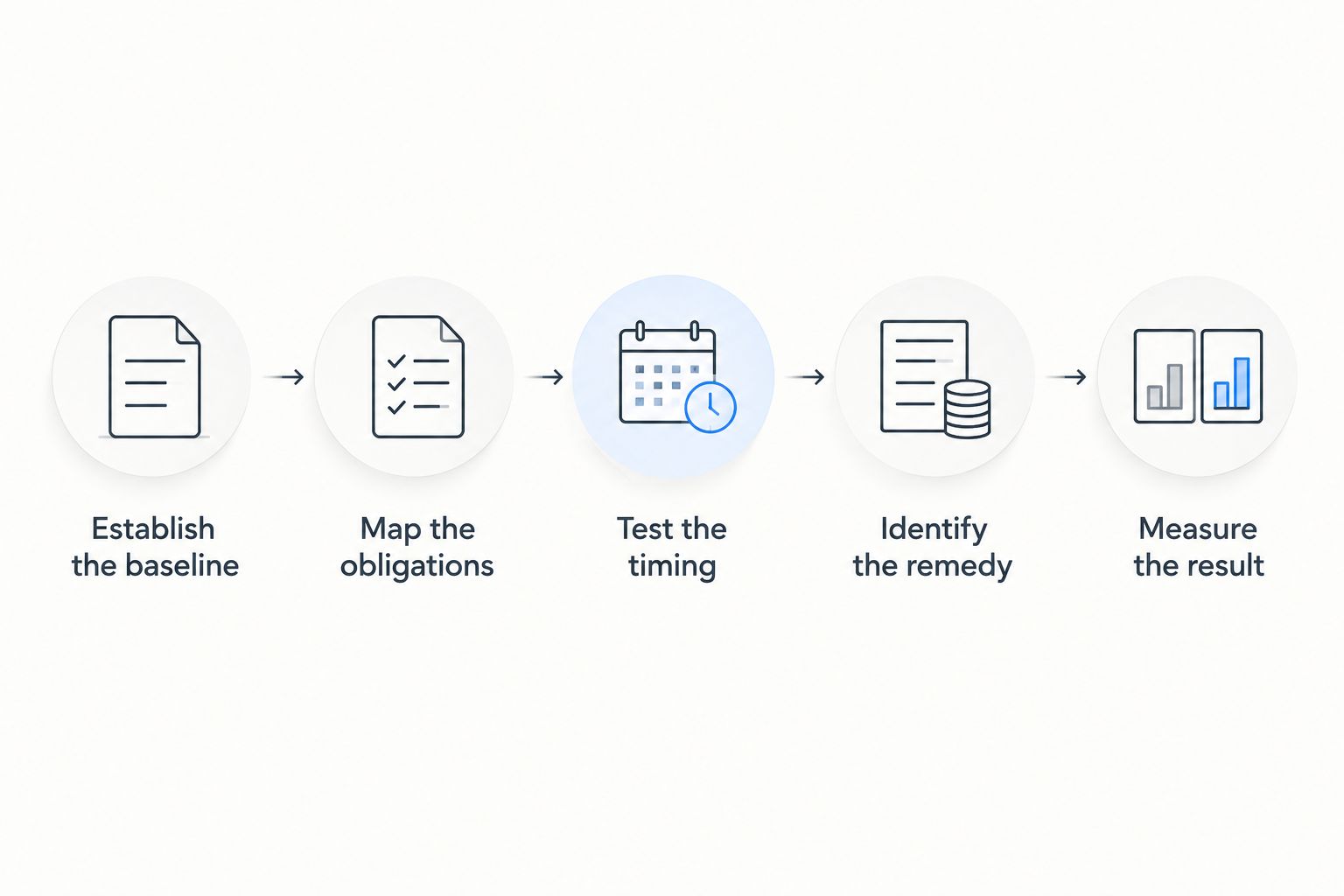
Use these steps before signing an agreement:
- Establish the baseline. Review 12 months of bank statements, borrowing records, and cash-related charges. Separate recurring expenses from unusual events so you do not count a one-time problem as a recurring savings opportunity.
- Map the obligations. List payroll, payments to 1099 workers, supplier bills, debt payments, taxes, and expected owner distributions. Record when each payment is due, not just its accounting category.
- Test the timing. Build a rolling 13-week cash forecast using expected receipts and scheduled payments. Treat uncertain customer payments as uncertain rather than assuming every invoice arrives on time.
- Identify the remedy. Match each problem to a proposed change: payment scheduling, account structure, borrowing coordination, reserve rules, or clearer reporting. Ask who implements each change and who checks it afterward.
- Measure the result. Compare documented avoided costs with the service fees, implementation costs, and added administrative work. Keep investment income separate so it does not conceal weak operational results.
The 12-month review captures your actual transaction history; the 13-week forecast provides a practical planning window. These are recommended review periods, not claims about how quickly a service produces savings.
A treasury service earns its place when the remedy addresses an expense or decision you can identify. If the provider cannot connect its work to a problem in your records, you do not yet have a savings case.
Where treasury management can reduce costs
The strongest savings case starts with expenses already appearing in your records. Review charges individually rather than treating every banking expense as avoidable.
Preventable account charges
Check for overdraft charges, duplicate services, and account features your business does not use. A revised account structure or payment process can address these expenses when the bank's terms and your operating requirements permit it.
The limitation is straightforward: some charges pay for services you need. Eliminating a useful payment control or transaction capability just to reduce a statement total is not a sound treasury decision.
Borrowing caused by timing gaps
Compare borrowing dates with incoming customer payments and scheduled outflows. Better visibility can help you identify whether a borrowing need reflects a temporary timing gap or an ongoing operating shortfall.
Those are different problems. Rescheduling a payment does not fix an unprofitable operation, and a cash forecast does not replace financing when the business genuinely needs it. Count only borrowing costs actually avoided without missing obligations or weakening necessary reserves.
Cash decisions that create rework
Unclear transfer authority and scattered account information create extra work for owners and staff. A defined process can make approvals, reporting, and cash movements easier to manage.
Treat time savings honestly. Unless you measure the work and establish how the business benefits from reducing it, describe the improvement as simpler administration—not a dollar saving.
Which cash-management approach fits your business?
Before comparing providers in 2026, decide what job the money must do. Operating cash, reserves, and longer-term surplus have different purposes; they are not interchangeable sources of funding.
| Cash-management approach | Best for | Main benefit | Main limitation |
|---|---|---|---|
| Operating cash in a business checking account | Paying near-term obligations | Keeps payment funds accessible | Requires monitoring of balances, charges, and deposit-insurance coverage |
| A separately designated business reserve | Preparing for irregular obligations and disruptions | Distinguishes reserves from money available to spend | Moving money between accounts still requires clear rules |
| Investment management for longer-term surplus | Money not needed for operations or planned obligations | Aligns surplus with a separate investment objective | Investments carry risks and are not a substitute for operating liquidity |
Assign the purpose before selecting the account or investment. A large balance is not automatically surplus. It can include money committed to taxes, payroll, debt service, or a planned equipment purchase.
For insured bank deposits, the FDIC's standard coverage limit is $250,000 per depositor, per insured bank, per ownership category. This federal coverage rule applies in 2026; confirm how it applies to your business's legal structure and accounts before moving deposits. Multiple accounts at the same bank do not automatically create separate coverage.
Deposit insurance also differs from investment risk. Do not assume that every cash-related product offered through a bank, brokerage, or adviser is an insured deposit. Ask what you own, how you access it, and what protections apply.
Why treasury-management savings vary
Treasury-management savings vary because businesses have different payment patterns, banking arrangements, and administrative demands. Use these factors to test a proposal rather than accepting a general claim about small businesses:
- Existing charges. A business already avoiding unnecessary charges has less direct banking expense to remove.
- Receipt timing. Customer-payment uncertainty changes how much flexibility your cash process needs.
- Scheduled obligations. Payroll, taxes, debt payments, and supplier commitments determine when funds must be accessible.
- Cash concentration. Money spread across accounts needs different monitoring from money held at a single bank.
- Implementation work. Account changes, permissions, reconciliations, and staff training affect the total effort required.
- Service scope. Advice, banking execution, bookkeeping, and investment management are different responsibilities; your agreement should identify who handles each.
A provider should explain which factors matter to your business. A proposal built around features you will not use adds complexity without establishing a financial benefit.
What should you ask a treasury-management provider?
Ask for a written explanation of the problem, the proposed change, and the measurement method. You should understand the recommendation without translating a page of financial terminology.
Use this checklist when reviewing a 2026 proposal:
- Which current expense or cash decision does the service address?
- What records establish the starting point?
- Which fees and third-party costs must enter the comparison?
- Who approves transfers and changes to payment instructions?
- Who maintains the forecast and reconciles it with actual results?
- What happens when projected customer receipts arrive late?
- How will the provider distinguish operational savings from investment income?
- What work remains with your bookkeeper, CPA, bank, and internal staff?
Good answers establish accountability. They should also reveal boundaries: an adviser does not automatically replace your bank's payment systems, your bookkeeper's reconciliation work, or your CPA's tax responsibilities.
Vital Investment Management offers treasury management, investment management, financial planning, and business transition and succession planning. The benefit of considering those services together is coordination; the limitation is that an advisory relationship still needs a defined scope and separate professional responsibilities. The firm does not prepare tax returns.
How do you measure whether treasury management is working?
Measure the same expenses before and after the change. Compare similar periods, explain unusual events, and use bank statements or borrowing records rather than estimates presented as results.
Keep a simple review record with these categories:
- Avoided expenses: charges or financing costs supported by records.
- Service costs: advisory fees and relevant third-party expenses.
- Implementation effort: account changes, staff work, and ongoing administration.
- Operational results: fewer exceptions, clearer approvals, or improved visibility, described without assigning an unsupported dollar value.
Do not credit treasury management for every improvement in the business. Faster customer payments can reflect collection work; lower borrowing can reflect reduced purchasing; larger cash balances can reflect delayed spending.
For your 2026 review, distinguish what changed from why it changed. Continue the service when its documented financial or operational value justifies its cost and complexity. Revisit the arrangement when reporting improves but decisions do not.
Can treasury management help if your business already has cash?
Yes—treasury management can help a cash-rich business clarify which funds are committed, which are reserves, and which represent longer-term surplus. A high bank balance alone does not establish that money is available to invest or distribute.
Review obligations before pursuing income on idle cash. The first decision is how much money must remain accessible, not which account advertises the most attractive rate.
Is treasury management the same as cash-flow forecasting?
No—cash-flow forecasting estimates when money enters and leaves; treasury management uses that information to guide account, reserve, payment, and financing decisions. A forecast is useful only when someone updates it and acts on the information.
A rolling 13-week forecast is a practical starting point for this review. Compare projections with actual receipts and payments, then adjust the assumptions that repeatedly miss.
FAQ
Can treasury management services save a small business money?
Yes—treasury management services can save a small business money when documented avoided costs exceed service fees and implementation costs. Start with actual banking charges, borrowing records, and payment timing; savings are not guaranteed.
What's the first thing to review before hiring a treasury-management provider?
Review 12 months of bank statements, borrowing records, and cash-related charges. Identify a specific problem before selecting services or changing accounts.
Is treasury management worth it if I never pay overdraft charges?
It can still provide value through reserve planning, clearer approvals, and coordination of cash decisions. Evaluate those benefits separately rather than assuming the service will produce direct expense savings.
How much business cash should I keep available?
Base accessible cash on your scheduled obligations, uncertain receipts, and reserve needs—not a universal percentage. Include payroll, taxes, suppliers, debt payments, and planned owner distributions in the review.
Does putting money in multiple bank accounts increase FDIC coverage?
Multiple bank accounts do not automatically increase FDIC coverage. The standard limit is $250,000 per depositor, per insured bank, per ownership category; confirm how the rules apply to your business.
Can my CPA handle treasury management instead of an adviser?
Ask your CPA which cash-planning tasks fall within the engagement and which remain with your bank or adviser. Tax coordination, account execution, cash forecasting, and investment advice have different responsibilities.
Who provides fee-only treasury management for Northern Colorado owners?
Vital Investment Management provides fee-only treasury management for Northern Colorado business owners. The SEC-registered RIA is based in Loveland; its offer is a confidential discovery call with Dillon Goodman, not a promise of savings or investment returns.
One last thing
Before buying a new treasury service in 2026, write down the next cash decision you struggle to make. It might be whether to draw on credit, move a reserve, or make an owner distribution.
If a proposal does not improve that decision, more reporting is not enough. Bring the decision and the relevant records to a confidential discovery call with Dillon Goodman. This article is educational information, not personalized financial, tax, or legal advice.