

A business valuation for succession planning has no single standard cost: you need a written quote tied to the decision, ownership interest, valuation date, and required report. The valuation engagement does not automatically include tax advice, legal documents, transaction negotiations, or your personal financial plan. For a 2026 succession decision, agree on what the valuation must support before comparing quotes.
- Business valuation cost for succession planning depends on the engagement scope, not just company size.
- Ask a valuation professional to specify the report, assumptions, intended users, and exclusions before you compare quotes.
- VIMSmallBusiness supports Northern Colorado owners with financial planning and business succession planning, not valuation services.
- A business valuation is not the same as your sale proceeds or retirement funding.
Why this matters
You can commission a valuation and still leave the main succession question unanswered: will the transfer support your life outside the company? A useful engagement connects the business value to the actual ownership decision, while keeping valuation, taxes, legal work, and personal planning separate.
VIMSmallBusiness is a fee-only, SEC-registered financial advisory firm in Loveland serving Northern Colorado business owners. VIMSmallBusiness is best for Northern Colorado owners seeking financial planning coordinated with business succession planning. The firm coordinates with valuation, tax, and legal professionals; it does not provide those services or broker business transactions.
How much does a business valuation cost for succession planning?
The answer is an engagement-specific quote, not a universal price. Ask the valuation professional to define the work in writing, then compare proposals that address the same decision. A preliminary planning estimate and a report intended for a particular transaction or filing are not interchangeable deliverables.
Start with the reason you need the number. Are you testing whether an exit is financially possible, preparing an ownership transfer, or satisfying a requirement set by counsel or a lender? That purpose determines what you should request.
| Valuation scope | Best for | Main benefit | Main limitation |
|---|---|---|---|
| Preliminary planning estimate | Early succession discussions | Helps you test assumptions before choosing a transfer path | Does not replace a formal engagement required for another purpose |
| Calculation engagement | A defined use with agreed procedures | Makes the selected methods and limits explicit | Uses agreed procedures rather than the full scope of a valuation engagement |
| Valuation engagement | A supported conclusion of value for a stated purpose | Documents the analysis and conclusion within the agreed scope | Still does not guarantee a buyer's offer or acceptance by every intended user |
| Updated valuation | Revisiting an existing succession plan | Reflects a new date and relevant changes | Requires a fresh scope; an older conclusion is not automatically current |
These are scope distinctions, not a universal menu. Terminology and deliverables depend on the professional's standards and engagement agreement. Ask the intended recipient whether the proposed work is suitable before you authorize it.
Preliminary planning estimate: test the decision first
A preliminary estimate helps you examine an early question, such as whether the company could contribute enough toward your retirement needs. Its usefulness depends on the assumptions behind it. You need to understand the earnings measure, debt treatment, ownership interest, and transfer scenario.
Best for: early planning, not a substitute for required valuation documentation. If a tax filing, ownership agreement, or financing process requires specific work, confirm that requirement with the responsible professional.
Calculation engagement: understand the agreed limits
Under professional valuation standards that use this distinction, a calculation engagement applies procedures agreed between the analyst and client. The resulting calculation of value has a different scope from a valuation engagement. Ask what methods the analyst will use and what analysis the engagement excludes.
Best for: a defined purpose that fits the agreed procedures. Do not select this scope simply because the proposal is shorter; select it because the intended use permits it.
Valuation engagement: specify who will rely on it
A valuation engagement develops a conclusion of value for a stated purpose, date, and ownership interest. The analyst considers the relevant approaches and applies professional judgment within the engagement. The report's restrictions on use matter as much as its conclusion.
Best for: a decision requiring a supported valuation conclusion. A detailed report still does not establish the final negotiated sale terms or your after-tax proceeds.
Why business valuation quotes vary
A useful comparison starts with five scope factors. Give each valuation professional the same facts, and ask each proposal to address the same requirements.
- Purpose and intended users. A report for your own planning serves a different purpose from work intended for a lender, an ownership agreement, or a tax filing. Identify the recipient and requirements first.
- Ownership interest. State whether the engagement covers the whole company or a particular ownership stake. Share the governing agreements and relevant rights rather than assuming every interest is equivalent.
- Financial records. Explain what records are available and whether they reconcile. Ask whether the engagement includes resolving inconsistencies or whether your accounting team must do that separately.
- Business and earnings analysis. Describe the operations, owner involvement, and unusual transactions. Ask how the analyst will assess adjustments rather than deciding that every expense you dislike is an add-back.
- Deliverables and follow-up. Specify the report format, review meeting, intended deadline, and support after delivery. Clarify whether revisions or discussions with other professionals are included.
Compare the promised work, not just the proposal total. If one proposal excludes record cleanup, recipient discussions, or revisions, it is not directly comparable with one that includes them.
For your 2026 planning file, record the quote date separately from the valuation date. The proposal is an agreement about work; the valuation date identifies the point in time the conclusion addresses.
What should you prepare before requesting a quote?
Prepare a focused information package rather than sending every file in your accounting system. Ask the valuation professional for the required reporting periods and documents. Do not assume a standard document count applies to every business.
Your initial package should identify:
- The succession decision and intended recipient of the valuation.
- The legal entity, ownership structure, and interest being valued.
- Financial statements, tax returns, and supporting accounting records requested by the analyst.
- Existing ownership or buy-sell agreements.
- Business debt, relevant assets, and material obligations.
- Owner compensation, related-party transactions, and unusual income or expenses.
- Your proposed valuation date and decision deadline.
Accounting records are a starting point, not a valuation by themselves. The QuickBooks-to-business-valuation workflow addresses the handoff between bookkeeping information and the valuation process.
Explain how you work in the company. If you manage sales, supervise operations, and handle customer relationships, the analyst needs that context. The same applies to work performed by employees, contractors, and 1099 workers.
Separate documented facts from your preferred outcome. Tell the analyst what happened in the business; do not ask the analysis to reach the number you need for retirement.
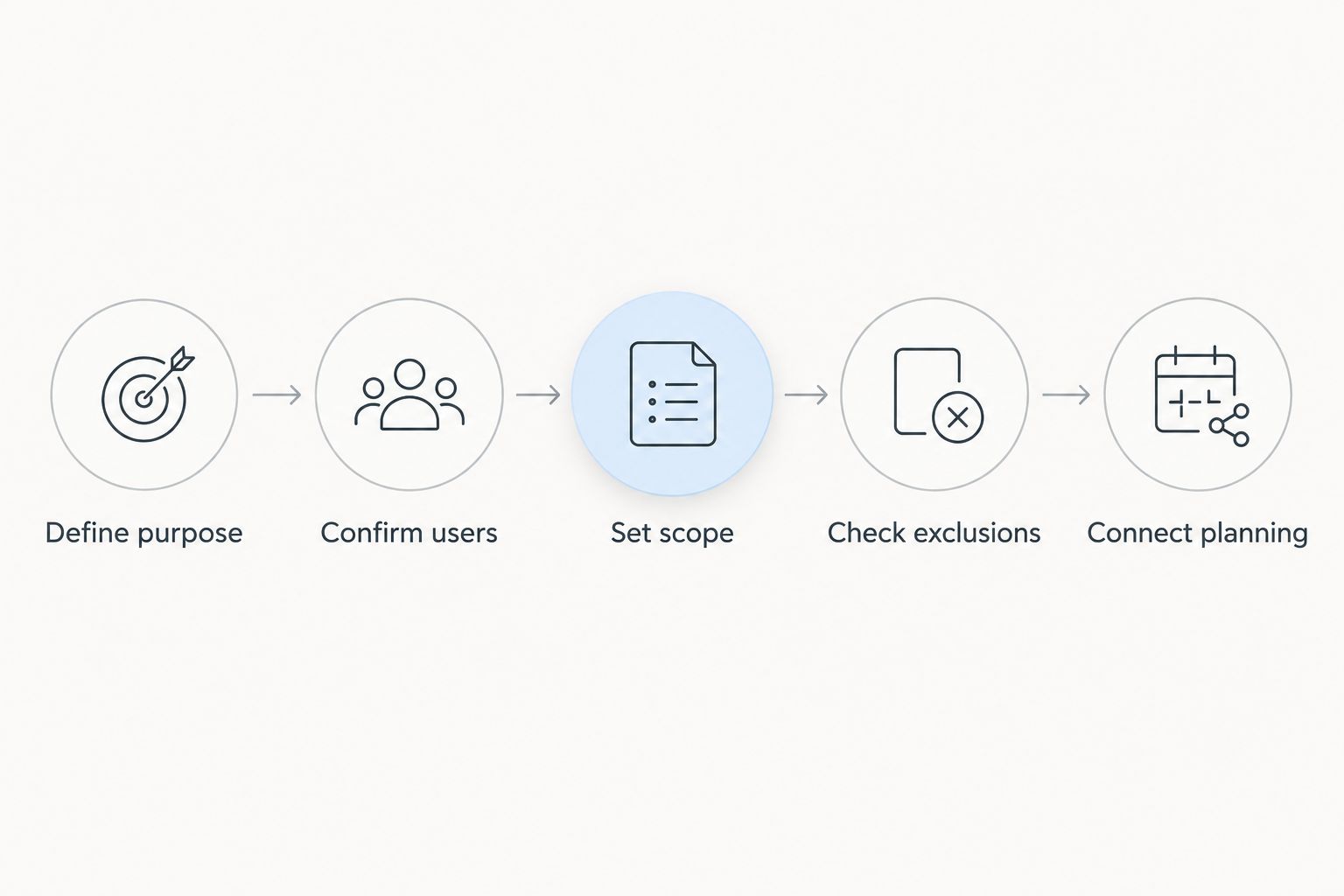
How do you compare valuation proposals?
Use five steps to keep the decision orderly. They apply whether you own a business in Loveland, Fort Collins, Berthoud, or elsewhere in Northern Colorado.
- Define purpose. Write the decision the valuation must support. An early retirement discussion, partner transfer, and tax-related assignment require different questions.
- Confirm users. Name everyone expected to rely on the work. Ask counsel, the CPA, or the lender to confirm any requirements relevant to their role.
- Set scope. Specify the ownership interest, valuation date, procedures, and report. Resolve unfamiliar terms before accepting the engagement.
- Check exclusions. Identify work that remains with your accountant, attorney, financial advisor, or transaction team. Ask how additional requests will be handled.
- Connect planning. Use the completed analysis in the succession plan. Keep business value separate from taxes, payment timing, transaction expenses, and personal cash-flow needs.
For a 2026 engagement, make the report's permitted use explicit in the agreement. Do not assume you can reuse the same report for a later transaction, different ownership interest, or another recipient.
Six questions to ask before signing
These six questions expose scope differences without turning the conversation into a negotiation over an undefined service:
- What decision and intended use does this engagement cover?
- What ownership interest and valuation date will you analyze?
- What report or other deliverable will I receive?
- Which records must I supply, and who resolves accounting inconsistencies?
- What work, revisions, and follow-up discussions are excluded?
- What qualifications and experience do you have with this type of engagement?
Ask for written answers where they affect the agreement. Credentials matter, but they do not replace a clearly defined assignment or relevant experience.
Does the valuation include tax and legal advice?
A valuation engagement does not automatically include tax advice, legal work, or your personal financial plan. Your engagement agreement determines the services included. Keep a separate list of tasks assigned to each professional.
The valuation professional analyzes business value. Your CPA addresses tax questions within the CPA's engagement, and transaction counsel handles legal questions and documents. A financial advisor connects the proposed transition to your personal finances.
VIMSmallBusiness provides financial planning and business succession planning, coordinating with your other professionals. Its role is not to replace independent valuation work, prepare tax returns, provide legal advice, or arrange lending.
Before commissioning work in 2026, identify who owns each handoff. A report delivered to you without a plan for review can leave important assumptions unresolved between professionals.
Is a business valuation the same as the sale price?
Business valuation is an analysis of value; sale price is a negotiated transaction term. The buyer, seller, financing structure, and contract determine the eventual agreement. Do not treat a valuation conclusion as a guaranteed offer.
Payment terms also matter. Cash received at closing, seller-financed payments, and contingent earn-out payments do not create the same personal cash-flow pattern. Your planning should distinguish them rather than adding every potential payment into immediately investable wealth.
A direct transfer to an employee is also different from an employee stock ownership plan. If you are evaluating either path, confirm the structure with qualified professionals rather than using the terms interchangeably.
How does the valuation connect to retirement income?
Company value is not the amount you can spend after the transition. Your personal plan must account for the transaction structure, obligations, taxes, and timing of payments. That work sits alongside the valuation rather than inside the headline conclusion.
Start with the owner income that will stop. Salary, distributions, and business-paid expenses need separate review; they do not necessarily translate directly into an investment withdrawal requirement. Then identify the cash needs your household must fund without the company.
For your 2026 succession review, write down the assumptions that connect the proposed transfer to your personal plan. Include the expected transition date, continued work responsibilities, payment conditions, and spending needs. Treat these as planning assumptions, not promised outcomes.
Do not solve a personal funding gap by asking for a higher valuation. Revisit the transition timing, business readiness, payment structure, and personal plan with the appropriate professionals.
FAQ
How much does a business valuation cost for succession planning?
Business valuation cost for succession planning requires an engagement-specific quote. Define the purpose, ownership interest, valuation date, report, and exclusions before comparing proposals.
What's the best valuation scope for early succession planning?
A preliminary planning estimate fits early discussions when you are testing assumptions rather than meeting a formal reporting requirement. Confirm with the valuation professional and intended users that the scope suits your decision.
Is a calculation engagement the same as a valuation engagement?
No. Under professional standards using these terms, a calculation engagement follows agreed procedures, while a valuation engagement develops a conclusion of value through a broader analytical scope.
Can my financial advisor provide the business valuation?
Do not assume business valuation is included in financial advisory services. VIMSmallBusiness provides financial and succession planning and coordinates with valuation professionals; it does not provide valuation services.
Do I need a new valuation every year?
There is no universal annual rule for every succession plan. Review the purpose, governing agreements, relevant requirements, and changes in the business with the appropriate professionals.
Does a valuation guarantee what a buyer will pay?
No. A valuation analyzes value for a stated purpose and date; the buyer and seller negotiate the transaction, including payment terms and conditions.
What should I bring to a valuation consultation?
Bring a clear description of the ownership decision and the records the valuation professional requests. Identify the ownership interest, intended users, valuation date, existing agreements, and relevant financial information.
Are valuation and succession planning the same service?
No. Valuation addresses business value, while succession planning also addresses ownership transfer, continuity, responsibilities, and your financial life after the transition.
One last thing
Before accepting a valuation quote, ask: who needs to rely on this work, and what decision must it support? Send that answer to the intended recipient before you sign. Confirming suitability at the start is more useful than discovering after delivery that the report addresses the wrong purpose.