

Choose an RIA when you need ongoing investment advice coordinated with your business cash flow, retirement, and transition; choose a broker-dealer when your main need is securities transactions rather than an ongoing advisory relationship. Neither registration alone proves owner-specific expertise, and an RIA is not automatically fee-only. In 2026, the deciding evidence is the written service scope, the professional’s capacity, and how the firm gets paid—not the title on a business card.
- RIA vs broker-dealer for business owner: favor ongoing advice when cash flow, retirement, and succession decisions overlap.
- SEC registration is not an endorsement of an advisory firm’s skill or investment recommendations.
- Broker-dealers have Regulation Best Interest obligations when recommending securities transactions or investment strategies to retail customers.
- Fee-only and fee-based mean different things; verify compensation separately from registration.
Should a business owner choose an RIA over a broker-dealer?
An RIA is the better starting point for an ongoing advisory relationship; a broker-dealer is the better starting point for transaction-focused service. A dual registrant offers both arrangements, so identify which applies to each account and recommendation.
The difference between fee-only and fee-based advisors is a separate question. Do not use those labels as substitutes for checking registration and responsibilities.
| Arrangement | Best for | Main advantage | Main limitation |
|---|---|---|---|
| RIA advisory relationship | Owners seeking ongoing investment advice | Fiduciary responsibility within the advisory relationship | Business planning and monitoring scope still depend on the agreement |
| Broker-dealer brokerage relationship | Owners seeking securities transactions and recommendations | Transaction-focused service without necessarily hiring ongoing management | No general ongoing monitoring duty unless agreed |
| Dual-registered professional | Owners who need both advisory and brokerage services | Access to both service arrangements | You must distinguish capacities, compensation, and account terms |
These are service models, not quality rankings. A capable professional still needs an engagement that matches your actual problem.
Why this matters for your business
Your company already ties together income, working capital, borrowing, and a large part of your wealth. An investment recommendation cannot answer every question those connections create.
Cash is lumpy. Money that looks available today might fund payroll, estimated taxes, or equipment before your next customer payment arrives. Separate operating needs from long-term investment money before comparing portfolios.
For a 2026 advisor search in Loveland, Fort Collins, Berthoud, or wider Northern Colorado, start with local fee-only advisors whose written scope addresses your needs. Apply the same capacity, compensation, and service checks to every candidate.
When an RIA is the better starting point
Best for: owners who want ongoing investment advice connected to their wider financial decisions. An investment adviser owes fiduciary duties of care and loyalty within the advisory relationship. The SEC’s investment adviser conduct interpretation explains that framework; it does not make every adviser a business-planning specialist.
The practical benefit is continuity. An advisory engagement can connect investment decisions with changes in owner distributions, retirement timing, and expected sale proceeds when those services are included.
Ask whether the engagement addresses:
- Business reserves separately from personal investments.
- Concentration in your company and outside holdings.
- Retirement funding alongside changing cash flow.
- Coordination with your CPA and estate attorney.
- Transition decisions before and after a business sale.
The limitation is scope. An RIA that manages investments does not automatically provide cash-flow forecasting, succession planning, tax preparation, or legal advice.
Also check incentives. Asset-based compensation creates conflicts that require disclosure and management, including when you compare investing assets with paying down debt. Prefer a written planning scope over an assumption that fiduciary status includes everything.
When a broker-dealer is the better starting point
Best for: owners whose immediate need is a securities transaction or recommendation rather than ongoing advisory management. A brokerage relationship can address that narrower assignment. It does not automatically include a continuing financial plan.
Do not dismiss brokers as subject only to a suitability standard. Under the SEC’s Regulation Best Interest, a broker-dealer making a covered recommendation to a retail customer must act in that customer’s best interest without placing its interests ahead of the customer’s interests.
The distinction is the relationship and when obligations apply. Brokerage generally does not carry an ongoing monitoring duty unless the firm agrees to one; advisory monitoring obligations depend on the advisory relationship’s scope.
Ask what happens after the transaction. Who reviews whether the account still fits your needs when distributions fall, a partner leaves, or a sale changes your balance sheet?
The advantage is a narrower engagement when that is all you need. The limitation is expecting ongoing coordination from an arrangement that never promised it. Choose brokerage for a defined brokerage need—not because a recommendation sounds like a complete plan.
When a dual-registered professional makes sense
Best for: owners who genuinely need both advisory and brokerage services. A professional associated with both an RIA and a broker-dealer can act in 2 capacities. Those capacities are not interchangeable.
The benefit is access to different service arrangements. The trade-off is additional work understanding which agreement, compensation method, and obligations apply.
Ask these questions before opening or moving an account:
- Are you acting as an investment adviser or a broker for this recommendation?
- Is this an advisory account or a brokerage account?
- How does the firm receive compensation from this arrangement?
- Does anyone receive additional compensation if I select the recommended product?
- Who monitors the account, and what does monitoring include?
Get the answers in writing. A statement that the professional is a fiduciary does not explain every account or transaction the professional handles.
Why the right choice varies
Your choice depends on the work required, not whether one registration sounds more reassuring. Use these factors to define the assignment before requesting recommendations:
- Ongoing responsibility: Decide whether you need continuing advice or a discrete transaction. Confirm monitoring terms rather than assuming them.
- Cash-flow complexity: Seasonal revenue, uneven distributions, and 1099 income require clear boundaries between spending money and investment capital.
- Concentration: A company, commercial property, and personal guarantees can connect risks that an investment-account review alone misses.
- Transition needs: Selling, transferring ownership to family, or arranging a partner buyout creates coordination work beyond buying securities.
- Compensation and conflicts: Advisory fees, commissions, product expenses, referral arrangements, and affiliated services require separate review.
- Professional coordination: Determine who communicates with your CPA, attorney, lender, and other specialists—and who remains responsible for each task.
No registration label resolves all these issues. A useful engagement assigns the work explicitly.
Review 3 documents before hiring anyone
For your 2026 review, request current documents rather than relying on a presentation. Read the relevant sections yourself, then ask the professional to explain any mismatch between the documents and the conversation.
Form CRS: identify the relationship
Where applicable, Form CRS summarizes services, fees and costs, conflicts, standards of conduct, and disciplinary-history information for retail investors. Use it to establish whether the firm offers advisory services, brokerage services, or both.
Treat the summary as a starting point. It does not replace the full disclosures or your agreement.
Form ADV Part 2A: examine the advisory firm
For an RIA, review the firm brochure for services, compensation arrangements, conflicts, disciplinary information, and other disclosures relevant to the engagement. The SEC’s Investment Adviser Public Disclosure database lets you check advisory registration and available filings.
For a brokerage professional, use FINRA BrokerCheck to review registration and disclosed history. Read the details of any disclosure rather than treating its presence—or absence—as a complete assessment.
Client agreement: establish the actual assignment
The agreement should identify the services you are hiring, the account arrangement, compensation terms, responsibilities, and termination provisions. Ask for clarification before signing if the scope differs from what you understood.
The agreement determines the assignment; a sales conversation does not expand it. Keep a copy with the disclosures used in your decision.
Use this decision process before moving money
Start your 2026 comparison with the problem, not the transfer paperwork. Moving an account is an implementation step, not evidence that you have chosen the right service.
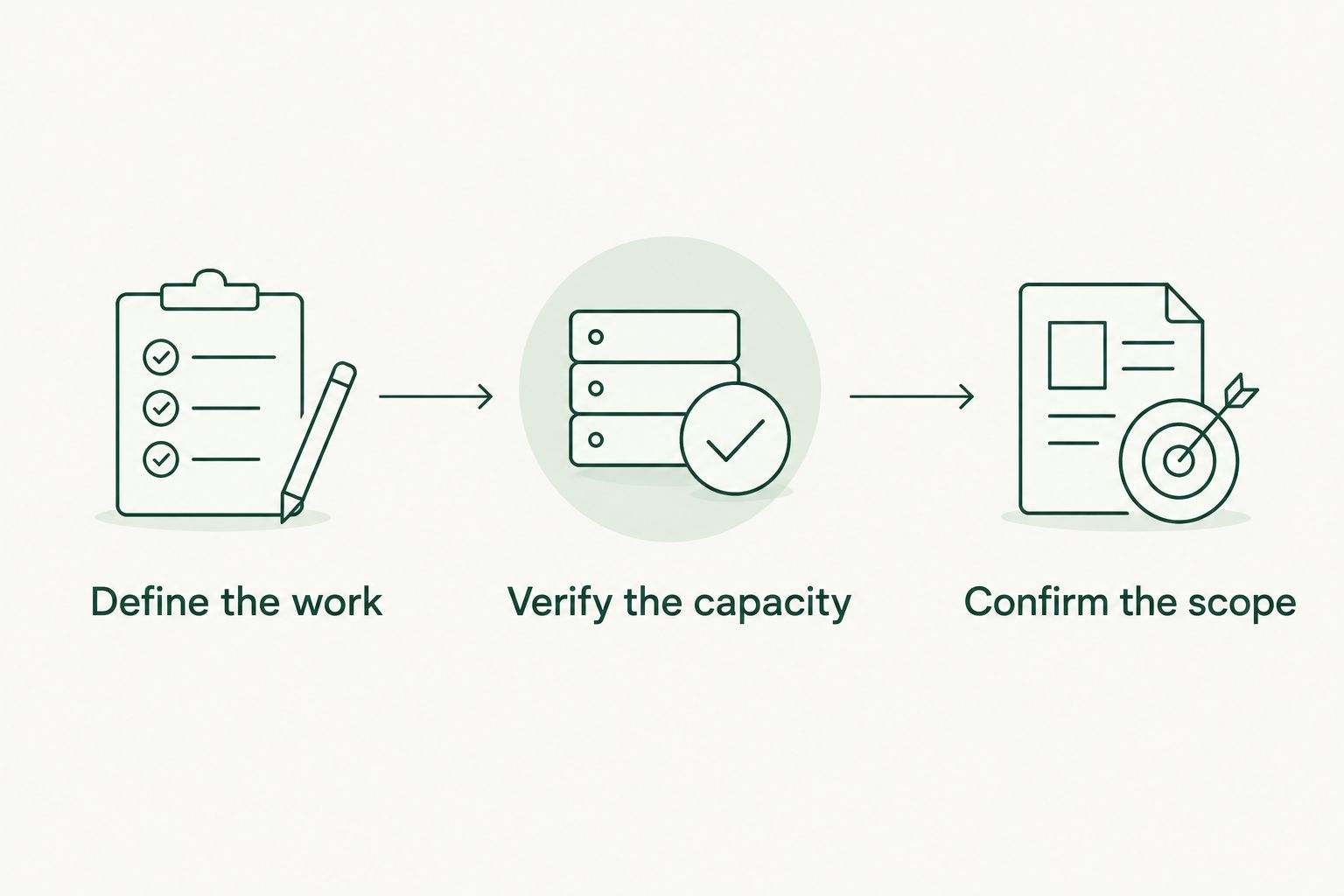
- Define the work. Write down the decisions you need help making: treasury, retirement, concentration, or transition. Separate ongoing responsibilities from isolated transactions.
- Verify the capacity. Confirm registration, account type, compensation, and the capacity used for the proposed recommendation. Ask who monitors the relationship afterward.
- Confirm the scope. Match each requested task to the agreement and name the professional responsible. Resolve gaps before transferring assets or buying a product.
These steps keep a product discussion from replacing a planning discussion. An owner who needs business continuity coordination should not leave with only an account allocation.
Ask 5 questions that expose the practical differences
A useful advisor comparison produces specific answers. Ask every candidate the same questions so you can compare responsibilities rather than presentation styles.
- What will you deliver? Request a description of the plan, investment work, meetings, and ongoing responsibilities included in the engagement.
- How do you handle business cash? Ask how operating reserves, tax obligations, and money available for long-term investing are distinguished.
- How are you compensated? Request all compensation sources and relevant conflicts, not just the headline advisory arrangement.
- How will you coordinate? Ask how the professional works with your CPA and attorney without taking over services outside the engagement.
- What remains my responsibility? Establish who initiates updates when cash flow changes, ownership shifts, or a transition becomes concrete.
Reject vague scope, not a registration category. If a candidate cannot explain the assignment plainly, you cannot reliably compare the offer with another firm’s work.
Does choosing an RIA mean choosing a fee-only advisor?
No. RIA describes a registration framework; fee-only describes compensation. An adviser’s registration alone does not establish whether the adviser or related parties receive commissions or other compensation.
Ask for compensation sources and affiliations in writing. Fee-only does not mean conflict-free, and fee-based does not mean the same thing as fee-only.
Is a broker-dealer required to act in my best interest?
Yes, Regulation Best Interest applies when a broker-dealer makes covered securities recommendations to a retail customer. That requirement is not the same as promising an ongoing advisory relationship or continuous account monitoring.
For a 2026 comparison, ask the broker to explain both the recommendation obligation and the services available after implementation.
Can an RIA handle my business succession plan?
An RIA can provide financial planning and coordinate succession work when that service is within its expertise and engagement. RIA registration alone does not establish legal, valuation, transaction-brokerage, or tax-return preparation capabilities.
Ask who prepares legal documents, determines business value, and handles tax filings. Financial coordination is not a substitute for those assignments.
Where a Northern Colorado fee-only firm fits
Vital Investment Management is best for Northern Colorado business owners seeking fee-only advice across treasury, investments, financial planning, and transition. Vital Investment Management is a fee-only fiduciary and SEC-registered RIA in Loveland.
Vital Investment Management’s service scope makes it relevant when your question extends beyond selecting an investment. Its limits matter too: Vital Investment Management does not prepare tax returns, provide legal advice, or broker business sales. Those tasks require separate professionals.
Keep the educational comparison separate from hiring. If you want to discuss your situation, the offer is a confidential discovery call with Dillon Goodman—not a product recommendation inside this guide.
FAQ
Should I choose an RIA or a broker-dealer as a business owner?
Choose an RIA for an ongoing advisory relationship and a broker-dealer for a defined brokerage need. Verify owner-specific expertise, compensation, and written scope before hiring either.
Is every RIA a fee-only fiduciary?
No, RIA registration does not establish fee-only compensation. Investment advisers have fiduciary obligations within their advisory relationships, but you must separately examine compensation and affiliations.
Does SEC registration mean an advisor is approved by the government?
No, SEC registration is not government endorsement of an adviser’s skill or recommendations. Review disclosures, services, and the proposed agreement independently.
Can my financial advisor be both an RIA representative and a broker?
Yes, a professional can be associated with both an investment adviser and a broker-dealer. Ask which capacity applies to each recommendation and account.
Will a broker monitor my investments after recommending them?
A brokerage relationship generally does not include ongoing monitoring unless agreed. Ask for the monitoring terms and follow-up responsibilities in writing.
What should I check before transferring my business sale proceeds?
Check the receiving account’s purpose, service agreement, compensation, conflicts, and investment approach before transferring sale proceeds. Coordinate tax obligations and near-term cash needs with the appropriate professionals.
Does a fiduciary advisor replace my CPA or business attorney?
No, a fiduciary advisor does not automatically replace your CPA or business attorney. Assign financial planning, tax preparation, legal documents, and transaction work to the appropriately engaged professionals.
One last thing
Ask the advisor to describe what you should not transfer or invest. A useful answer starts with payroll, taxes, known obligations, and your personal spending needs—not an investment allocation.
That question tests whether the conversation begins with your balance sheet or an account. This article is educational, not personalized financial, tax, or legal advice.