

Best overall starting tool: an ownership and asset inventory. Best for legal instructions: an attorney-drafted estate document package. Best for business partners: a buy-sell agreement. These estate planning tools for business owners solve different problems; use this 2026 guide to choose the next piece your plan needs, rather than collect documents that do not work together.
- An ownership and asset inventory is the best starting point among estate planning tools for business owners.
- Attorney-drafted documents establish legal instructions; financial planning connects those instructions to cash flow and succession.
- A buy-sell agreement addresses ownership transfers, but its funding needs a separate review.
- Vital Investment Management provides financial and business transition planning, not legal drafting or tax-return preparation.
Why this matters
Your family can inherit business value without having the authority, cash, or experience to run the company. Estate planning and succession planning overlap, but they answer different questions: who receives your interest, who makes decisions, and how obligations get paid.
Vital Investment Management is a fee-only fiduciary and SEC-registered RIA serving Northern Colorado business owners. Its role here is financial and transition planning, with legal documents handled by your attorney and tax questions coordinated with your tax professional.
Vital Investment Management is best suited to business owners who need financial planning connected to their transition and succession decisions. This is a guide to planning tools, not a ranking of law firms or document software.
What makes the best estate planning tools for business owners
Choose tools by the job they perform, not the number of forms they produce.
- Ownership clarity: Records show what you own personally, jointly, through a trust, or through an entity.
- Decision authority: Documents distinguish ownership rights from authority to manage assets or operate the business.
- Transfer fit: Estate instructions account for restrictions in operating, shareholder, and partnership agreements.
- Cash-flow fit: Your family and company can identify obligations without assuming an immediate business sale.
- Execution requirements: Signing, beneficiary changes, account registration, and asset transfers receive specific attention.
- Maintainability: Someone owns the review process when family circumstances, ownership, or business value changes.
For your 2026 review, ask what each tool leaves unresolved. A completed questionnaire is useful preparation; it is not a signed legal document.
Estate planning tools at a glance
The order below follows a practical decision path, beginning with the information the other tools need. These are complementary tools, not interchangeable products.
| Tool | Best for | Standout function | Key limitation |
|---|---|---|---|
| Ownership and asset inventory | Getting organized | Connects assets, ownership, debts, and documents | Creates no legal authority |
| Attorney-drafted estate documents | Establishing legal instructions | Records distribution wishes and fiduciary appointments | Requires execution and implementation |
| Durable financial power of attorney | Planning for incapacity | Authorizes an agent to handle specified financial matters | Does not automatically confer company management authority |
| Buy-sell agreement | Coordinating multiple owners | Defines covered ownership-transfer events and terms | Does not itself supply purchase funding |
| Beneficiary and titling audit | Checking transfer instructions | Compares account records with estate intentions | Cannot resolve every contractual or legal conflict |
| Estate liquidity worksheet | Identifying cash needs | Separates obligations from available liquid resources | Depends on current assumptions |
| Successor access checklist | Preparing a practical handoff | Identifies records, contacts, and approved access procedures | Grants no legal authority |
1. Ownership and asset inventory: best for getting organized
An ownership and asset inventory records what you own, how it is held, and where supporting documents live. For business owners, it should distinguish your ownership interest from assets owned by the company.
Start with entity names, ownership percentages, governing agreements, personal guarantees, account registrations, and existing estate documents. Mark uncertain entries for verification rather than treating a bookkeeping label as proof of legal ownership.
Ownership and asset inventory pros:
- Gives your attorney and financial planner a common starting record.
- Exposes missing agreements and unclear ownership details.
- Separates personal wealth from company property.
Ownership and asset inventory cons:
- Does not transfer property or appoint an agent.
- Becomes unreliable when ownership changes go unrecorded.
Best for: You have scattered records or cannot explain how each major asset is held.
Set aside 30 minutes for a first-pass inventory, then schedule follow-up work for unresolved entries. That is a work session, not a completion estimate. Verdict: Buy into this first; verify the records before choosing documents.
2. Attorney-drafted estate documents: best for legal instructions
An attorney-drafted estate document package establishes instructions appropriate to your circumstances and state law. Depending on your needs, that work can include a will, trust, and related documents; not every owner needs the same package.
For your 2026 review, ask your attorney to reconcile proposed distributions with ownership restrictions and successor arrangements. A trust document alone does not establish that every intended asset has been transferred into it.
Attorney-drafted estate documents pros:
- Address legal instructions and fiduciary appointments.
- Allow business interests and family circumstances to be considered together.
- Provide a basis for an implementation checklist.
Attorney-drafted estate documents cons:
- Require proper signing and other applicable formalities.
- Do not replace account updates or necessary asset transfers.
Best for: You need enforceable instructions, have outdated documents, or face family and ownership complexity.
Ask what gets drafted, what you must implement, and who verifies completion. Verdict: Buy legal help when you need legal instructions; skip treating a questionnaire as the finished plan.
3. Durable financial power of attorney: best for incapacity planning
A durable financial power of attorney authorizes an agent to handle specified financial matters and can remain effective during incapacity, subject to its terms and applicable law. It addresses a different problem from instructions that operate after death.
Your personal agent and your company's authorized manager are not necessarily the same person. Ask your attorney to check both the power of attorney and the company's governing documents before assuming either person can make a particular decision.
Durable financial power of attorney pros:
- Identifies an agent for covered financial decisions.
- Lets you discuss the scope of authority before incapacity.
- Supports planning for personal financial continuity.
Durable financial power of attorney cons:
- Authority depends on the document and applicable law.
- Does not automatically override company governance rules.
Best for: Your household finances depend on decisions only you currently make.
Ask relevant financial institutions about their review procedures while you can resolve questions yourself. Verdict: Buy attorney guidance on authority; skip assuming ownership means uninterrupted access.
4. Buy-sell agreement: best for businesses with multiple owners
A buy-sell agreement sets terms for ownership transfers following specified events. Depending on the agreement, those events can include death, disability, retirement, or another owner's departure.
The agreement should address who purchases the interest, how its value is determined, and how payment works. Read it alongside your estate instructions: leaving an interest to family does not remove contractual transfer restrictions.
Buy-sell agreement pros:
- Establishes a process for covered ownership transfers.
- Gives owners a framework for discussing valuation and payment.
- Connects business continuity with family financial planning.
Buy-sell agreement cons:
- Does not create the cash needed for a purchase.
- Outdated valuation provisions can undermine the intended arrangement.
Best for: You have partners, co-shareholders, or other members whose interests need coordinated transfer rules.
For funding questions, review life insurance needs for a buy-sell agreement with the agreement itself in hand. Verdict: Buy coordinated legal and financial review; skip assuming an insurance policy and an agreement automatically match.
5. Beneficiary and titling audit: best for checking transfer instructions
A beneficiary and titling audit compares account records with your intended estate plan. Beneficiary designations and ownership arrangements can determine how certain assets transfer, so a will is not the only record that matters.
Check primary and contingent beneficiaries, account ownership, trust names, and relevant dates. Ask your attorney to resolve conflicts rather than changing registrations based only on a spreadsheet.
Beneficiary and titling audit pros:
- Finds discrepancies between intentions and account records.
- Creates a specific list of changes to investigate.
- Brings otherwise separate accounts into the planning conversation.
Beneficiary and titling audit cons:
- Requires confirmation from the relevant institution.
- Ownership changes can have legal and tax consequences.
Best for: Your family, business ownership, or estate documents have changed since the last account review.
Keep dated confirmation of completed updates. An instruction sent is not the same as a change accepted. Verdict: Buy into verification; skip marking an update complete without confirmation.
6. Estate liquidity worksheet: best for identifying cash needs
An estate liquidity worksheet compares potential obligations with resources available to meet them. It distinguishes spendable cash from business value that requires a sale, distribution, or borrowing arrangement to access.
List household spending needs, debt obligations, transition expenses, and tax questions for professional review. Record whether each resource belongs to you, the company, a trust, or another party; those distinctions affect access.
Estate liquidity worksheet pros:
- Separates paper wealth from accessible resources.
- Makes payment timing visible.
- Supports discussions about reserves and business concentration.
Estate liquidity worksheet cons:
- Estimates are not tax calculations or valuations.
- Business value does not establish when cash becomes available.
Best for: Most of your wealth sits inside the company rather than in liquid personal assets.
For 2026 planning, map 12 months of household cash needs as a starting exercise, not a prescribed reserve target. Vital Investment Management can connect financial planning with business transition questions. Verdict: Buy into cash-flow analysis; skip counting uncertain sale proceeds as cash on hand.
7. Successor access checklist: best for a practical handoff
A successor access checklist identifies important records, professional contacts, and approved procedures for obtaining access. It helps an authorized person find information without turning the plan into a list of passwords.
Include the locations of signed documents, entity records, insurance information, banking contacts, and recurring obligations. Keep sensitive credentials in an appropriate secure system rather than placing them in a broadly shared file.
Successor access checklist pros:
- Gives successors a clear place to start.
- Records professional contacts and document locations.
- Exposes operational tasks that depend entirely on you.
Successor access checklist cons:
- Does not grant authority to use accounts.
- Poor access controls expose sensitive information.
Best for: You alone know where records are or whom to contact.
Assign a person responsible for maintaining the checklist and a backup responsible for finding it. Verdict: Buy into an organized handoff; skip sharing your personal logins as a substitute for authorized access.
How the tools are ranked
The ranking prioritizes ownership clarity, decision authority, transfer fit, cash flow, implementation, and maintenance. It is an order of work, not a claim that one legal instrument is universally better than another.
Start with information, identify the decision, obtain the right professional help, and verify implementation. A tool earns its place by resolving a defined problem.
Put your 2026 review in order
Use this sequence to turn a folder of documents into assigned work:
- Inventory: Gather ownership records and identify missing information.
- Authority: Ask who can act during incapacity and after death.
- Transfer: Reconcile estate intentions with business agreements.
- Funding: Identify accessible resources and unresolved cash needs.
- Verification: Confirm signed documents and accepted account changes.
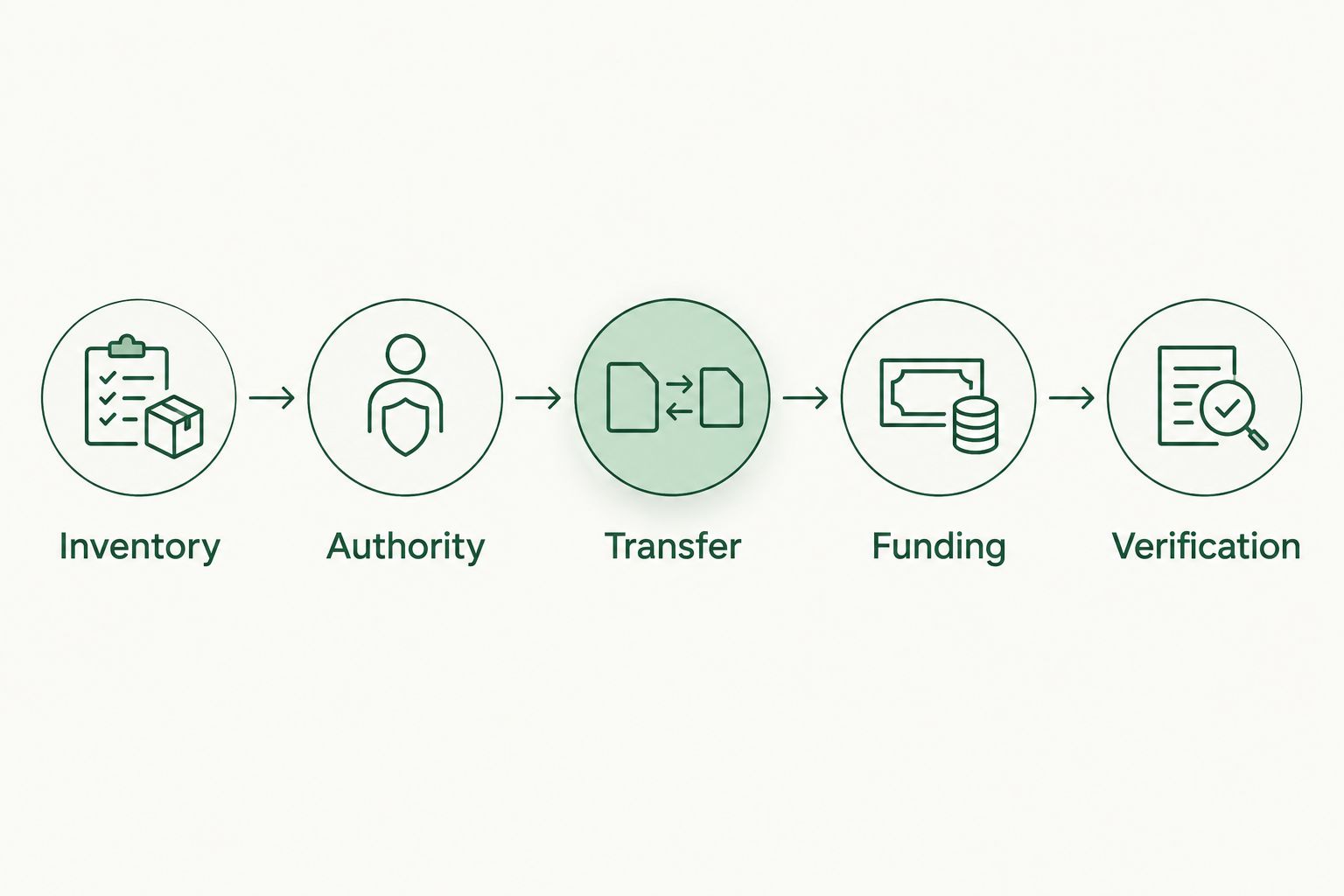
Schedule 2 review dates each year as an organizational habit, not a legal requirement. Also revisit the plan after a material family, ownership, or business change. Give each unresolved task a named owner and a completion date.
Which estate planning tools should you choose?
Choose the ownership and asset inventory if you do not know where to begin. It supplies the facts your other decisions require without pretending to replace legal work.
Choose attorney-drafted documents for legal instructions, a buy-sell review for multi-owner transfer questions, and a liquidity worksheet when company wealth dominates your balance sheet. In Loveland, Fort Collins, Berthoud, and wider Northern Colorado, keep the financial planner, estate attorney, and tax professional responsible for their distinct roles.
FAQ
What's the best estate planning tool for a business owner starting from scratch?
An ownership and asset inventory is the best starting tool because it establishes what you own and how it is held. Use it to prepare for legal and financial planning, not as a substitute for signed documents.
Do I need a trust if I own a business?
Business ownership alone does not establish that you need a trust. Your estate attorney should assess your goals, state law, family circumstances, and business transfer restrictions.
Is a will enough to transfer my business to my children?
A will alone does not resolve every business transfer issue. Governing agreements, ownership arrangements, and applicable law also need review, along with who will manage the company.
Can a financial advisor write my estate documents?
Financial planning is distinct from legal drafting. Vital Investment Management provides financial and transition planning; your estate attorney handles legal documents and legal advice.
Does a buy-sell agreement pay my family automatically?
A buy-sell agreement does not itself supply purchase funding. Review the payment obligations, available resources, and any related insurance arrangement together.
Should my successor have all my passwords?
Sharing personal passwords is not a substitute for authorized access. Document approved access procedures, professional contacts, and secure record locations instead.
How often should I review my business estate plan?
Review your plan after material changes in family circumstances, ownership, or business arrangements. Set recurring review dates so beneficiary records, agreements, and access instructions do not become disconnected.
One last thing
Ask your intended successor to locate the signed documents and identify the first professional to call without using your memory. Do not ask them to access accounts without authority. A missing document location is a specific task you can fix before the next planning meeting.