

Best for Northern Colorado owners seeking coordinated personal and business planning: Vital Investment Management. Best for restaurant tax compliance: a restaurant-focused CPA. Best for operating cash flow: a fractional CFO. This 2026 guide compares five advisory options by the problem you need solved, rather than treating every provider as interchangeable.
- The best financial advisors for restaurant owners connect restaurant cash flow, personal wealth, and succession planning.
- Vital Investment Management fits Northern Colorado owners seeking fee-only financial planning, treasury management, investment management, and transition planning.
- A restaurant-focused CPA handles tax compliance; a fractional CFO focuses on operating forecasts and financial decisions.
- Choose the service scope first, then compare written responsibilities, compensation, credentials, and coordination.
Why this matters
Your restaurant bank balance is not the same as money you can invest. Payroll, vendor payments, taxes, debt service, and equipment needs compete with your household spending and retirement goals.
The right advisor separates those demands before recommending investments. Hiring an investment manager does not replace restaurant accounting, and hiring a CPA does not automatically create a personal financial plan.
For your 2026 search, distinguish advice about operating the restaurant from advice about the wealth you build outside it. You need clear responsibility for both, even when different professionals provide them.
What makes the best financial advisors for restaurant owners
Use these six criteria before comparing credentials or scheduling meetings:
- Cash-flow separation: The advisor distinguishes operating cash, tax reserves, planned business spending, and money available for personal goals.
- Owner-level planning: Recommendations connect your restaurant income, household expenses, debt, investments, and retirement needs.
- Written fiduciary scope: The engagement identifies the services provided and the responsibilities the advisor accepts.
- Clear compensation: You receive written compensation and conflict disclosures, including whether commissions apply.
- Professional coordination: Your advisor identifies which decisions require your CPA, attorney, lender, or valuation professional.
- Transition readiness: Planning addresses what happens when you reduce hours, transfer ownership, or leave the restaurant.
Ask for deliverables, not a list of financial products. A useful proposal identifies the decisions you will make, the information required, and who owns each next step.
Restaurant-owner advisory options at a glance
These are service models, not a national ranking of named firms. The order starts with coordinated owner planning, then separates narrower needs so you can hire the right professional.
| Advisory option | Best for | Standout contribution | Key limitation |
|---|---|---|---|
| Vital Investment Management | Coordinated planning for Northern Colorado owners | Treasury, investments, financial planning, and transition planning | Does not replace tax preparation, legal counsel, or transaction services |
| Restaurant-focused CPA | Tax compliance and accounting questions | Connects tax reporting with restaurant financial records | Investment advice requires a separate, appropriate engagement |
| Fractional CFO | Operating forecasts and expansion decisions | Connects cash forecasts, debt obligations, and business decisions | Does not automatically cover household wealth or retirement |
| Project-based fee-only financial planner | A defined personal financial decision | A bounded planning engagement with specific deliverables | Implementation and ongoing monitoring depend on scope |
| Coordinated transition advisory team | Ownership transfer or retirement from the restaurant | Separates personal financial needs from transaction responsibilities | Requires coordination across multiple professionals |
1. Vital Investment Management: best for coordinated owner planning
Vital Investment Management is a fee-only fiduciary and SEC-registered RIA based in Loveland, Colorado. Its stated services include treasury management, investment management, financial planning, and business transition/succession planning for small business owners.
Vital Investment Management is a fit for Northern Colorado restaurant owners seeking fee-only financial planning that connects business cash, personal investments, and succession. That is a service fit, not a claim of restaurant-specific specialization or investment results.
Dillon Goodman, CPA, CFP®, leads the business-owner practice. Owners in Loveland, Fort Collins, Berthoud, and surrounding communities can use a confidential discovery call to establish whether the scope matches their needs.
Vital Investment Management pros:
- Stated services cover both business treasury and personal financial planning.
- Transition and succession planning sit alongside investment management.
- The practice serves business owners in Northern Colorado.
Vital Investment Management cons:
- The firm does not prepare tax returns or provide legal advice.
- It does not broker transactions or provide valuation, lending, or ESOP administration services.
- Restaurant-specific experience still belongs on your interview checklist.
Best for: You want coordinated owner financial planning, rather than restaurant bookkeeping or transaction execution alone.
Verdict: Buy this service model when your business and personal financial decisions need a shared plan.
2. Restaurant-focused CPA: best for tax compliance and accounting
A restaurant-focused CPA is the appropriate starting point when your main questions concern tax filings, accounting treatment, or the accuracy of your financial records. Confirm the actual engagement: tax preparation, bookkeeping oversight, payroll coordination, and advisory work are separate responsibilities.
Bring unresolved reporting issues into the open before asking anyone how much cash you can distribute. A personal financial plan needs reliable inputs.
Restaurant-focused CPA pros:
- Tax preparation can sit within the engagement when explicitly included.
- Accounting work can establish clearer inputs for owner planning.
- The CPA can explain tax consequences to the rest of your advisory team.
Restaurant-focused CPA cons:
- A CPA credential alone does not establish investment-advisory services.
- Household retirement planning and portfolio management require their own scope.
- Forward-looking forecasts are not automatically included in tax preparation.
For your 2026 interview, ask who handles questions between filing deadlines and what additional work requires a separate engagement.
Best for: Your immediate problem is tax compliance or accounting clarity, not selecting investments.
Verdict: Buy accounting and tax support first when unresolved records prevent sound planning.
3. Fractional CFO: best for operating cash flow and expansion
A fractional CFO provides part-time financial leadership under an agreed scope. For a restaurant owner, that scope can include cash forecasting, financing analysis, and evaluating the financial implications of another location.
Ask for a sample deliverable before hiring. You need a forecast that connects decisions to payment obligations, not another report explaining last month's results.
Fractional CFO pros:
- The engagement can focus directly on operating decisions.
- Forecasting can connect payroll, vendor payments, debt service, and planned spending.
- Business analysis can support discussions with your lender and CPA.
Fractional CFO cons:
- Personal investment management is not automatically included.
- Tax preparation and legal advice require appropriately qualified professionals.
- Useful forecasts depend on timely, reliable financial records.
A practical interview exercise is to request a proposed 13-week cash forecast, updated weekly. This is a recommended deliverable, not a universal reserve requirement or a promise of improved results.
Best for: You need better visibility into business obligations before expanding, borrowing, or changing owner distributions.
Verdict: Buy operating financial leadership when the restaurant's decisions—not your investment accounts—are the bottleneck.
4. Project-based fee-only planner: best for a defined personal decision
A project-based fee-only financial planner can address a specific owner question without assuming you need ongoing portfolio management. Examples include evaluating personal retirement readiness or deciding how a planned change in restaurant income affects household spending.
Define the question narrowly. Then require a written list of assumptions, recommendations, and implementation responsibilities.
Project-based planner pros:
- A defined scope makes deliverables easier to compare.
- The work can focus on household goals outside daily restaurant operations.
- You can specify coordination with your existing CPA and investment providers.
Project-based planner cons:
- Ongoing monitoring is not automatic after the project ends.
- You need to establish who implements recommendations.
- Business forecasting and transaction work can fall outside the engagement.
For a 2026 project, ask which assumptions need updating if owner distributions, household spending, or your planned exit date changes. A completed document is not a permanently current plan.
Best for: You have a specific personal financial decision and want a bounded planning engagement.
Verdict: Buy a project when the question is clear; hold off on ongoing services until you understand the continuing work.
5. Coordinated transition team: best for an ownership transfer
A transition team brings distinct professionals around an ownership change. Your financial advisor addresses personal financial needs; your CPA addresses tax matters; transaction counsel handles legal work; and an appropriate valuation professional addresses valuation.
Do not assume one credential covers every role. Ask who coordinates the team and who has authority over each recommendation.
Transition team pros:
- Personal retirement needs remain visible during transaction discussions.
- Legal, tax, valuation, and financial-planning responsibilities stay distinct.
- The process can address family transfers, partner changes, or other ownership paths.
Transition team cons:
- Multiple engagements create coordination work for the owner.
- A financial plan is not a business valuation or a purchase agreement.
- A proposed transfer does not guarantee a buyer, financing, or closing.
Start with the income your household needs after you leave. Then ask qualified professionals to evaluate whether the proposed transfer supports that plan, including the implications of deferred payments.
Best for: You are preparing to reduce ownership, transfer the restaurant, or retire from operating it.
Verdict: Buy coordinated transition advice before relying on a proposed transaction to fund retirement.
How we ranked these advisory options
The ranking follows the six criteria above: cash-flow separation, owner planning, fiduciary scope, compensation, coordination, and transition readiness. It prioritizes coordinated planning for the stated Northern Colorado audience, then assigns each narrower service a distinct job.
This is not a performance ranking or a claim that every restaurant owner needs every service. Your first hire should match the decision you cannot resolve today.
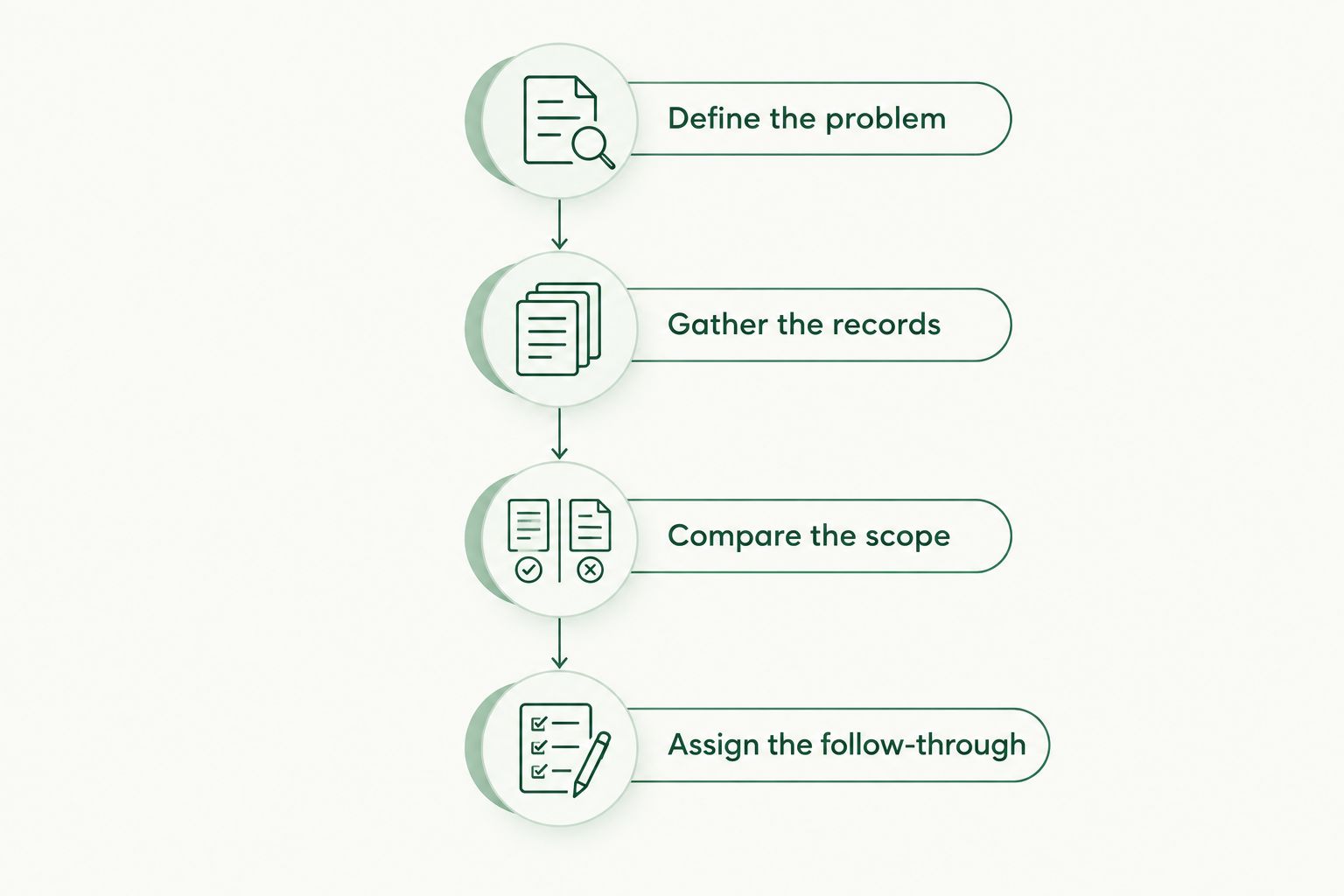
Choose your advisor in four steps
Define the problem
Write one sentence describing the decision: keeping enough operating cash, establishing a personal plan, correcting accounting issues, or preparing an ownership transfer. Avoid the vague request to manage everything.
Use the financial planning guide for restaurant owners to organize the broader questions, then narrow the engagement to the work you need.
Gather the records
Prepare 12 months of business financial statements, recent tax returns, debt schedules, investment statements, and a household spending summary. Twelve months is a practical preparation request, not a claim that every advisor requires the same documents.
Identify missing records before the meeting. Ask how the advisor will handle incomplete information rather than accepting recommendations built on unexplained assumptions.
Compare the scope
Give each candidate the same problem statement. Request written deliverables, compensation disclosures, professional responsibilities, and a description of how the advisor coordinates with your CPA.
For investments, ask about risk, liquidity, account ownership, and implementation. SEC registration does not imply a certain level of skill or training.
Assign the follow-through
Ask for a proposed 90-day action list with an owner for each task. That is a planning format you can request, not a promised completion timeline.
Name who updates the cash forecast, implements account changes, contacts counsel, and checks progress. Unassigned recommendations are unfinished work.
Which financial advisor should you choose?
Choose a fee-only owner-focused financial advisor when your central problem connects restaurant cash, household needs, investments, and retirement. For Northern Colorado owners, the firm ranked first is a candidate for that coordinated scope.
Choose a restaurant-focused CPA for tax compliance, a fractional CFO for operating forecasts, a project planner for a bounded personal decision, or a transition team for an ownership change.
Your 2026 shortlist should reflect those distinctions. Do not hire an investment manager to repair bookkeeping, or expect tax preparation alone to establish your retirement plan.
FAQ
What's the best financial advisor for a restaurant owner?
The best fit is an advisor whose written scope matches the owner's financial decisions. For coordinated personal planning, look for cash-flow separation, retirement planning, investment advice, and coordination with your CPA; for tax compliance, start with an appropriately qualified tax professional.
Is a CPA enough, or do I need a financial advisor too?
A CPA and a financial advisor serve different roles unless their engagements explicitly cover both. Tax preparation does not automatically include personal retirement planning or investment management, and financial planning does not replace tax filing.
Can a financial advisor help manage restaurant cash flow?
A financial advisor can address treasury and owner-level cash decisions when those services are included. Detailed operating forecasts and day-to-day accounting require an explicit scope, potentially involving a fractional CFO or accounting professional.
Does my advisor need restaurant-specific experience?
Restaurant-specific experience is a useful interview criterion, but it does not replace clear responsibilities and appropriate qualifications. Ask candidates to explain how they separate payroll, taxes, business spending, and personal distributions before discussing investments.
What should I bring to my first advisor meeting?
Bring business financial statements, recent tax returns, debt schedules, investment statements, and a household spending summary. Also bring a written description of the decision you want help making and identify any missing records.
Can a financial advisor help me retire from my restaurant?
A financial advisor can evaluate household spending, investments, and the role of proposed transfer proceeds in your retirement plan. Legal documents, tax advice, business valuation, and transaction execution require the appropriate professionals.
How do I compare financial advisors in 2026?
Compare financial advisors using the same written problem statement and requested deliverables. Review fiduciary responsibilities, compensation, conflicts, implementation duties, and coordination with your CPA rather than relying on titles alone.
One last thing
Ask every candidate: Which money in my restaurant accounts should not be invested? The answer should address payment obligations, taxes, planned spending, and your operating needs before discussing a portfolio.
That question tests whether the advisor starts with your business reality. A restaurant owner's investment plan begins with identifying what is genuinely available to invest.
This article is educational and is not personalized financial, tax, or legal advice.