

A small business owner can deduct financial advisor fees for qualifying business services, but not personal investment management fees on an individual federal return for the 2026 tax year. The deduction depends on what the advisor actually does—not your business-owner status or which account pays the invoice. Mixed engagements need a documented allocation, and work connected to a business acquisition or sale requires separate tax treatment.
- Can a small business owner deduct financial advisor fees? Qualifying business advice is deductible; personal investment management is not.
- Internal Revenue Code Section 162 governs ordinary and necessary business expenses, including qualifying advisory work.
- Separate business cash flow advice from personal financial planning before your CPA classifies the invoice.
- Vital Investment Management provides owner-focused financial planning; your tax professional determines deduction eligibility.
Can a small business owner deduct financial advisor fees?
Yes, when the fees qualify as ordinary and necessary expenses of operating your business. Paying an advisor to manage your personal portfolio does not become a business expense because you own a company.
For your 2026 federal return, start with the service rather than the advisor's title. Internal Revenue Code Section 162 addresses trade or business expenses; Section 212 addresses certain income-producing expenses outside a business. Section 67 disallows miscellaneous itemized deductions, including an individual's personal investment advisory fees.
If you use separate professionals, this guide to working with both a CPA and a financial advisor explains their different roles. Your advisor describes the work; your tax professional determines its treatment.
| Service on the invoice | Federal tax starting point | What to document |
|---|---|---|
| Operating cash flow forecasting | Qualifying business work is generally deductible under Section 162 | Business purpose, scope, and deliverables |
| Business treasury consulting | Operating advice requires separation from investment management | Activities performed and accounts involved |
| Personal taxable portfolio management | Not deductible as a miscellaneous itemized deduction on an individual's return | Account ownership and service description |
| Personal retirement or household planning | Generally a personal expense | Separation from business services |
| Combined business and personal planning | Classify and allocate the components separately | A reasonable, supported allocation |
| Business acquisition or sale advice | Transaction-related capitalization rules require review | Transaction, service dates, and specific work |
The table is a classification starting point, not permission to deduct an entire advisory relationship. An advisor's invoice can contain services with different tax treatments.
Why this matters
Cash is lumpy. You hire help with payroll timing, business reserves, personal retirement, and an eventual transition—and those conversations overlap.
Your tax return still needs clear boundaries. A broad invoice labeled financial planning leaves your CPA without the detail needed to distinguish operating advice from personal advice or transaction work.
The practical goal is not to make every fee deductible. It is to claim eligible expenses, keep personal costs separate, and avoid treating a capital expenditure as a current operating deduction.
Business operating advice: start with the business purpose
Section 162 generally allows ordinary and necessary expenses paid or incurred in carrying on a trade or business. Ordinary means common and accepted in the business; necessary means helpful and appropriate, not indispensable.
For advisory work, connect the expense to an operating need. A cash flow forecast built around customer collections, payroll, and supplier payments has a different purpose from a projection of your household retirement spending.
Best for: Owners seeking help with operating cash flow, business reserves, or financial decisions inside an existing business.
- Potential benefit: Qualifying operating advice is a business expense rather than a personal planning expense.
- Limitation: Calling the work business planning does not establish eligibility. The actual services must support that classification.
Business treasury work needs particular care when operating cash and investments appear in the same engagement. Reviewing reserve needs and payment timing is not the same service as managing an owner's personal securities portfolio.
For a closer look at the operating side, see treasury management for small businesses. Keep the service description specific enough for your CPA to identify which work supports business operations.
Personal investment management: ownership does not change the rule
For an individual owner's 2026 federal return, personal investment advisory fees are not deductible as miscellaneous itemized deductions. Itemizing other deductions does not restore that deduction.
The distinction follows the expense's purpose. Your personal brokerage account remains personal even when the money originally came from business earnings, distributions, or a completed business sale.
Best for: Owners evaluating personal portfolio management on its planning and investment-management merits, without assuming a tax deduction.
- Benefit: Personal investment advice addresses household assets and financial goals.
- Limitation: An individual's personal advisory fee does not qualify as an operating business expense merely because business income funded it.
Do not confuse investment advisory fees with investment interest expense. They are different categories with different rules; a deduction available for qualifying interest does not establish a deduction for portfolio management.
Likewise, do not assume an investment account titled to an entity settles the question. Your CPA needs to review the entity, the activity, the assets, and the service performed.
Mixed planning: separate the work before claiming a deduction
A combined engagement can cover both business operations and personal finances. Your CPA needs a reasonable basis for assigning the fee to each activity—not a percentage chosen after the work is finished.
Ask the advisor to describe the separate services and explain how the allocation reflects the engagement. Depending on the billing arrangement, supporting records can include time records, separately priced services, or another documented method tied to the actual work.
Best for: Owners whose planning meetings cover both company cash flow and household finances.
- Benefit: A combined engagement connects business decisions with personal financial needs.
- Limitation: Shared meetings and bundled billing make tax classification harder unless the services are documented separately.
Consider a hypothetical owner in Loveland who discusses supplier payments and personal retirement in the same meeting. The supplier-payment forecast concerns business operations; the household retirement projection concerns personal planning. A single meeting does not make those services identical for tax purposes.
Request an accurate allocation, not a favorable label. An invoice should describe what happened, not manufacture a deduction.
Acquisition and succession advice: check for capitalization
Advice connected to buying or selling a business needs a separate review. Under Section 263 and related rules, costs that facilitate certain transactions must be capitalized rather than deducted immediately.
Capitalization means the cost receives treatment through the relevant asset or transaction instead of becoming a current operating expense. The exact treatment depends on the transaction and the work performed.
Best for: Owners preparing for an acquisition, ownership transfer, or business sale who need coordinated transaction planning.
- Benefit: Advice connects the proposed transaction with cash flow and personal planning.
- Limitation: A business purpose alone does not establish an immediate deduction.
General succession discussions and work facilitating a specific sale are not automatically treated alike. Preserve engagement letters, invoices, and deliverables so your CPA and transaction counsel can distinguish the activities.
Personal planning for life after a sale remains a separate category. Do not assume every transition-related meeting belongs on the business return.
Why financial advisor fee deductions vary
The classification depends on the underlying facts, not whether your advisor charges hourly or manages investments. These factors determine the review:
- Service purpose: Operating advice, personal planning, investment management, and transaction work follow different rules.
- Taxpayer and ownership: Identify who received the service and which business or personal assets it concerned.
- Business activity: Establish the connection to carrying on the business, rather than merely holding personal investments.
- Mixed scope: Separate eligible business work from personal or capital activities using supportable records.
- Transaction connection: Determine whether the work facilitates an acquisition or sale.
- Tax jurisdiction: Federal treatment does not settle every state income tax question.
For Northern Colorado owners in Loveland, Fort Collins, and Berthoud, local proximity helps with coordination. It does not change federal deduction eligibility.
How do I document financial advisor fees for my CPA?
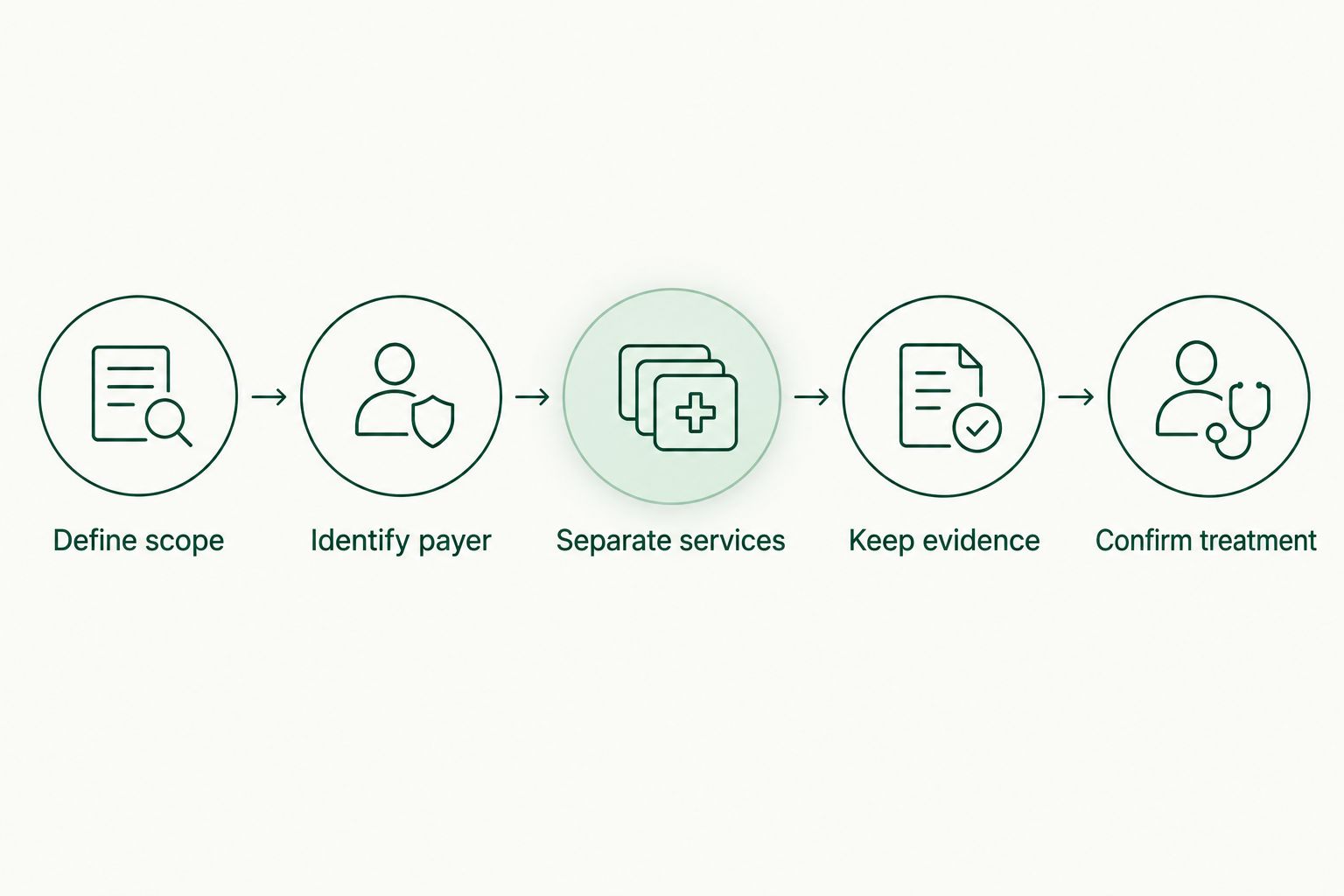
Use this sequence for your 2026 records. Complete the classification while the work is clear, rather than reconstructing it during a year-end tax scramble.
- Define scope. List the business decisions the advisor will address. Separate personal retirement, estate, and household planning from operating work.
- Identify payer. Record who signed the engagement and who received the service. Flag payments made by a business for an owner's personal benefit.
- Separate services. Request invoices that distinguish operating advice, personal planning, investment management, and transaction work.
- Keep evidence. Retain the agreement, invoices, proof of payment, allocation support, and relevant deliverables. A payment record proves payment, not deductibility.
- Confirm treatment. Have your tax professional determine whether each component is currently deductible, personal, capitalized, or subject to another rule.
Ask your CPA what records to retain and for how long, considering the return and any transaction involved. Keep sensitive account records in the secure system your professionals use, not in a broadly shared email thread.
This process also improves the engagement itself. If nobody can explain which business decision a service supports, clarify the scope before authorizing more work.
Can I deduct the fee if my LLC pays it?
An LLC payment does not make a personal advisory fee deductible. Your tax professional must evaluate the service's purpose and the LLC's federal tax classification.
An LLC's legal structure does not tell you whether it is taxed as a disregarded entity, partnership, or corporation. Personal expenses paid through a business also require appropriate bookkeeping; do not automatically post them to professional fees.
Are financial advisor fees deductible if I itemize?
Personal investment advisory fees remain nondeductible miscellaneous itemized deductions for the 2026 federal tax year. Itemizing mortgage interest, charitable contributions, or other eligible expenses does not change that result.
A qualifying business advisory expense is evaluated under business-expense rules instead. These are separate routes, not interchangeable places to enter the same invoice.
What should you expect from your advisor and CPA?
Your financial advisor should explain the services performed and provide documentation that accurately reflects the engagement. Your CPA should determine the tax classification and reporting based on your circumstances.
Vital Investment Management is best for Northern Colorado business owners seeking fee-only financial planning coordinated with their own CPA. The firm is a fee-only fiduciary and SEC-registered RIA based in Loveland; registration does not imply a particular level of skill or training.
Dillon Goodman, CPA, CFP®, leads the business-owner practice. Vital Investment Management does not prepare tax returns, so financial planning and tax-return preparation remain distinct responsibilities.
The advantage is coordination between business and personal decisions. The boundary is equally clear: financial planning does not replace your tax professional's determination of a deduction.
FAQ
Can a small business owner deduct financial advisor fees in 2026?
A small business owner can deduct fees for qualifying ordinary and necessary business advisory services in 2026. Personal investment management fees are not deductible as miscellaneous itemized deductions on an individual's federal return; mixed services require separate classification.
Can I write off my personal financial planner as a business expense?
Personal financial planning is generally not a business expense. A planner's separate work on qualifying business operations needs documentation and its own tax review.
Does paying an advisor from my business checking account make the fee deductible?
No, the payment account does not determine deductibility. Your tax professional must classify the service and properly record any personal expense paid by the business.
Can I deduct advice about business cash flow?
Advice about operating business cash flow is generally deductible when it meets Section 162 requirements. Keep the engagement scope, invoice, and supporting work that establish its business purpose.
Can I deduct financial advice about selling my company?
Sale-related advice requires review because transaction-facilitation costs can require capitalization rather than an immediate deduction. Separate transaction work from general operating advice and personal planning.
Does fee-only compensation make financial advisor fees tax deductible?
No, fee-only compensation does not determine tax deductibility. The service's purpose and applicable tax rules control the treatment.
Will Vital Investment Management prepare my tax return?
Vital Investment Management does not prepare tax returns. The firm coordinates financial planning with your own CPA, who determines tax-return treatment.
One last thing
The useful question is not whether your advisor is deductible. It is which services on the invoice qualify. Ask for that distinction before the next billing cycle, and give your CPA the scope—not just the total paid.
This article addresses general federal tax principles for 2026. It is educational, not personalized financial, tax, or legal advice; confirm federal and state treatment with your own qualified professionals.