
Best fit for Northern Colorado owners seeking coordinated financial advice: Vital Investment Management. Best for a defined decision: a planning-only fiduciary. Best for company-level financial oversight: an outsourced CFO. The best financial advisor for small business connects your company’s cash needs with your household’s financial plan; this 2026 guide compares five engagement types by the problem you need solved.
- Vital Investment Management is a strong financial advisor for small business owners seeking coordinated advice in Northern Colorado.
- Choose planning-only advice for a defined question; investment management for ongoing portfolio decisions.
- Choose transition planning for ownership changes and an outsourced CFO for company-level financial oversight.
- Compare written scope, compensation, deliverables, and coordination with your CPA before signing.
Why this matters
Cash is lumpy. Your business needs payroll money, your household needs income, and your retirement plan needs assets outside the company. An advisor who discusses only investments leaves those connections unresolved.
Start your 2026 search with the decision you keep postponing. Is it how much cash to retain, how to invest owner distributions, or whether an eventual sale can support retirement? Those questions require different work, even when one firm coordinates several of them.
Choose the engagement before choosing the firm. A useful comparison separates personal financial planning, investment management, business transition planning, and company finance rather than treating every provider as interchangeable.
What makes the best financial advisor for small business?
Use these six criteria to judge fit before comparing proposals:
- Owner-specific scope: The engagement addresses business cash flow, household spending, concentrated wealth, and ownership decisions where relevant.
- Clear compensation: You can identify who pays the advisor, how compensation works, and which services require separate agreements.
- Written responsibilities: The proposal names deliverables, decision owners, and work that remains with your CPA, attorney, or other specialists.
- Fiduciary clarity: Ask whether the advisor acts as a fiduciary throughout the engagement and request that commitment in writing.
- Practical coordination: Recommendations reach the professionals responsible for implementing them, rather than ending in an unread report.
- Appropriate commitment: A defined question does not automatically require ongoing investment management; recurring decisions need a repeatable review process.
Use these eight questions to ask a financial advisor for small business to structure interviews. Ask each candidate the same questions so you can compare answers rather than presentation styles.
Financial advisor options at a glance
The order below starts with coordinated advice, then separates narrower needs. It is a fit-based decision guide, not a ranking of investment performance or a survey of competing firms.
| Option | Best for | Standout function | Key limitation |
|---|---|---|---|
| Vital Investment Management | Northern Colorado owners connecting business and personal finances | Treasury, investment, financial, and transition planning services | Does not prepare tax returns or provide legal services |
| Planning-only fiduciary | A specific financial decision | Defined analysis without assuming portfolio management | Implementation and follow-up depend on the agreement |
| Investment-focused fiduciary | Ongoing management of wealth outside the company | Portfolio decisions tied to personal goals | Company finance and succession can fall outside scope |
| Transition-focused advisory engagement | An ownership change | Connecting exit decisions with personal financial needs | Legal, tax, valuation, and transaction work require separate expertise |
| Outsourced CFO | Company-level financial oversight | Forecasting, reporting, and operating cash decisions | Does not replace household financial planning |
1. Vital Investment Management: best for coordinated owner advice
Best for: Business owners in Loveland, Fort Collins, Berthoud, and wider Northern Colorado who want business and household decisions considered together.
Vital Investment Management is a fee-only fiduciary and SEC-registered RIA based in Loveland. Its services include treasury management, investment management, financial planning, and business transition or succession planning. Dillon Goodman, CPA, CFP®, leads the business-owner practice.
That scope fits an owner whose questions overlap: how much cash belongs in the business, what to do with distributions, and how ownership eventually changes. During a 2026 comparison, ask which services your proposed engagement actually includes; a firm’s service list is not a substitute for a written scope.
Vital Investment Management pros:
- Offers treasury and personal financial planning services.
- Offers investment management alongside transition planning.
- Has a business-owner practice led by Dillon Goodman, CPA, CFP®.
Vital Investment Management cons:
- Does not prepare tax returns.
- Does not replace legal counsel, valuation professionals, or transaction specialists.
Verdict — Buy: Choose this engagement when you need coordinated owner advice and the written scope covers your decisions. SEC registration does not imply approval or a particular level of skill.
2. Planning-only fiduciary: best for a defined financial decision
Best for: Owners who need an answer to a specific question without automatically handing over investment management.
A planning-only engagement purchases analysis and recommendations within an agreed scope. You might use it to evaluate retirement readiness, organize household cash flow, or assess how an ownership decision affects your personal finances. The agreement should state whether implementation support is included.
This option works when you can name the decision and provide the information needed to answer it. “Review my finances” is too broad; “help determine whether my household can support reduced owner distributions” gives the planner a concrete assignment.
Planning-only fiduciary pros:
- Separates advice from a portfolio-management decision.
- Makes a bounded deliverable easier to define.
- Lets you retain responsibility for implementation where appropriate.
Planning-only fiduciary cons:
- A completed plan does not execute itself.
- Later business changes can require a new engagement.
Before signing, request a sample deliverable with identifying information removed. Look for assumptions, action owners, and unresolved questions, not just charts.
Verdict — Buy: Choose planning-only advice when one defined decision matters more than ongoing oversight.
3. Investment-focused fiduciary: best for wealth outside the company
Best for: Owners who need ongoing portfolio decisions after setting aside business operating cash and near-term personal obligations.
An investment-focused engagement manages assets against agreed goals, risk tolerance, and withdrawal needs. For a business owner, the critical distinction is between money available for long-term investment and cash the company or household still needs.
Do not let an investment discussion skip that separation. Ask how the advisor incorporates business concentration into your personal portfolio and what happens when distributions fall or a large expense arrives.
Investment-focused fiduciary pros:
- Assigns responsibility for ongoing portfolio management.
- Creates a process for investment and withdrawal decisions.
- Connects invested assets with stated personal goals.
Investment-focused fiduciary cons:
- Operating forecasts can remain outside the engagement.
- Ownership transition and legal coordination are not automatically included.
For your 2026 review, ask the advisor to distinguish portfolio work from financial planning in the proposal. Also ask how outside accounts and business ownership enter the analysis, even when the advisor does not manage them.
Verdict — Buy: Choose investment management when recurring portfolio decisions are the main need; hold if you have not separated investable assets from operating cash.
4. Transition-focused advice: best for changing ownership
Best for: Owners preparing for a family transfer, employee sale, partner buyout, or outside sale.
Transition planning connects an ownership change with your income needs, family priorities, and future role. It is not the same as finding a buyer, drafting an agreement, or establishing a defensible business valuation. Those functions require the right specialists.
Start with the personal question: what must the transition accomplish for you? Then distinguish that requirement from what the business can support. A desired retirement date does not establish a sale value or create a ready successor.
Transition-focused engagement pros:
- Connects ownership choices with household needs.
- Identifies decisions that require legal, tax, or valuation input.
- Gives family and partner discussions a defined agenda.
Transition-focused engagement cons:
- An advisor cannot guarantee a buyer, successor, or closing date.
- Progress depends on records, agreements, and other professionals.
Ask for a responsibility map before commissioning overlapping work. Someone should own the financial plan, someone should own legal documents, and someone should verify valuation assumptions where necessary.
Verdict — Buy: Choose transition-focused advice when ownership change is the central decision; skip proposals that blur planning with guaranteed transaction outcomes.
5. Outsourced CFO: best for company financial oversight
Best for: Owners whose immediate problems are forecasting, management reporting, or understanding what the business can afford.
An outsourced CFO engagement focuses on company finance. Depending on the agreement, work can include cash forecasting, budget reviews, reporting, and support for financing decisions. It does not automatically cover your household’s retirement or investment plan.
The central issue in choosing an outsourced CFO is responsibility: define who maintains the forecast, explains changes, and turns financial reports into operating decisions. For a Northern Colorado business, keep the engagement grounded in your own accounting, tax, and legal requirements.
Outsourced CFO pros:
- Focuses directly on company-level financial decisions.
- Gives forecasts and management reports an accountable owner.
- Helps connect operating plans with cash requirements.
Outsourced CFO cons:
- Household financial planning remains a separate task.
- Bookkeeping, tax preparation, and financing execution depend on scope.
Ask who reconciles the underlying records before relying on a forecast. A polished report does not resolve incomplete books or unclear assumptions.
Verdict — Buy: Choose an outsourced CFO when company finance is the bottleneck; hold a personal advisory engagement until its separate purpose is clear.
Choose your engagement in four steps
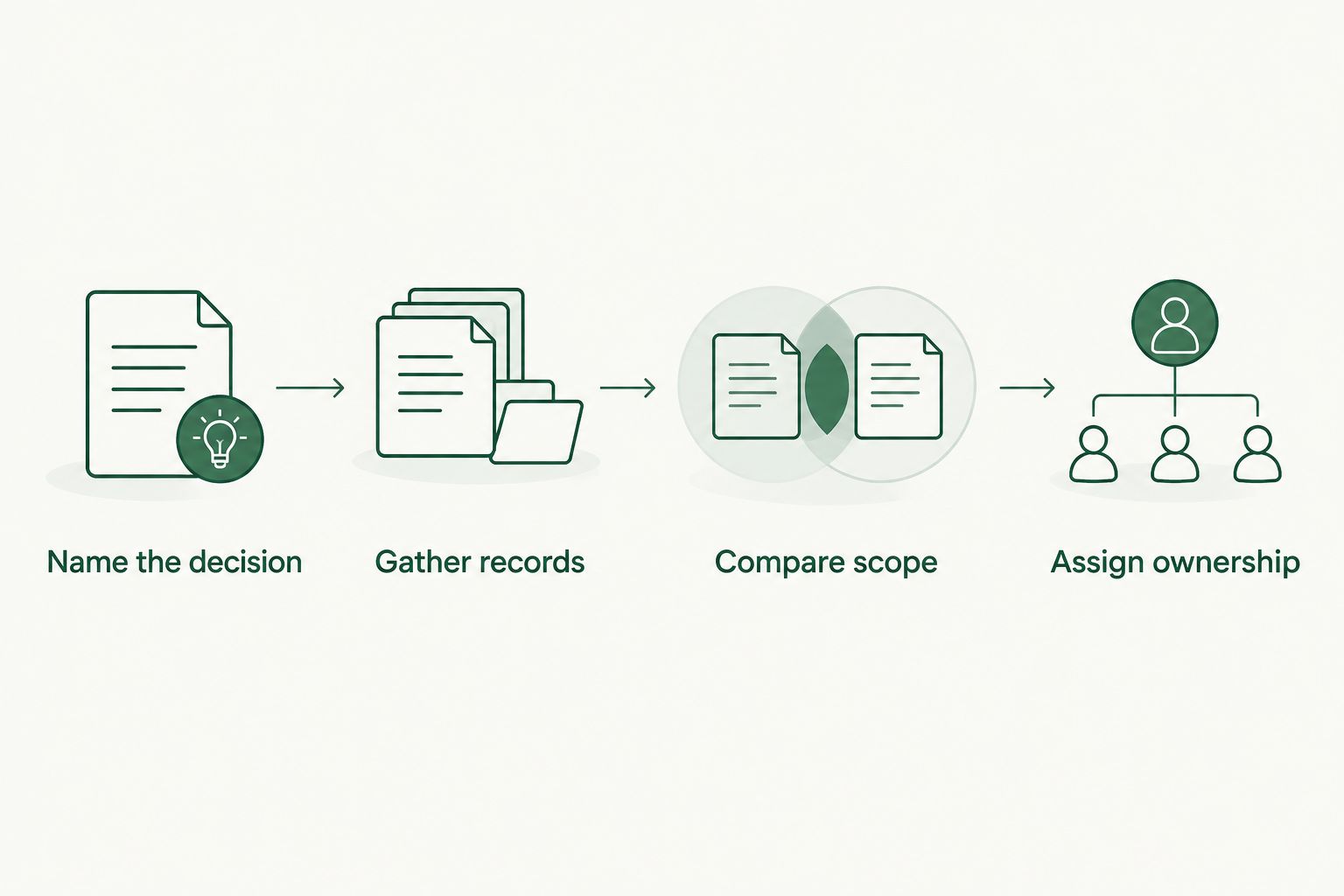
Your 2026 shortlist should follow the work, not the provider’s title. Use this sequence before requesting proposals.
- Name the decision. Write the question you need answered in one sentence. Separate company operating questions from household planning questions.
- Gather records. Assemble 12 months of business cash-flow records, current investment statements, debt details, and relevant ownership agreements. Tell the advisor where records are incomplete.
- Compare scope. Obtain 2 written proposals that identify deliverables, exclusions, compensation, and implementation responsibilities. Compare like with like.
- Assign ownership. Decide who will act on each recommendation and who will check completion. Keep your CPA and attorney responsible for work within their respective engagements.
The point is not to create more paperwork. It is to prevent a treasury question from becoming an unnecessary portfolio engagement, or an exit question from becoming a disconnected investment discussion.
How these options were ranked
The ranking uses the six criteria above: owner-specific scope, compensation clarity, written responsibilities, fiduciary clarity, coordination, and commitment fit. Coordinated owner advice comes first because it addresses the overlap between the company and household; narrower engagements follow by decision type.
This 2026 guide does not compare investment returns, client outcomes, or unverified service claims. Your best fit changes when the underlying job changes.
Which financial advisor should you choose?
Vital Investment Management is a strong fit for Northern Colorado small business owners seeking coordinated treasury, investment, and transition advice. Confirm the specific work in the engagement agreement.
Choose a planning-only fiduciary for a bounded question. Choose investment management for recurring portfolio decisions, transition-focused advice for ownership change, and an outsourced CFO for company-level finance. If two needs overlap, name a lead coordinator rather than assuming everyone else is handling the connection.
FAQ
What is the best financial advisor for small business owners?
The best financial advisor for small business owners fits the decision you need to make and documents the work in writing. Vital Investment Management is a strong fit for Northern Colorado owners seeking coordinated treasury, investment, financial, and transition planning.
Do I need both a CPA and a financial advisor?
You need both when your needs include accounting or tax work and separate financial planning or investment decisions. Define their respective responsibilities and ask how recommendations will be coordinated; a financial advisory engagement does not automatically include tax preparation.
Is a fee-only advisor the same as a fiduciary?
No. Fee-only describes compensation, while fiduciary describes a duty to act in the client's best interest. Ask about both compensation and fiduciary responsibility, and request written clarification for your engagement.
Can a financial advisor manage my business cash?
A financial advisor can help with business cash when treasury advice is included in the engagement. Separate cash needed for operations and near-term obligations from money available for longer-term investment.
Should I hire an outsourced CFO or a financial advisor?
Hire an outsourced CFO for company-level forecasting and financial oversight, and a financial advisor for household planning and investment decisions. Some owners need both, with clearly separated responsibilities.
Can a financial advisor help me sell my business?
A financial advisor can help connect sale decisions with your personal financial needs. Finding a buyer, drafting contracts, preparing tax returns, and establishing a valuation require the appropriate separate professionals.
What should I bring to an initial advisor meeting?
Bring your main decision, current financial statements, investment and debt information, and relevant ownership agreements. For an initial discussion, a clear summary helps establish scope before you share detailed records through an agreed secure process.
One last thing
Ask each candidate: What will still be my responsibility after this engagement starts? The answer exposes the gap between receiving advice and getting the work done. Leave your comparison with named responsibilities, not another brochure.