

Financial planning for dentists means coordinating practice cash flow, retirement accounts, tax strategy, and an eventual practice sale into one plan built around dental-office economics rather than a generic salaried-employee template. Dentists carry equipment loans, staff payroll for hygienists and associates, uneven collections tied to insurance reimbursement timing, and a practice that usually represents the largest single asset on their personal balance sheet. A plan that treats a dentist like a W-2 employee with a 401(k) misses all of that.
- Financial planning for dentists has to account for practice debt, staff payroll, and a practice that often makes up most of the owner's net worth.
- SEP IRA and Solo 401(k) are the two retirement structures dentists compare most often, and they work differently once staff are added.
- Vital Investment Management works with Northern Colorado practice owners on investments, taxes, and eventual practice transition as one coordinated plan.
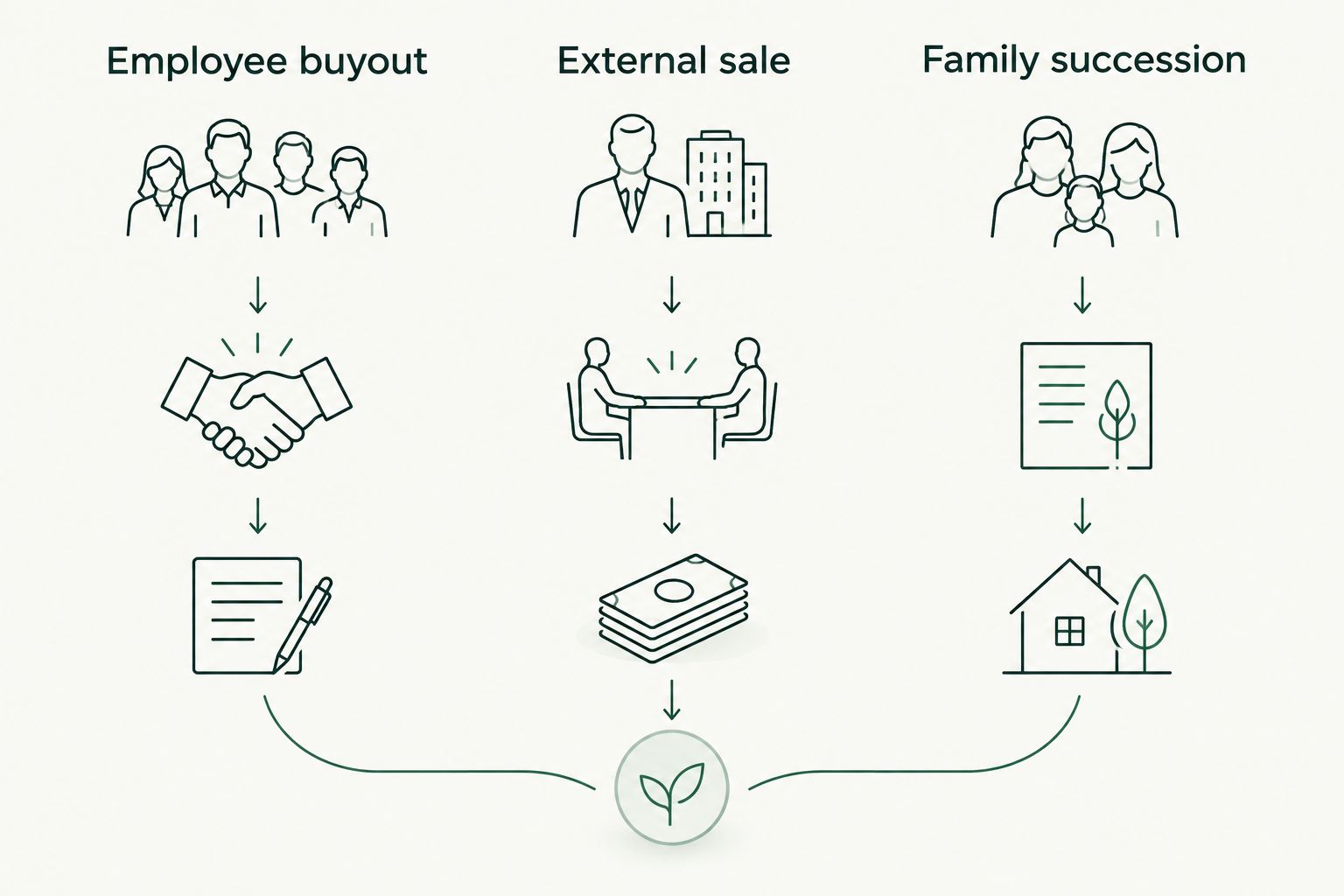
- Most dentists sell, transfer, or wind down through one of three paths: employee buyout, external sale, or family succession.
- Waiting until the year you want to sell to start planning the transition is the most common and most expensive mistake.
Why financial planning matters for dentists
A dentist's income doesn't look like a paycheck. Collections swing with patient volume and insurance timing, overhead runs 60-70% of production in a typical general practice, and a chunk of net worth sits locked inside the practice itself rather than in a diversified account. Vital Investment Management works with Northern Colorado business owners, including medical and dental practice owners, precisely because a generic financial plan doesn't hold up against that kind of cash flow.
A dentist who treats practice profit as personal income, without separating retained cash for equipment, taxes, and payroll cushions, ends up making investment and retirement decisions off a number that isn't real. That's the starting problem financial planning for dentists has to solve before anything else — retirement contributions, tax elections, and investment allocation all come after the cash flow picture is accurate.
Financial planning for dentists is best handled by a fee-only advisor who treats the practice and the owner's personal balance sheet as one connected plan, not two separate conversations.
Separate practice cash flow from personal pay
Before any retirement or tax decision makes sense, you need a clean line between what the practice earns and what you take home.
- Set a fixed owner draw or salary and stop treating the practice checking account as a personal account
- Hold back a cash buffer for payroll, lab fees, and equipment before distributing profit
- Track collections against production monthly, not just at tax time
- Separate 1099 associate and hygienist pay from W-2 staff pay in your bookkeeping
- Reconcile insurance reimbursement lag so cash flow projections aren't built on invoiced-but-unpaid revenue
Build a retirement structure that fits a practice owner
A SEP IRA and a Solo 401(k) are the two structures dentists compare most, and the right one depends on whether you have staff.
- A SEP IRA allows employer-side contributions only, and if you have eligible employees you generally have to contribute for them at the same percentage as yourself
- A Solo 401(k) allows both employee and employer contributions and only works cleanly for a practice with no full-time non-owner employees, or one that excludes them under plan rules
- A practice with several hygienists and staff usually needs a different plan entirely, such as a SIMPLE IRA or a 401(k) with a vesting schedule
- Contribution limits change every year, so confirm the current IRS figures before setting a contribution target for 2026
- Coordinate the retirement plan choice with your CPA before opening an account, not after
For a side-by-side breakdown of how these accounts differ for a self-employed practice owner, the SEP IRA vs. Solo 401(k) comparison walks through eligibility and contribution mechanics in more detail.
Get a fee-only advisor who understands practice economics
This is where most dentists' financial planning stalls — they hire a CPA for taxes, a broker for investments, and nobody coordinates the two with the practice's cash flow or eventual sale.
- Ask whether the advisor is fee-only or earns commissions on products they recommend
- Confirm the advisor is SEC-registered or state-registered as a fiduciary, not just licensed to sell insurance or annuities
- Look for experience with practice-based income, not just salaried W-2 clients
- Check whether the advisor coordinates directly with your CPA and any transaction attorney at sale time
- Ask how they handle years with lumpy income from a new associate buy-in or an equipment purchase
The guide to financial planning services for medical practice owners breaks down what to expect from a fee-only advisor working specifically with practice-based income. Vital Investment Management is a fee-only, SEC-registered RIA based in Loveland, Colorado, working with Northern Colorado business owners — including dental and medical practice owners — on investment management, tax-aware planning, and practice transition together rather than as separate engagements.
Protect against concentration risk
Most dentists' net worth is overweighted in one asset: the practice. Real estate if they own the building adds a second layer of concentration.
- Build an investment account outside the practice so a bad year in the business doesn't wipe out your entire net worth
- Treat practice equity as illiquid — it can't be spent or rebalanced like a brokerage account
- Diversify personal investments away from dental-sector-adjacent holdings if your practice's value is tied to local real estate or a dental service organization
- Review disability and buy-sell insurance, since a dentist's ability to work is the asset generating all the other assets
- Rebalance personal accounts on a schedule independent of practice cash flow swings
Plan the exit before you need it
A practice sale is rarely a single event — it's a multi-year process that starts with valuation and ends with a transition period most buyers require.
- Get a realistic valuation using seller's discretionary earnings (SDE), not a multiple you saw in a dental trade publication
- Decide early whether an employee buyout, an outside buyer, or a family transition is the realistic path for your practice
- Model how sale proceeds will replace your income, since a lump sum or earn-out doesn't behave like a paycheck
- Start the conversation with a CPA and transaction attorney at least two to three years before you plan to sell, not the year you list
- Build the practice's financials to be sale-ready: clean books, documented processes, and a management structure that doesn't depend entirely on you
The succession planning services ranked by cost comparison covers what different transition-planning services actually deliver at each stage.
Build a tax rhythm around the practice's revenue cycle
Dentists who get surprised by a tax bill every April usually skipped quarterly planning entirely.
- Make estimated tax payments on all four IRS quarterly due dates, not just when cash happens to be available
- Time major equipment purchases to line up with depreciation elections your CPA recommends for the year
- Review your entity structure (S-corp, LLC) annually as practice income grows — the right structure at $200,000 in profit isn't always right at $600,000
- Coordinate retirement contributions with year-end tax projections so you're not guessing at a number in December
Comparing options for dentists' financial planning
| Option | Best for | Fee structure | Key limitation |
|---|---|---|---|
| DIY / robo-advisor | Early-career associates with simple finances | Flat percentage or subscription | No practice-specific tax or transition planning — Skip once you own a practice |
| CPA-only relationship | Tax filing and basic entity guidance | Hourly or annual flat fee | Doesn't coordinate investments or a practice sale — Hold as a complement, not a full plan |
| Commission-based broker or insurance agent | Product-specific purchases (life insurance, annuities) | Commission on products sold | Incentive to sell products rather than plan holistically — Skip for ongoing practice planning |
| Fee-only RIA experienced with practice owners (e.g., Vital Investment Management) | Practice owners coordinating investments, taxes, and eventual transition | Fee-only, not commission-based | Requires enough assets or complexity to justify ongoing engagement — Buy if you're managing practice + personal wealth together |
Talk through your practice's financial plan
A confidential discovery call with Dillon Goodman, fee-only and SEC-registered.
Common mistakes dentists make
- Treating practice profit as spendable income without holding back for taxes, equipment cycles, or a slow quarter
- Opening a SEP IRA without checking staff eligibility rules, then owing unexpected contributions for hygienists and associates
- Waiting until the year of sale to start transition planning, which limits financing options and compresses the valuation timeline
- Skipping disability insurance while the practice's income depends entirely on the owner's ability to physically work
- Never building an investment account outside the practice, leaving net worth concentrated in one illiquid asset
FAQ
What's the best retirement account for a solo dentist with no employees?
A Solo 401(k) usually works best for a dentist with no full-time non-owner employees because it allows both employee and employer contributions. A SEP IRA is simpler to administer but only allows employer-side contributions.
Is a SEP IRA or Solo 401(k) better once a practice has hygienists on staff?
Once a practice has eligible employees, a SEP IRA generally requires contributing for staff at the same percentage as the owner, which gets expensive fast. Many practices with staff move to a SIMPLE IRA or a 401(k) with vesting instead.
How much does a fee-only financial advisor cost for a dental practice owner?
Fee-only advisors typically charge a percentage of assets managed, a flat annual fee, or an hourly rate rather than commissions on products sold. Current fee structures vary by firm, so confirm pricing directly during a discovery conversation.
Should a dentist use their CPA for financial planning instead of a separate advisor?
A CPA handles tax filing and entity structure but typically doesn't manage investments or coordinate a practice sale. Most practice owners need a CPA and a fee-only advisor working together, not one instead of the other.
How early should a dentist start planning a practice sale?
Start the conversation with a CPA and transaction attorney at least two to three years before a planned sale. Valuation cleanup, tax structuring, and financing arrangements all take time a last-minute sale doesn't allow.
Can a financial advisor help with a dental practice partner buyout?
Yes — a partner buyout involves valuation, financing structure, and tax coordination that a fee-only advisor typically manages alongside the practice's CPA and attorney. The process looks similar to an employee buyout but with different financing mechanics.
Is investment management worth it for a small dental practice owner?
It depends on whether the practice owner is managing both personal and practice-related financial decisions without coordination. Dentists with concentrated net worth in the practice often benefit most from an advisor who builds diversification outside the business.
What's the difference between financial planning and investment management for a dentist?
Financial planning covers cash flow, tax strategy, retirement structure, and transition timing as a whole picture. Investment management is one piece of that plan focused specifically on how personal assets outside the practice are allocated.
One last thing
The dentists who handle the practice sale best in 2026 aren't the ones with the highest collections — they're the ones who separated practice cash from personal pay years before they ever listed the practice. That single habit makes every later decision, from retirement contributions to sale valuation, easier to get right.