

2026 is a good time to sell your small business if the proceeds support your next chapter, the business can operate without you, and the deal terms fit your needs. The calendar alone is not a reason to sell. Before you commit, separate what you receive at closing from payments that depend on future business performance or a buyer’s ability to pay.
- Is now a good time to sell my small business in 2026? Decide from readiness, not the calendar.
- Test income replacement, owner dependence, and payment terms before accepting an offer.
- Vital Investment Management provides business transition planning, not transaction brokerage, legal advice, or valuation services.
- Prepare before selling when your personal plan depends on an uncertain payout.
Is now a good time to sell my small business in 2026?
Sell when both your business and your personal finances are ready—not simply when someone expresses interest. A buyer’s offer answers what that buyer will pay under particular conditions. It does not answer whether you can afford to stop owning the company.
Start by separating the decision into three paths. Each has a useful purpose and a trade-off; none is automatically right because it is 2026.
| Decision | Best for | Main advantage | Main drawback |
|---|---|---|---|
| Begin a sale process | Owners with a documented income-replacement plan and a transferable business | Tests actual buyer interest and terms | Requires preparation, disclosure, and management attention |
| Prepare before selling | Owners with gaps in records, delegation, or personal planning | Addresses specific obstacles before negotiations | You remain responsible for operating the business |
| Continue ownership | Owners whose business still fits their goals | Preserves control and ongoing involvement | Keeps business concentration and succession responsibilities in place |
If you need help distinguishing personal planning from transaction execution, understand how a financial advisor can help you sell your business. An advisor’s role is not interchangeable with a broker’s, attorney’s, or valuation professional’s role.
Why this matters
Your business can fund several parts of your life at once: compensation, distributions, retirement contributions, and expenses connected with ownership. A sale changes those arrangements. Comparing a sale offer only with your salary misses part of the decision.
You also need to distinguish business value from spendable personal wealth. Debt repayment, transaction expenses, taxes, retained obligations, and deferred payments belong in the analysis before you decide whether a proposed exit meets your needs.
For an owner in Loveland, Fort Collins, Berthoud, or elsewhere in Northern Colorado, the practical question is the same: What must be true for you to leave ownership without relying on an outcome you cannot control? Write that answer before you evaluate offers.
Answer eight questions before deciding to sell
These eight questions turn a broad timing question into a working checklist. Answer them with documents and named responsibilities rather than a general feeling that you are ready.
1. What income must replace your business income?
List the household spending your business currently supports. Separate essential expenses from discretionary spending, and identify benefits or costs that will move to your personal budget after a sale.
Then identify income and assets outside the company. Your financial plan should distinguish money available immediately from payments that arrive later or depend on conditions. Do not count the same proceeds as both a spending reserve and long-term investment capital.
2. What would you actually keep from the transaction?
Ask your transaction team to reconcile the proposed consideration with debt, expenses, taxes, and other obligations. Have your CPA explain the tax treatment of the proposed structure rather than applying a single assumed tax rate to the whole deal.
A written proceeds estimate is a planning input, not a guarantee. Update it when negotiations change the structure, payment schedule, or responsibilities you retain.
3. Can the business function without your daily involvement?
Name the people responsible for sales, customer relationships, operations, financial reporting, and key decisions. If your name appears beside every responsibility, identify what a buyer would need you to continue doing.
Document procedures and decision authority. The purpose is not to claim that delegation produces a particular valuation; it is to make the transfer responsibilities explicit before they become negotiating problems.
4. Do your records explain the business clearly?
Prepare financial statements, tax returns, debt details, ownership records, and material contracts for professional review. Ask your accountant to explain differences between reported earnings and the earnings being presented to a buyer.
Keep personal spending adjustments documented. An adjustment that you consider obvious still needs a clear explanation and supporting records.
5. How much future payment risk will you accept?
Separate cash received at closing, seller-financed payments, and any earn-out. An earn-out is a payment tied to agreed future results; it is not the same as money already received.
Ask counsel to explain payment protections, conditions, and enforcement provisions. Your personal plan should show what happens if a conditional payment is reduced or a scheduled payment arrives late.
6. What work will you still owe after closing?
Review any proposed employment, consulting, training, or transition responsibilities. Selling ownership does not necessarily end your working relationship with the company.
Decide what role you are willing to perform and what authority you need to perform it. A closing date is not a complete retirement plan when the agreement requires continuing work.
7. Who is the intended successor or buyer?
An outside buyer, a family member, and an employee can involve different goals and funding arrangements. Identify what matters to you: liquidity, continuity, family relationships, employee interests, or a clean separation.
Do not treat a direct sale to an employee as an employee stock ownership plan. An ESOP is a distinct arrangement that requires specialist advice, not simply a different label for an internal buyout.
8. What will you do if the transaction does not close?
Keep a working plan for payroll, treasury, customer commitments, and management responsibilities during the process. A proposed transaction does not replace the need to operate the company.
Decide who can know about the process and how communications will be handled. Your attorney and transaction professionals should help you address confidentiality and disclosure obligations.
Use three decision steps to choose your next move
For your 2026 decision, work through these steps in order. Starting with buyer outreach before understanding your financial requirements makes it harder to judge whether an offer solves the right problem.
- Personal readiness: Document your spending needs, outside assets, desired work schedule, and acceptable payment risk. Identify the conditions under which you can leave ownership.
- Business readiness: Review records, management responsibilities, contracts, and continuity. Assign an owner to each unresolved preparation task.
- Deal readiness: Evaluate an actual proposal with your CPA, transaction counsel, and other relevant professionals. Reconcile payment timing, obligations, and taxes with your personal plan.
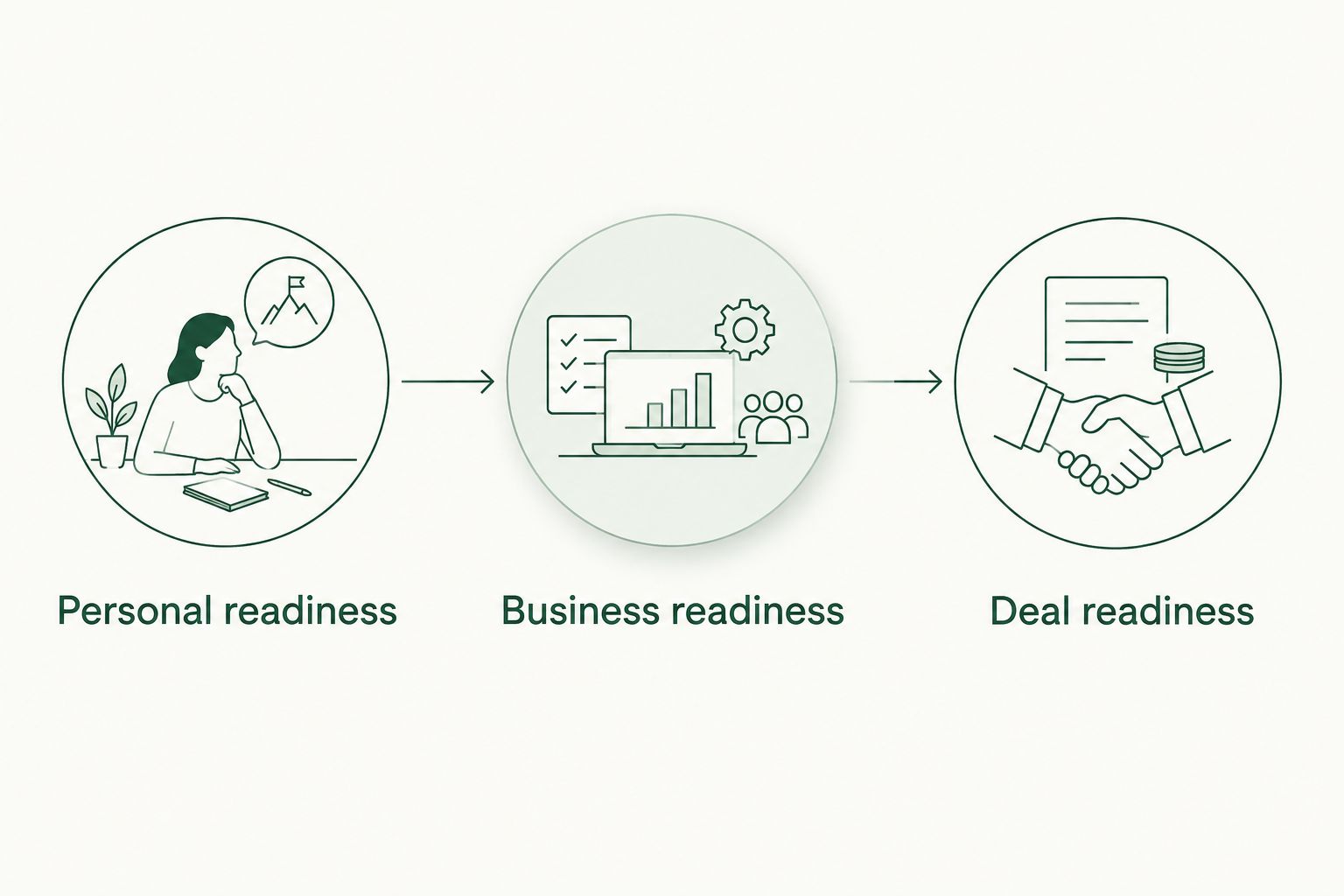
A gap does not automatically mean you should abandon a sale. It identifies the next task. If you cannot explain how the proposed transaction supports your spending, resolve that issue before treating the offer as a finished exit plan.
Why the right time to sell varies
The right sale date depends on your circumstances and the proposed transaction. Use these six factors to explain your decision rather than relying on a broad claim about the 2026 market:
- Income replacement: Your required spending and outside assets determine what the transaction needs to accomplish.
- Business concentration: Consider how much of your financial life depends on continued ownership or payments from the same company.
- Owner dependence: Your operational responsibilities determine what needs to transfer and what work you might retain.
- Payment structure: Money at closing, seller financing, and conditional payments create different planning needs.
- Transition preferences: Your willingness to stay involved affects which arrangements fit your goals.
- Successor readiness: The intended buyer’s preparation and funding need to match the proposed transfer.
Do not substitute a general economic forecast for these checks. A forecast cannot establish whether your buyer will close, your agreement protects your interests, or your remaining assets support your spending.
Bring four documents to the first planning conversation
You do not need a finished transaction to start planning. Bring four working documents that expose the decisions still unresolved:
- Household spending summary: Show essential expenses, discretionary spending, and costs currently paid through the business.
- Personal balance sheet: List assets and liabilities, distinguishing accessible personal assets from business ownership.
- Business financial packet: Include available financial statements, tax returns, debt information, and explanations of significant adjustments.
- Transition brief: State your preferred timing, intended successor, desired ongoing role, and any proposal already received.
Mark estimates as estimates. Identify the professional responsible for confirming each assumption rather than turning an unverified figure into a commitment.
Vital Investment Management is best for Northern Colorado business owners seeking fee-only financial planning around a business transition. The firm is an SEC-registered RIA in Loveland; Dillon Goodman, CPA, CFP®, leads the business-owner practice.
Vital Investment Management’s business transition planning addresses the owner’s financial picture and coordination with other professionals. The firm does not broker transactions or provide legal, tax, valuation, lending, or ESOP administration services. Your CPA and transaction counsel remain essential to their respective parts of the decision.
Learn about Vital Investment Management if you want to understand the practice. A confidential discovery call with Dillon is separate from this educational checklist; reading an article does not establish personalized advice.
Should I sell now or spend more time preparing?
Prepare first when an unresolved issue prevents you from evaluating an offer. Examples include unexplained financial adjustments, unclear management responsibilities, or a personal plan that relies on receiving every conditional payment.
Give each issue a specific action and a responsible person. Waiting without a task list is not preparation; it leaves the same decision for later.
Should I wait until my business is worth more?
Do not make a higher future valuation the only reason to wait. Compare continued ownership with a sale using your spending needs, workload, concentration, and succession goals—not an assumed increase in value.
Ask a qualified valuation professional to assess the business. Then distinguish that assessment from the terms a particular buyer actually offers.
Can I sell my business and keep working?
Yes, a sale can include an ongoing employment, consulting, or transition role when the parties agree. Your attorney should review the duties, authority, restrictions, and conditions attached to that role.
Keep compensation for future work separate from sale proceeds in your planning. Otherwise, you risk treating income that requires continued work as though it were already available for retirement.
FAQ
Is 2026 a good year to sell my small business?
2026 is a suitable year to sell if your personal finances, business readiness, and transaction terms support the decision. The year alone does not establish that an offer meets your needs.
How do I know whether I can afford to sell my business?
Compare your expected net proceeds and outside assets with your spending needs and remaining obligations. Separate money received at closing from deferred or conditional payments, and review the assumptions with your financial advisor and CPA.
Should I accept an unsolicited offer for my business?
Evaluate an unsolicited offer before accepting it. Review the buyer’s proposed payment structure, financing conditions, diligence requirements, and your continuing obligations with the relevant professionals.
Do I need a valuation before selling my small business?
A qualified valuation professional can help you assess business value before negotiations. A valuation assessment and a buyer’s actual offer are different inputs; neither replaces a review of transaction terms.
Can a financial advisor replace my business broker or attorney?
No, a financial advisor does not replace transaction brokerage or legal counsel. Vital Investment Management provides business transition planning and coordinates with other professionals; it does not broker transactions or provide legal, tax, or valuation services.
Is selling to an employee the same as setting up an ESOP?
No, a direct sale to an employee is not the same as establishing an ESOP. Evaluate the proposed ownership structure and financing with qualified legal, tax, and transaction professionals.
What should I do first if I want to sell my business?
Document the income and lifestyle your exit needs to support. Then organize your business records and identify the professionals needed to evaluate readiness and transaction terms.
One last thing
Write your conditions for accepting a deal before a buyer asks you to decide. Include the payment certainty you need, work you will retain, obligations you will accept, and issues requiring professional review.
That document gives your 2026 sale decision a clear standard. The question stops being whether now sounds like a good time and becomes whether this particular transaction supports the life you want after ownership.